
Winchendon is a town of approximately 10,000 people in northcentral Massachusetts. It was originally home to the Pennacook and, later, the Nipmuc tribes. It was incorporated as a town in 1764 and later nicknamed Shingletown because of its shingle production. Creativity in naming was not a thing.
The town eventually earned its more intriguing Toy Town moniker. Toys came to Winchendon in a big way in 1873, when local entrepreneur Morton Converse (a long-ago relative of the mysterious singer Connie Converse) opened a woodware factory. Over the next fifty years, Morton E. Converse and Company turned out a lot of toys - dollhouses and furniture, blocks, wagons - basically, all the things you probably thought were boring when your distant old relatives trotted them out while talking about the good old days.
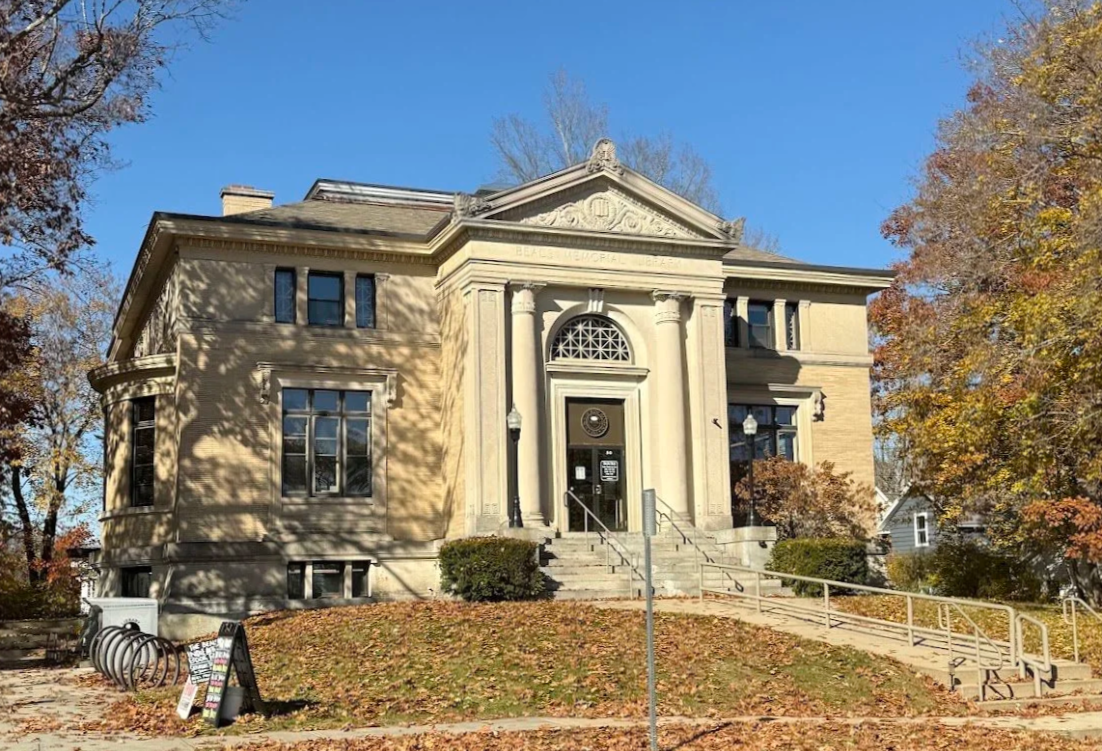
Anyway, the Beals Memorial Library serves the town well. This neat little library has more than a few surprises. Approaching the library from the street, we both pegged it as a Carnegie and appreciated the ornate pediment as we entered. The cutaway Beals sign at the side of the library is a nice modern touch.
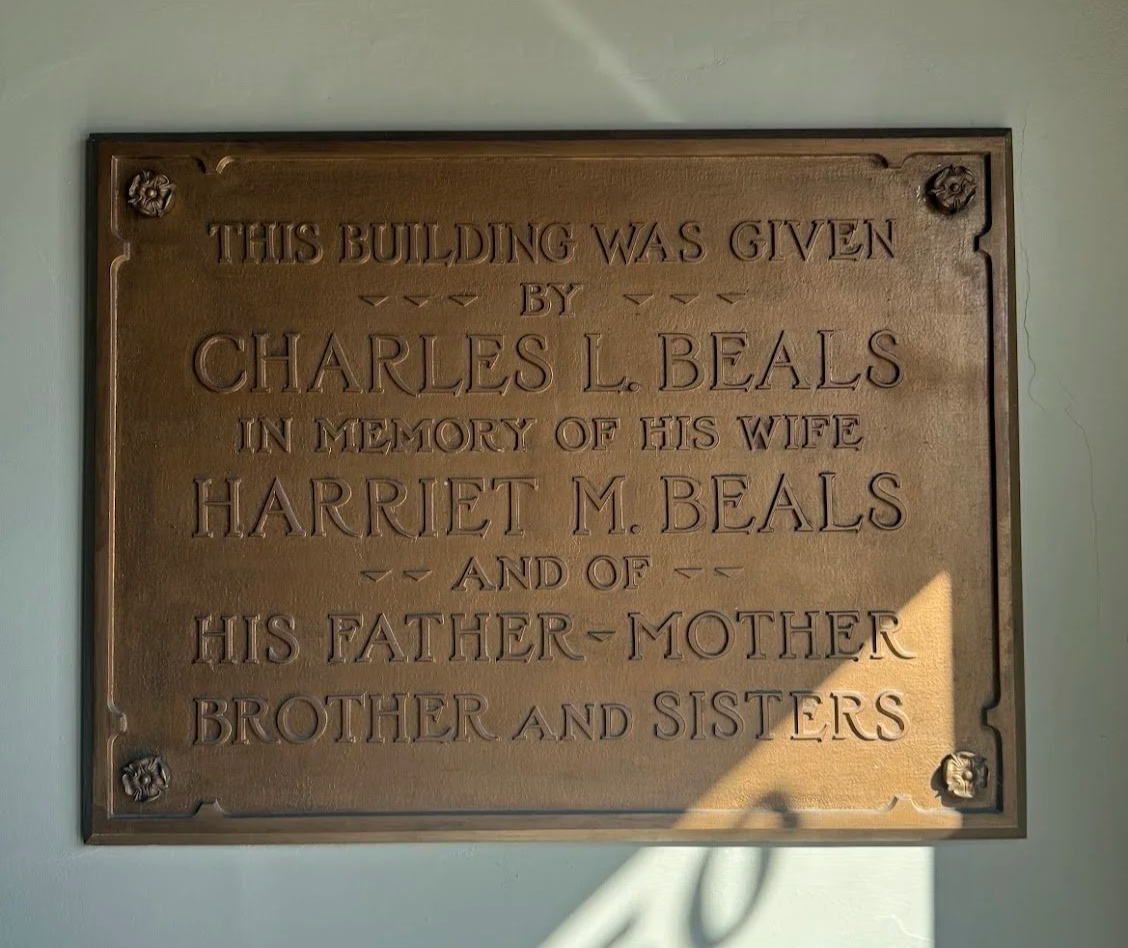
Inside, we met Director Manuel and staff members. We asked him about the library's history. Andrew Carnegie had offered the town $12,500 to build a library. The town ultimately declined when Charles Beals provided 25,000 dollars and the land on which the library now stands. It opened in 1912.
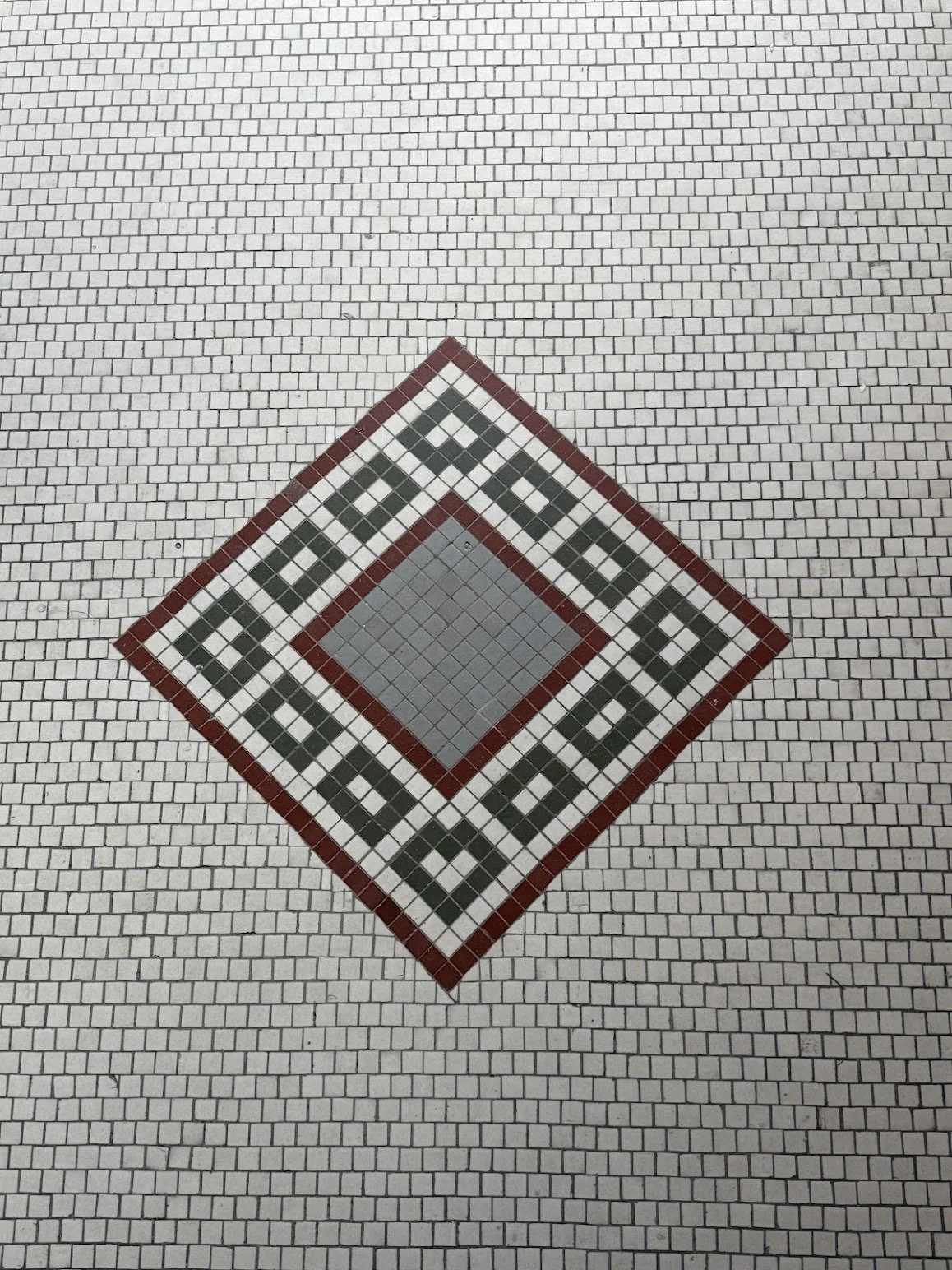
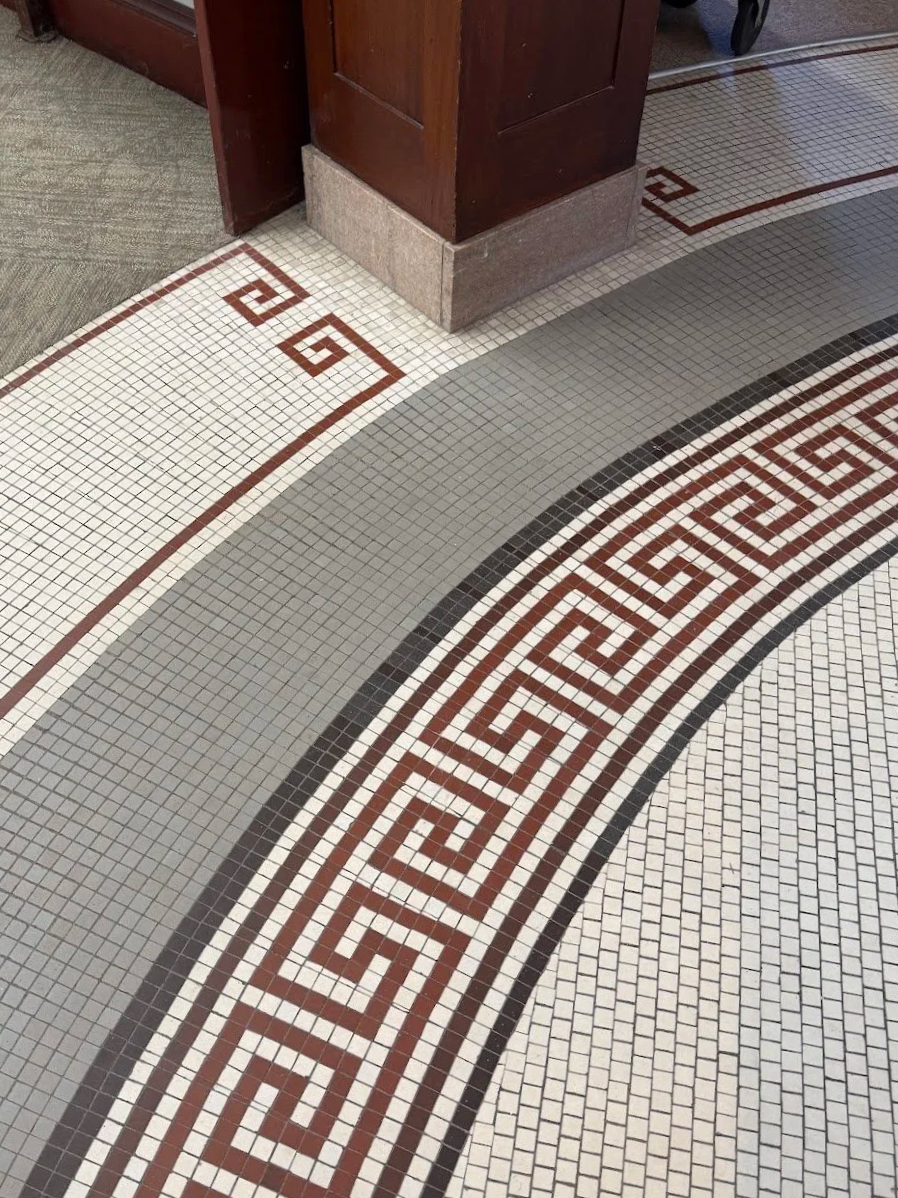
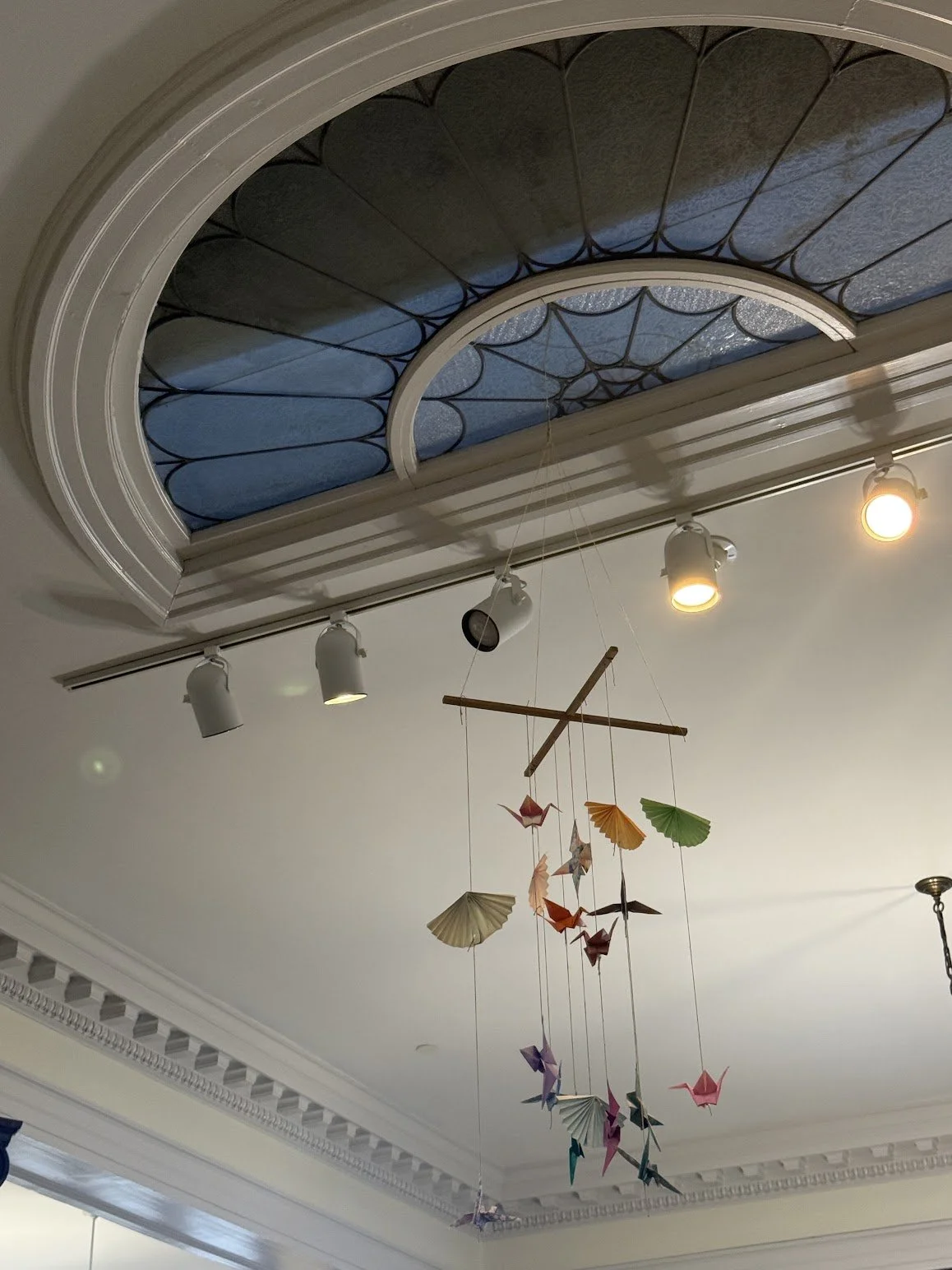
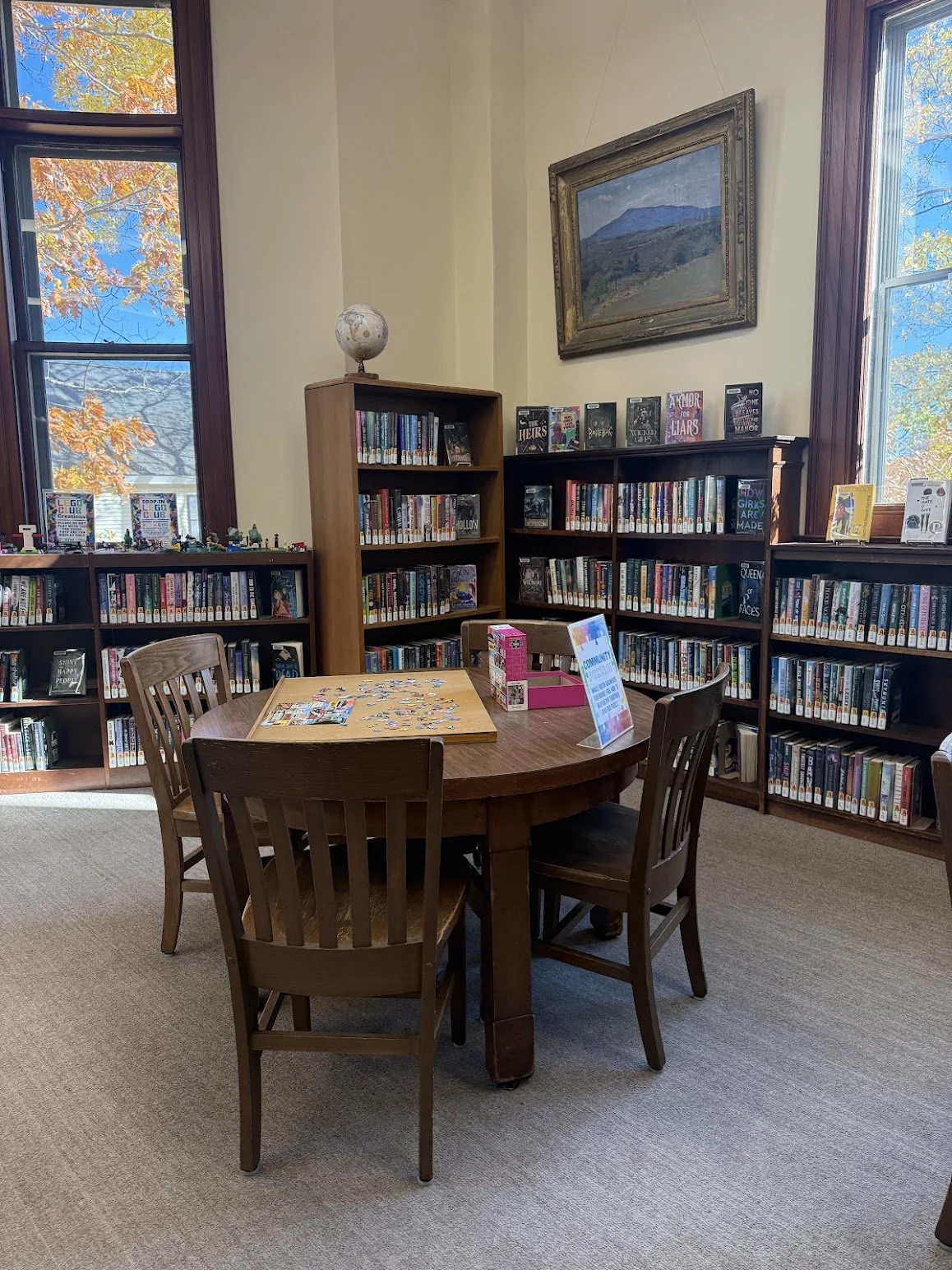
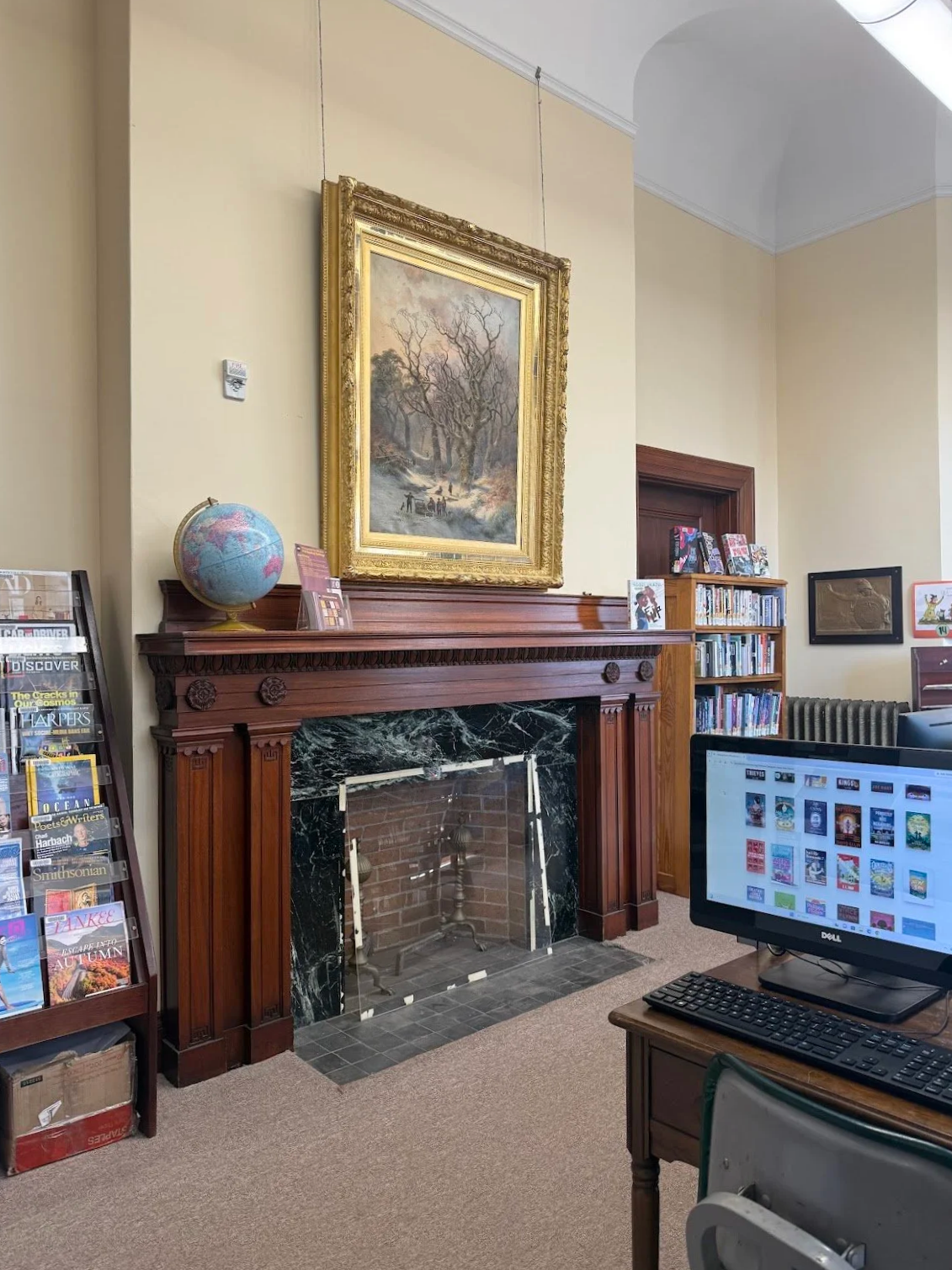
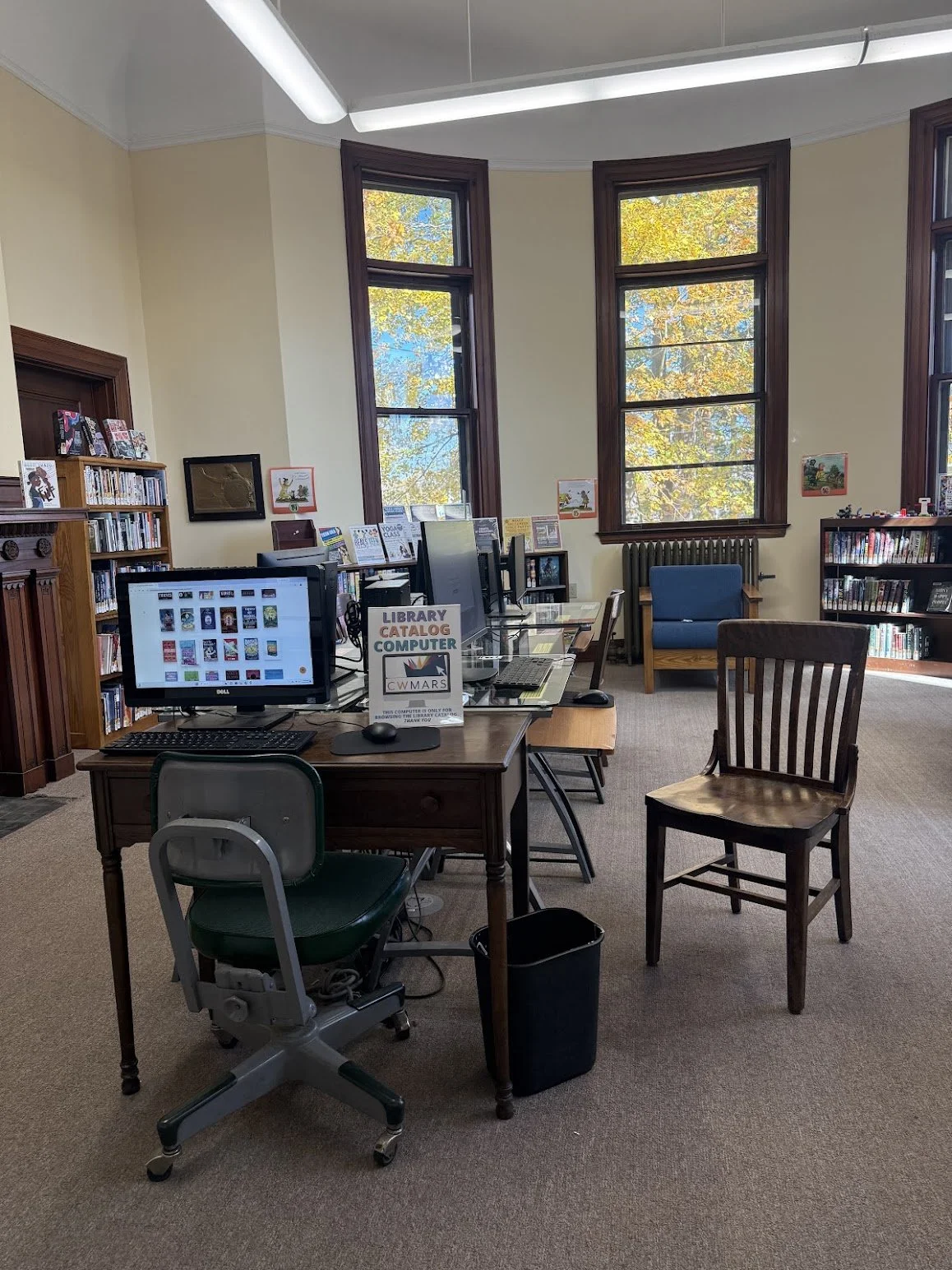
The first things we noticed were the beautiful mosaic floor, the large service desk, and two wings. All so familiar, having seen many libraries of this era. However, many surprises lay ahead. The first was a beautiful wooden staircase curving up to the second floor. Perhaps because of the community’s past engagement with wood arts, the woodwork throughout the library is especially fine.
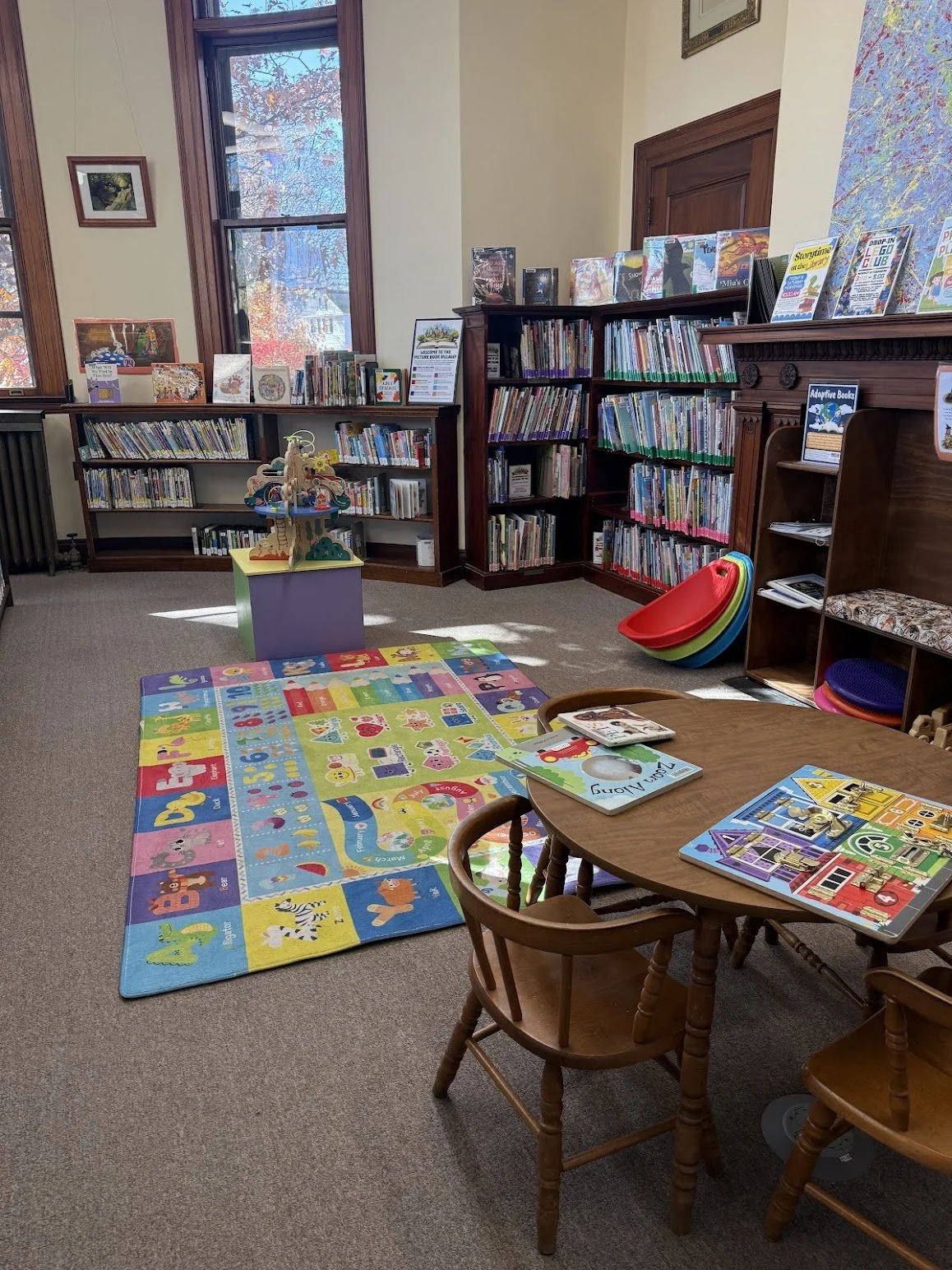
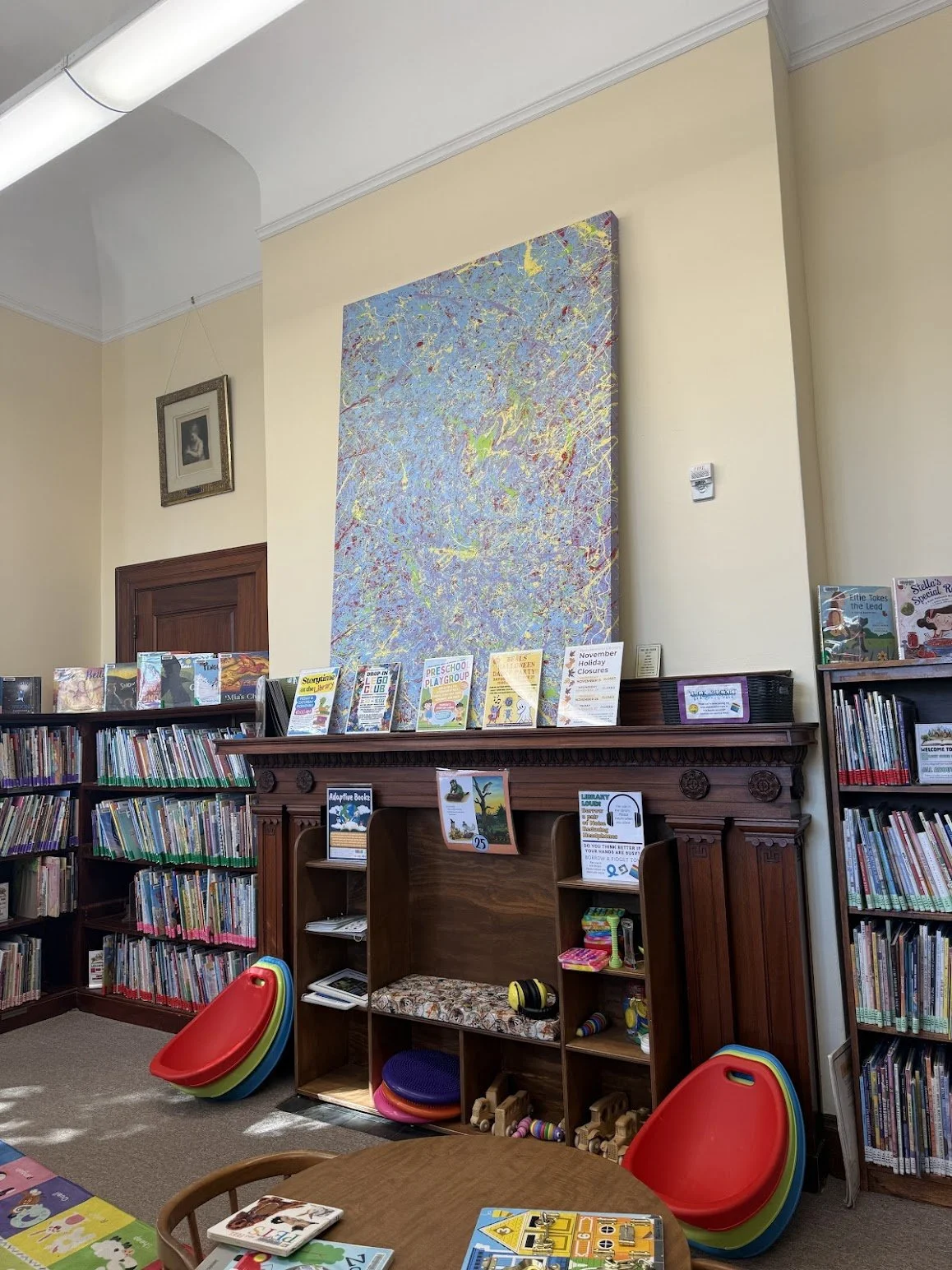
The wing to the right houses YA and public technology, as well as periodicals. A marble fireplace on one wall gives the space a homey and welcoming atmosphere. On the opposite side is the children’s area. It is basically a mirror image of the teen room, albeit with more materials and activities.
Director Manuel saw us staring at the ceiling. He said the library was full of strange shapes and few straight lines. That point was well illustrated in the adult stacks at the rear of the library. It is a fan-shaped room, with supports radiating along the ceiling from the interior to the window-lined exterior wall.
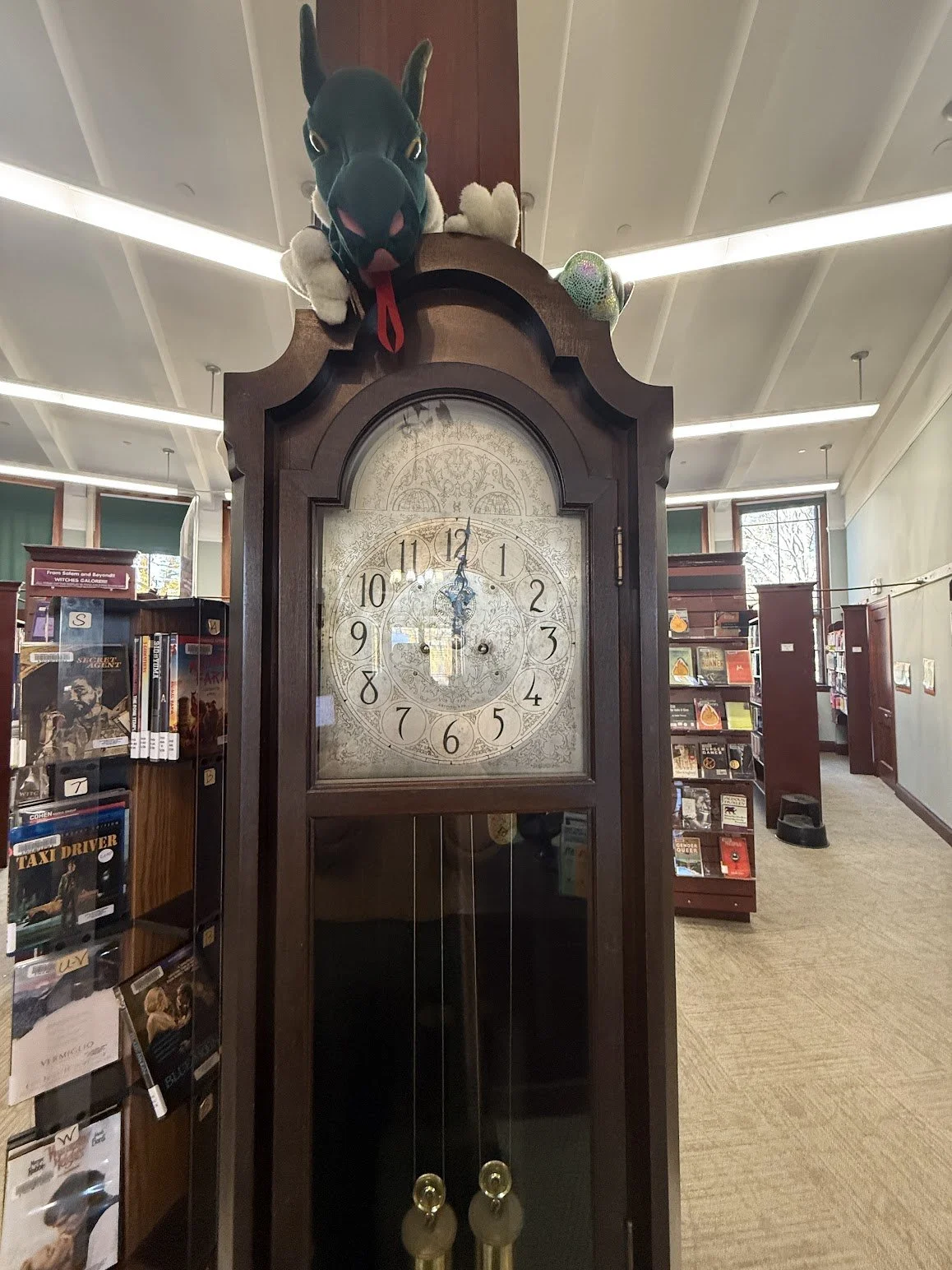
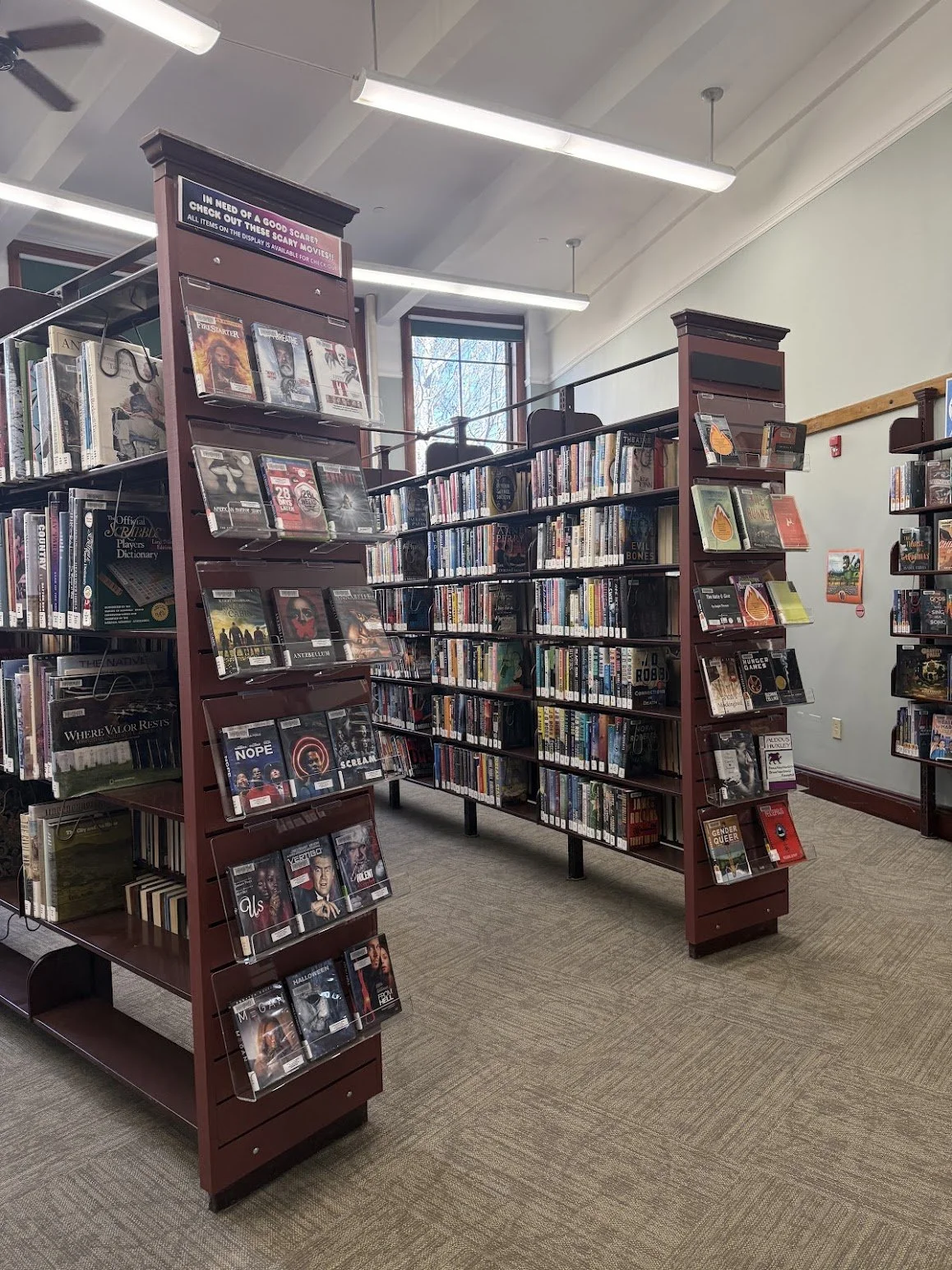
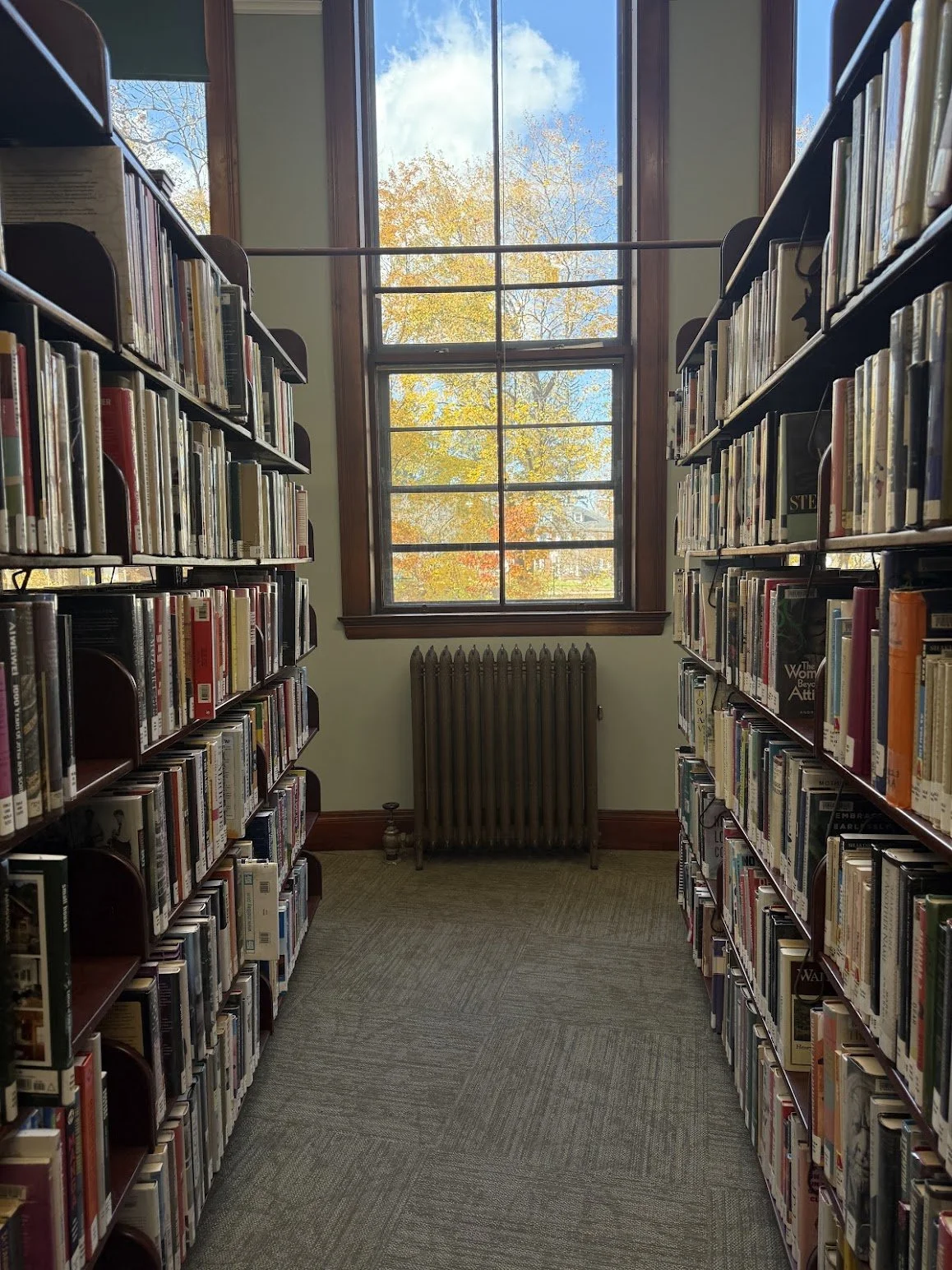
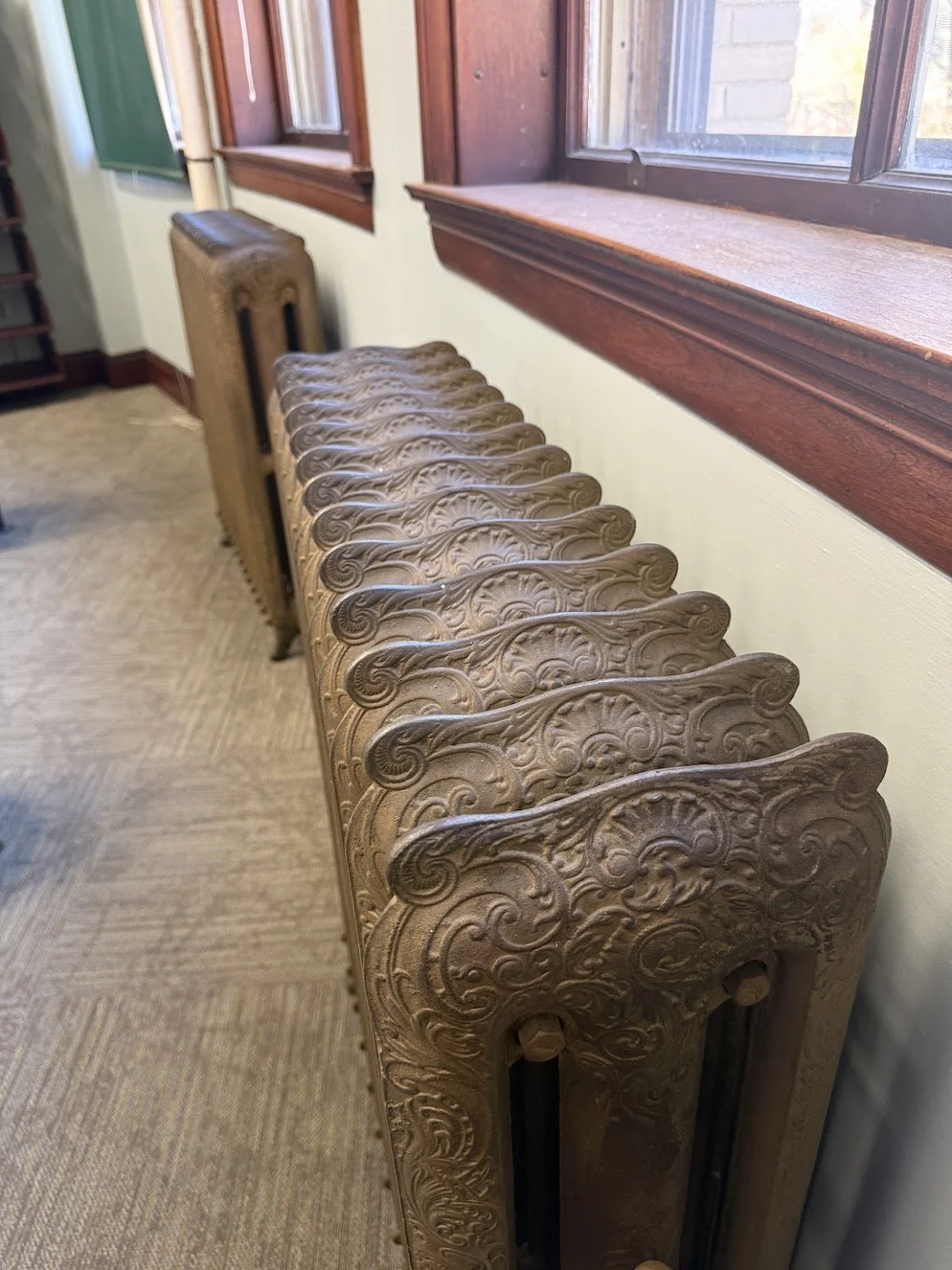
Speaking of radiating, the original radiators are quite wonderful. The shelves follow this pattern. It’s a really interesting, surprising design. As we were marveling at the space, the library’s clock, one of the simplest we’ve seen, rang twelve with a deep and sonorous chime. It’s the first time we’ve actually heard a library clock. We were smitten.
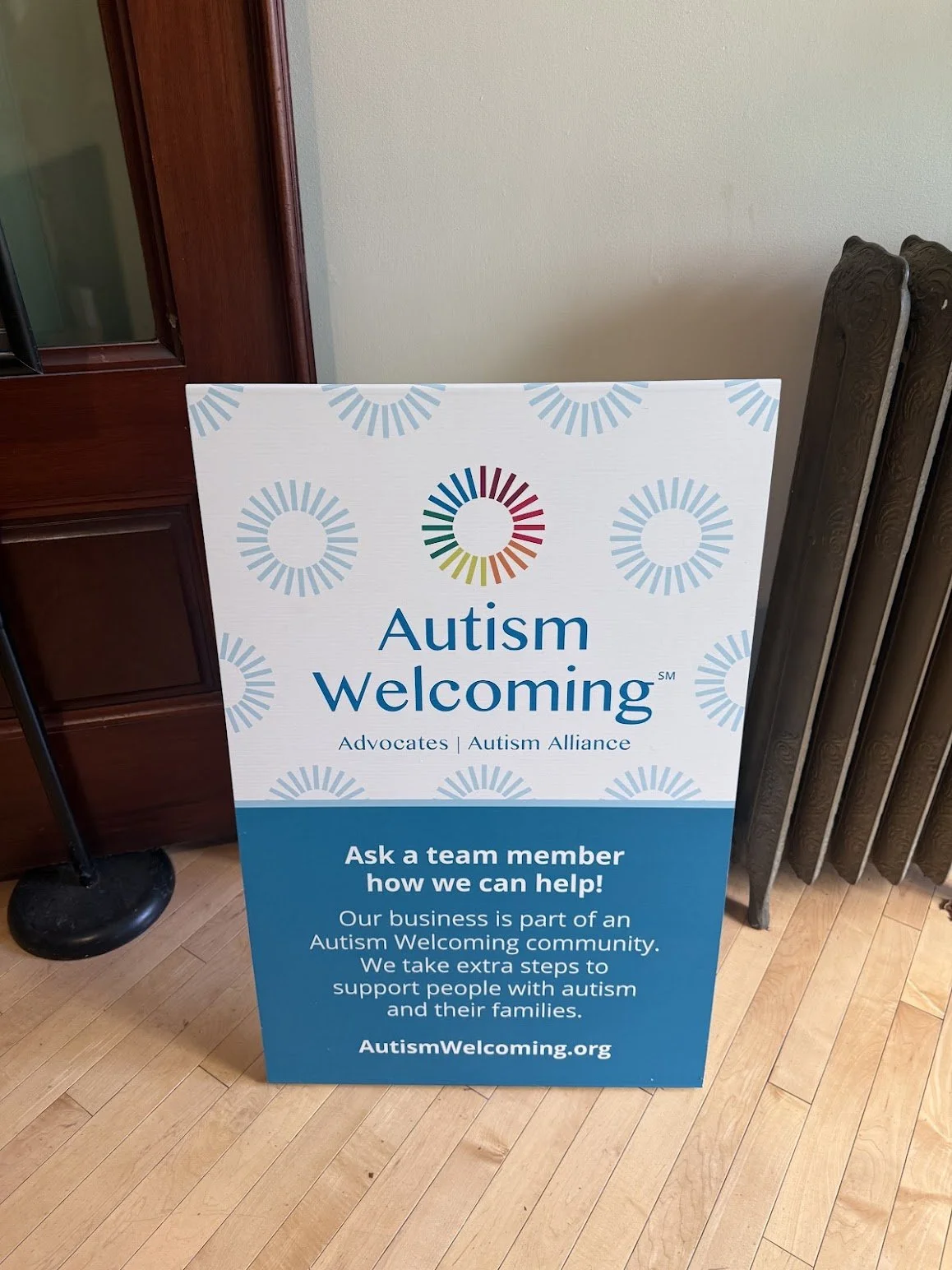
An addition in 2018 made the library fully accessible. Staff space was sacrificed to put in modern stairs and an elevator. Providing more staff space is one of the few things he wishes could change, but inclusivity is critical. That means more than accessibility, but it means creating an accessible and welcoming space for all. Director Manuel is rightfully proud of the library’s work with the autism community.
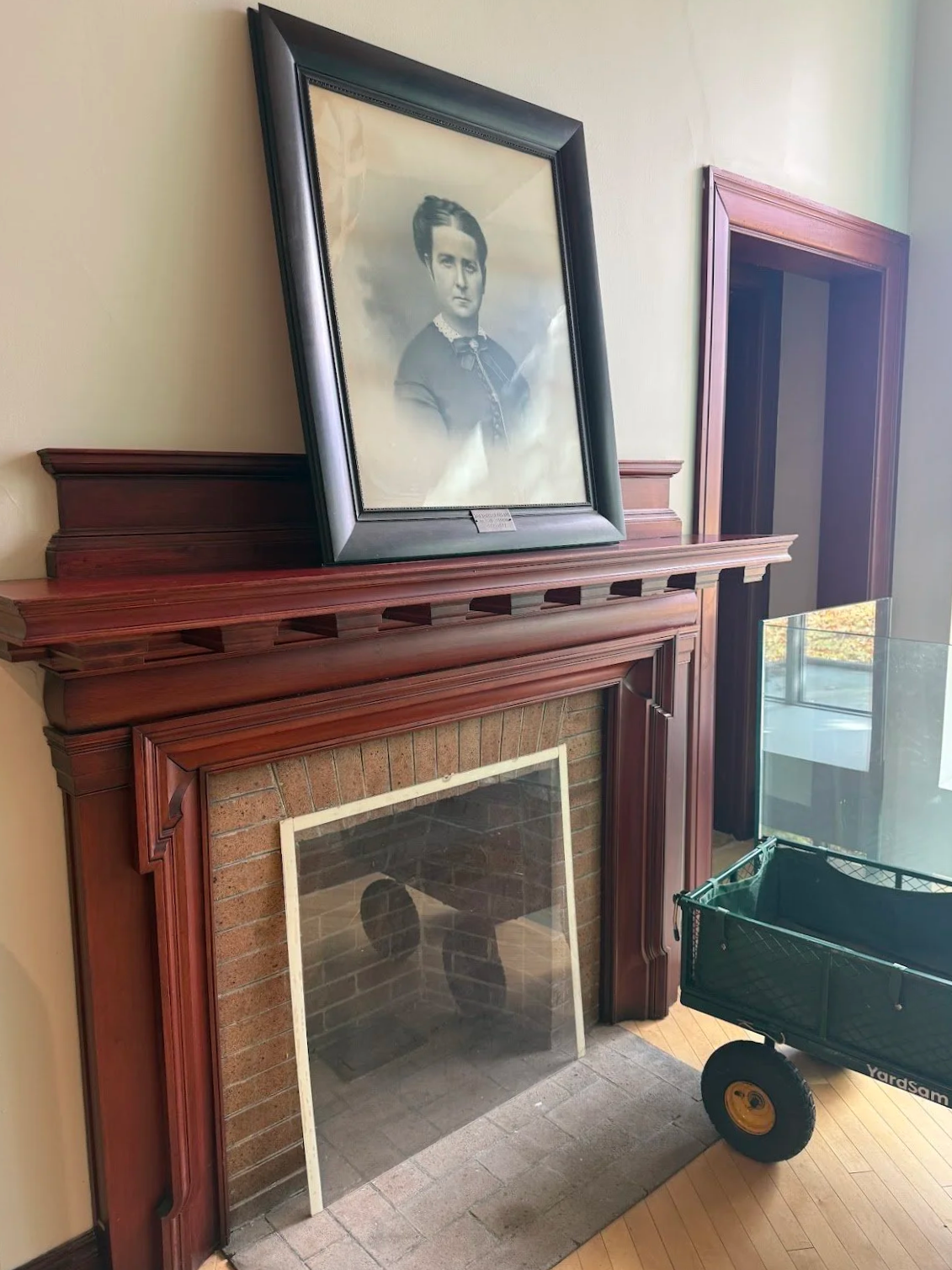
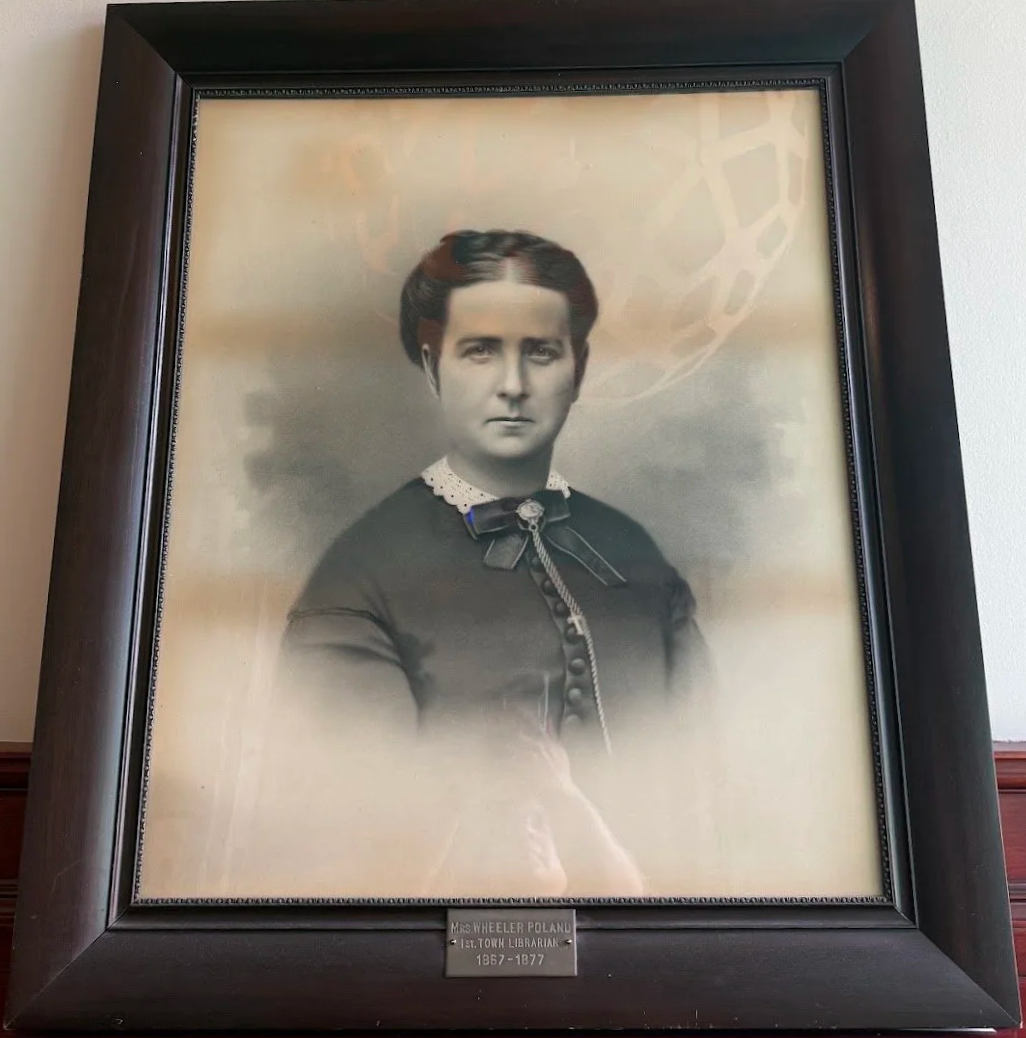
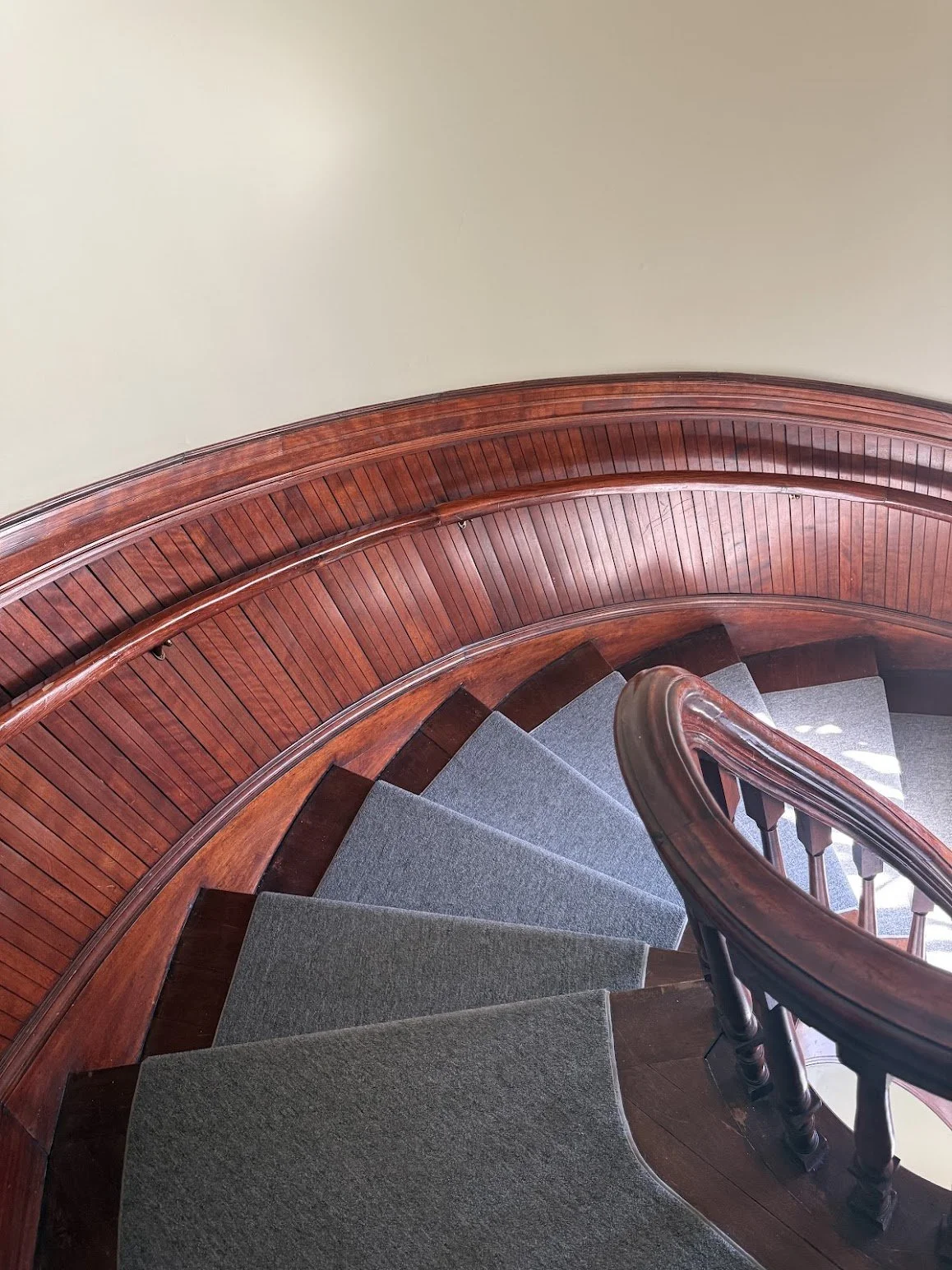
Another fireplace sits in the new stairwell and elevator area. Above it is a framed portrait of Wheeler Poland (what an awesome name!), the town’s first librarian. As we headed up the stairs, he talked about his favorite things about the library. Architectural pride was right at the top, and it’s easy to see why.
When the library was created, the second floor was dedicated to the Women’s Tea Club and included a lovely auditorium. As with the rest of the library, this space remains largely unchanged since it opened in 1912. One curious addition arrived in 1913: a grand piano. It was a gift from Beals’ brother. How it actually got into the building remains a mystery.
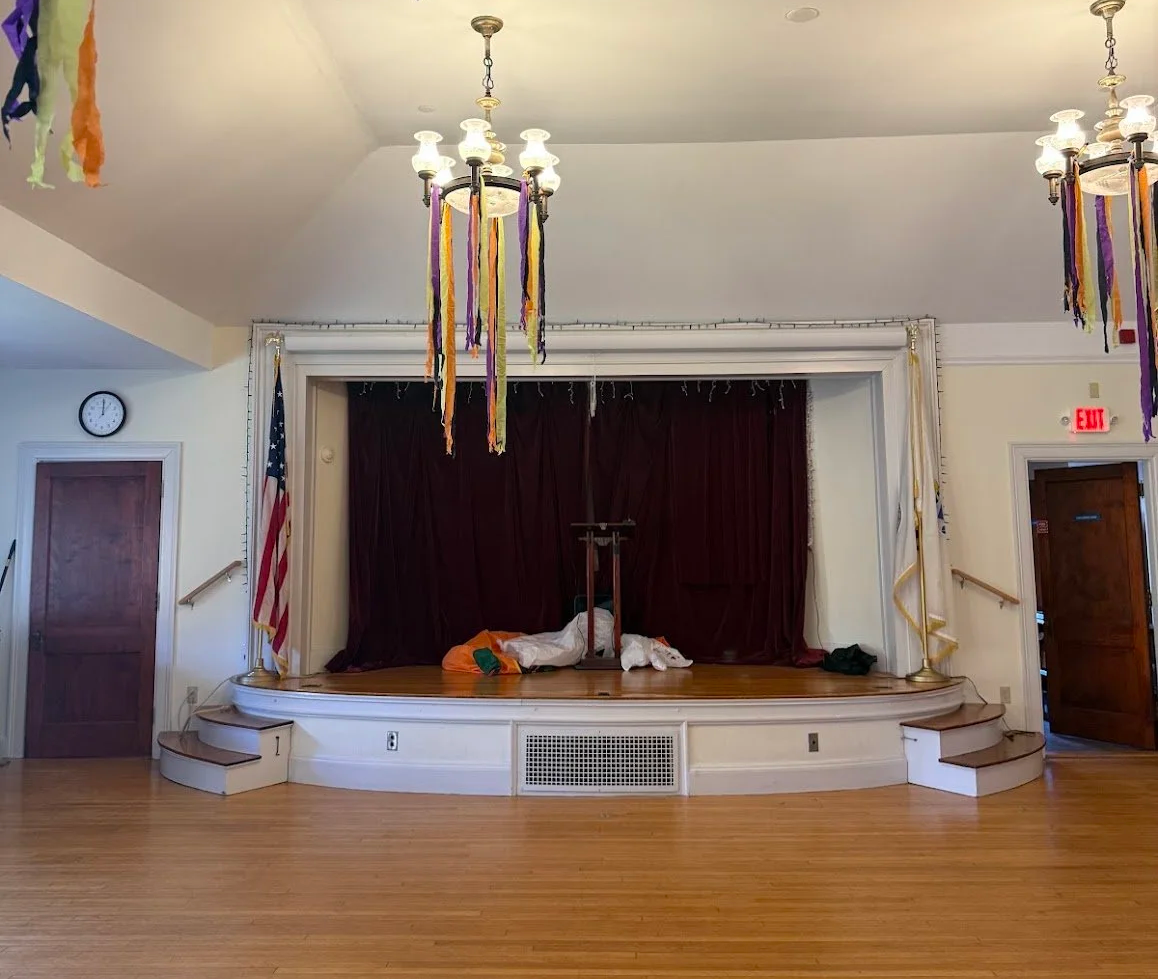
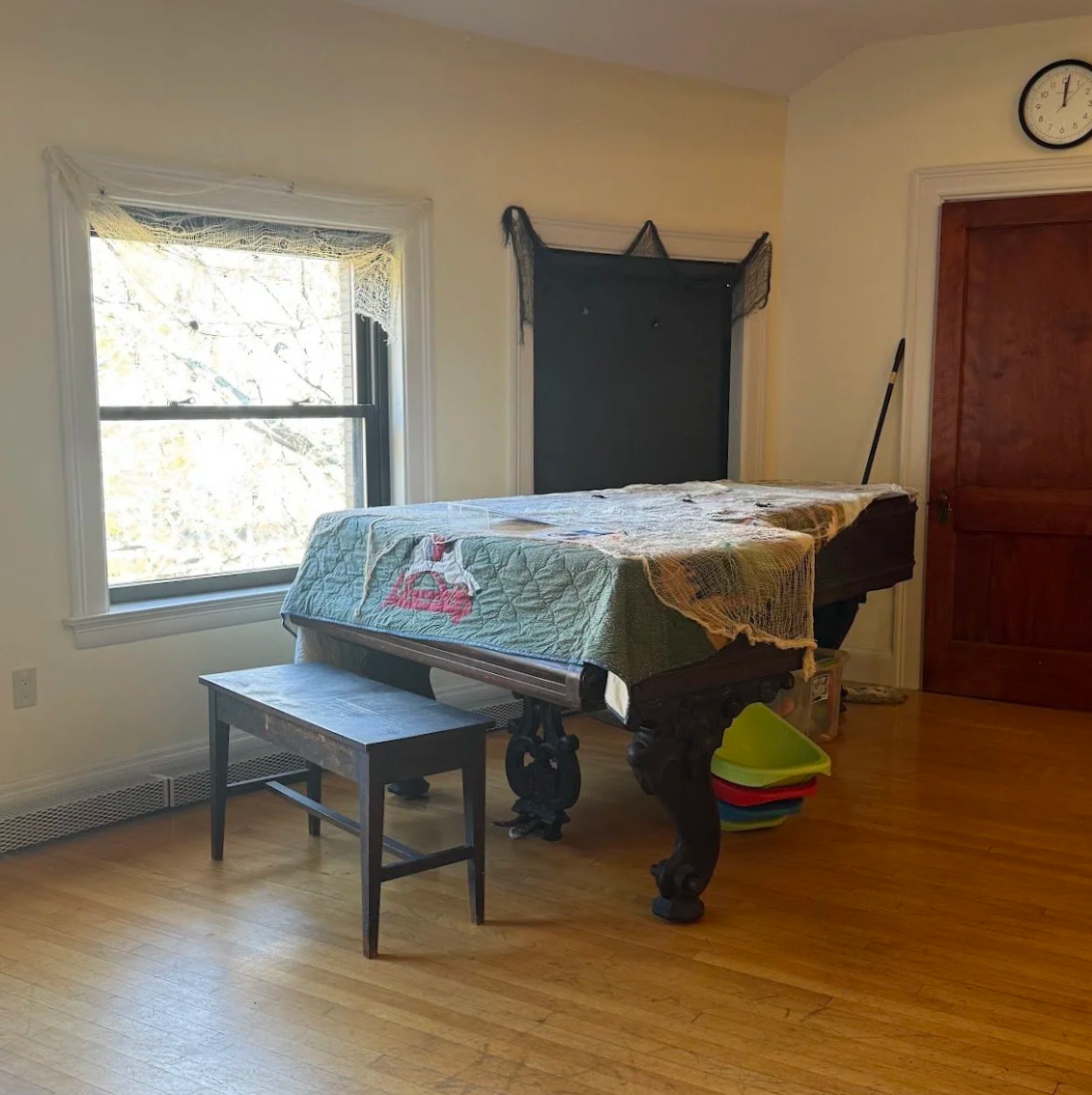
In addition to the piano, the room features a low stage with velvet curtains. A small kitchenette also rounds out the auditorium portion of the floor. The rest of the second level includes a trustees’ room, the director’s office, and a charming period bathroom with original fixtures.
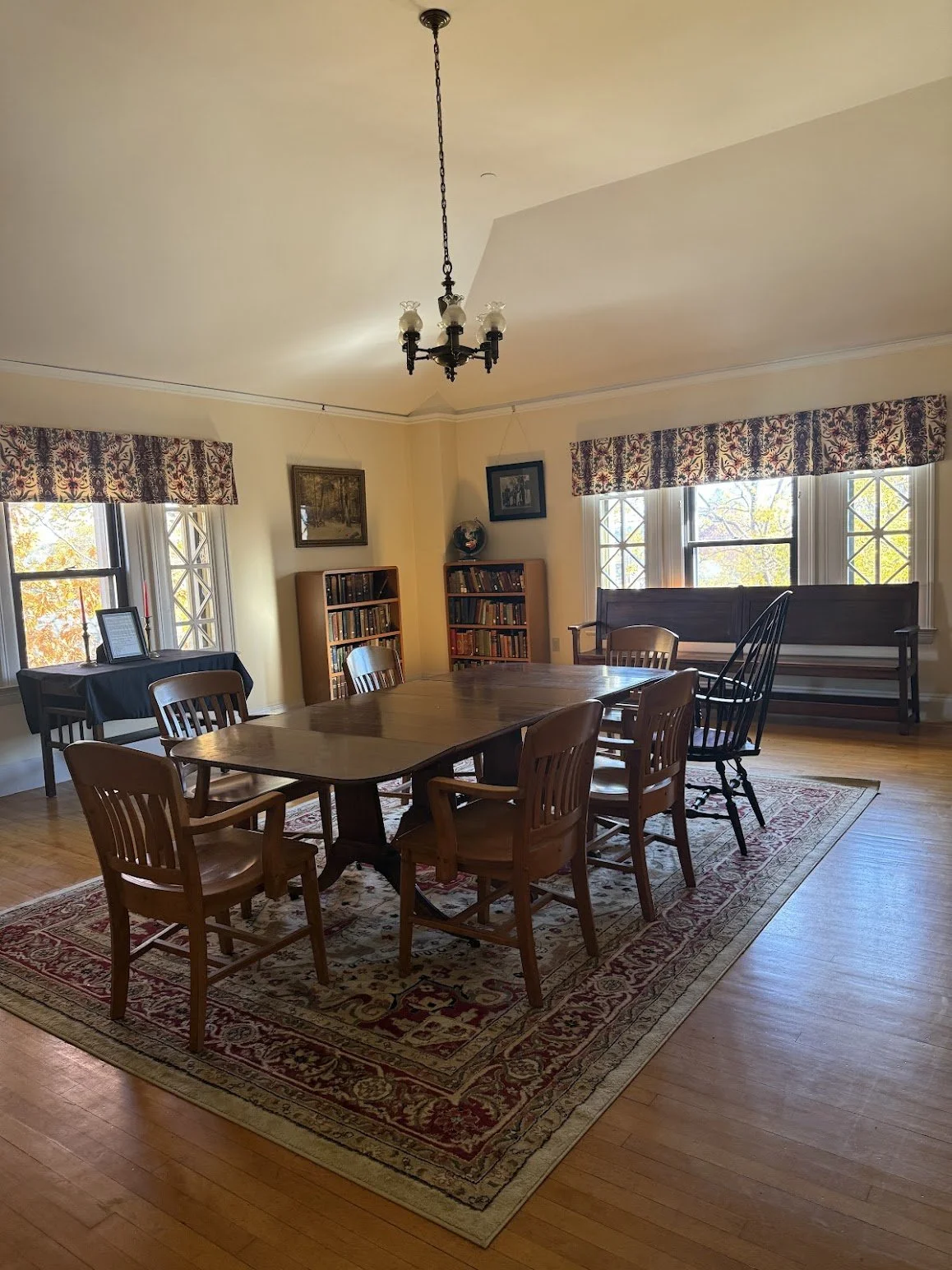
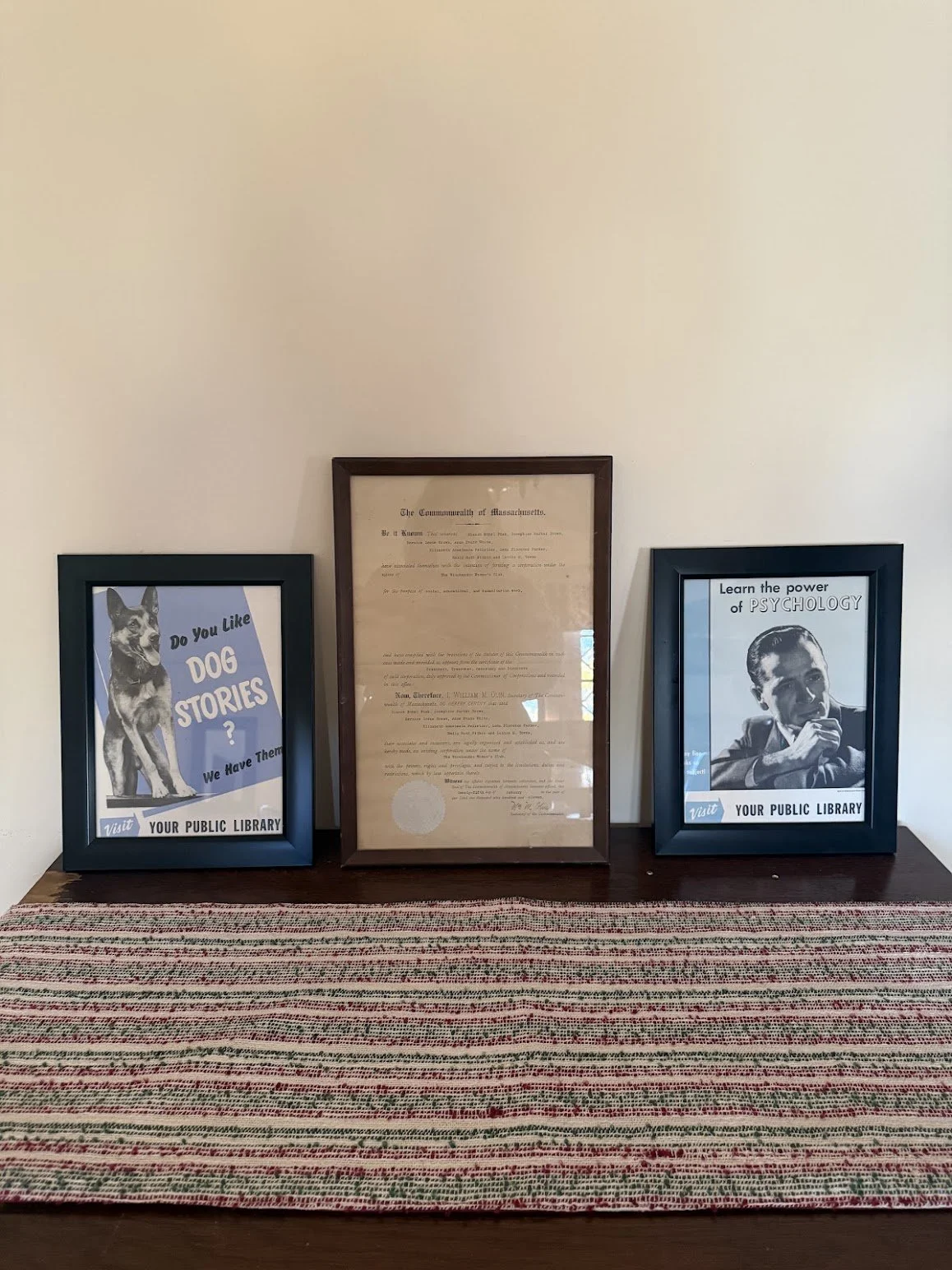
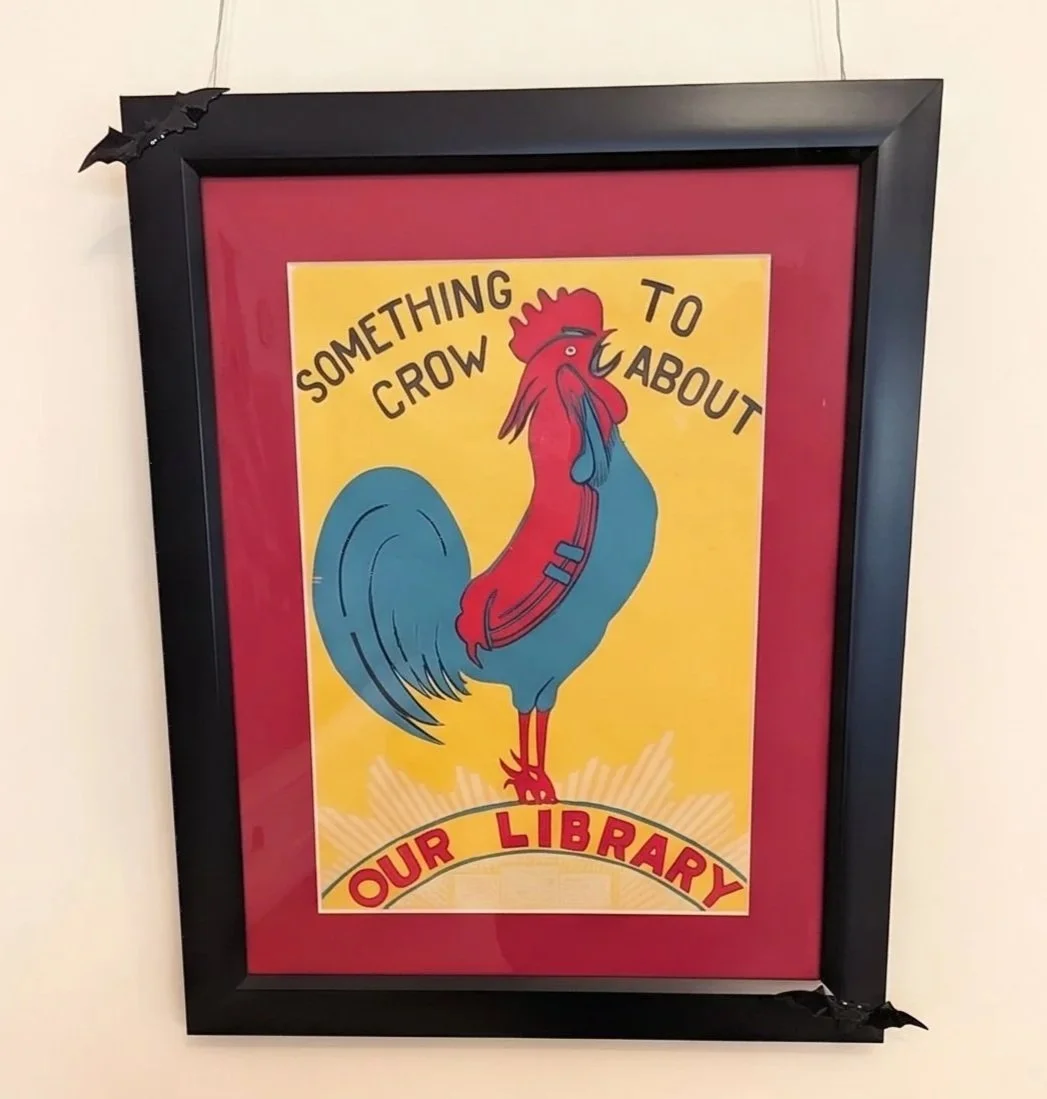
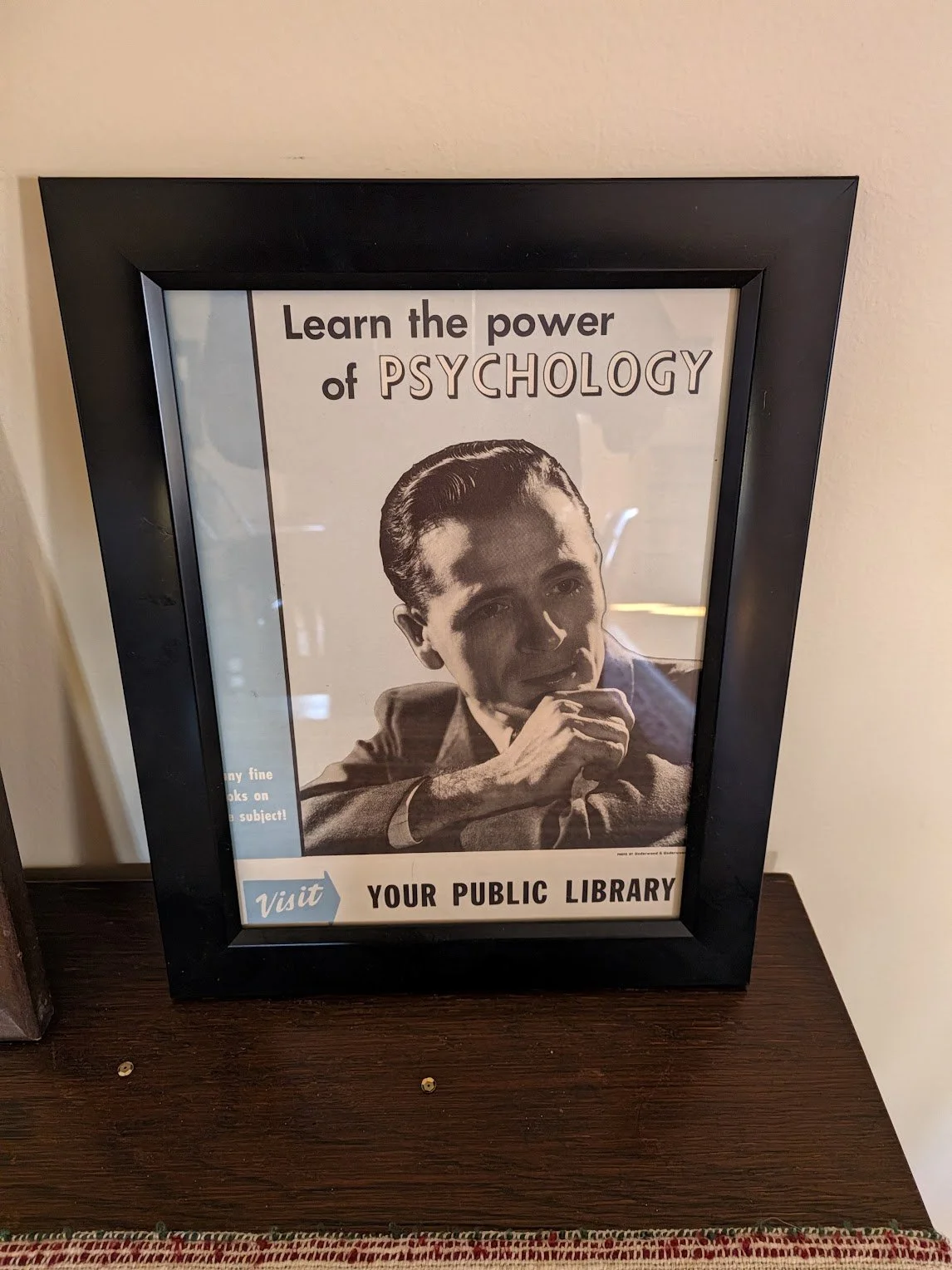
The trustee’s room is worth noting. It features the original card catalog, proclamations on the walls and tables, and some of the best library posters we’ve ever seen. The director’s office is a mirror image of the trustee’ room, but with a more lived-in feeling.
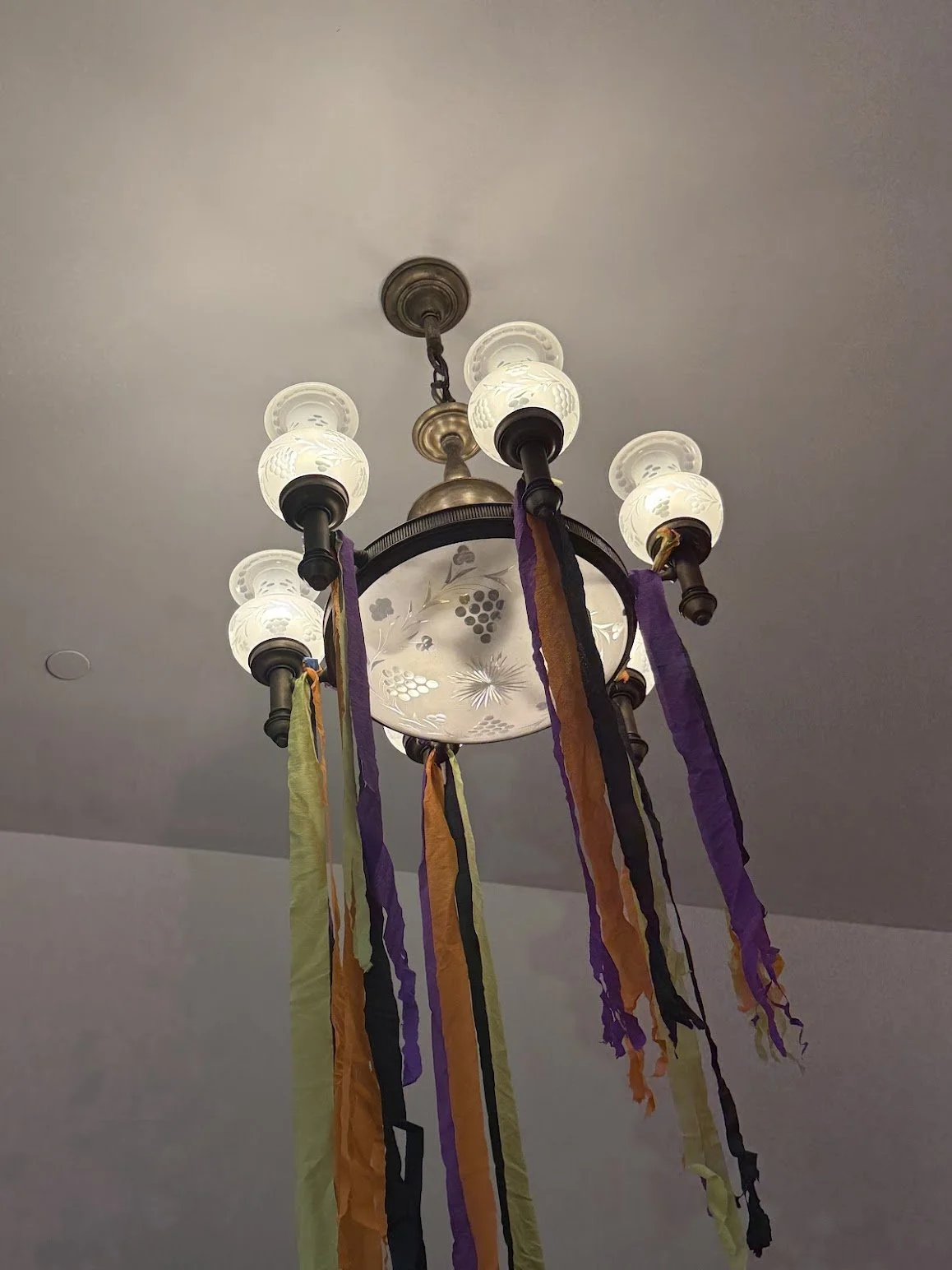
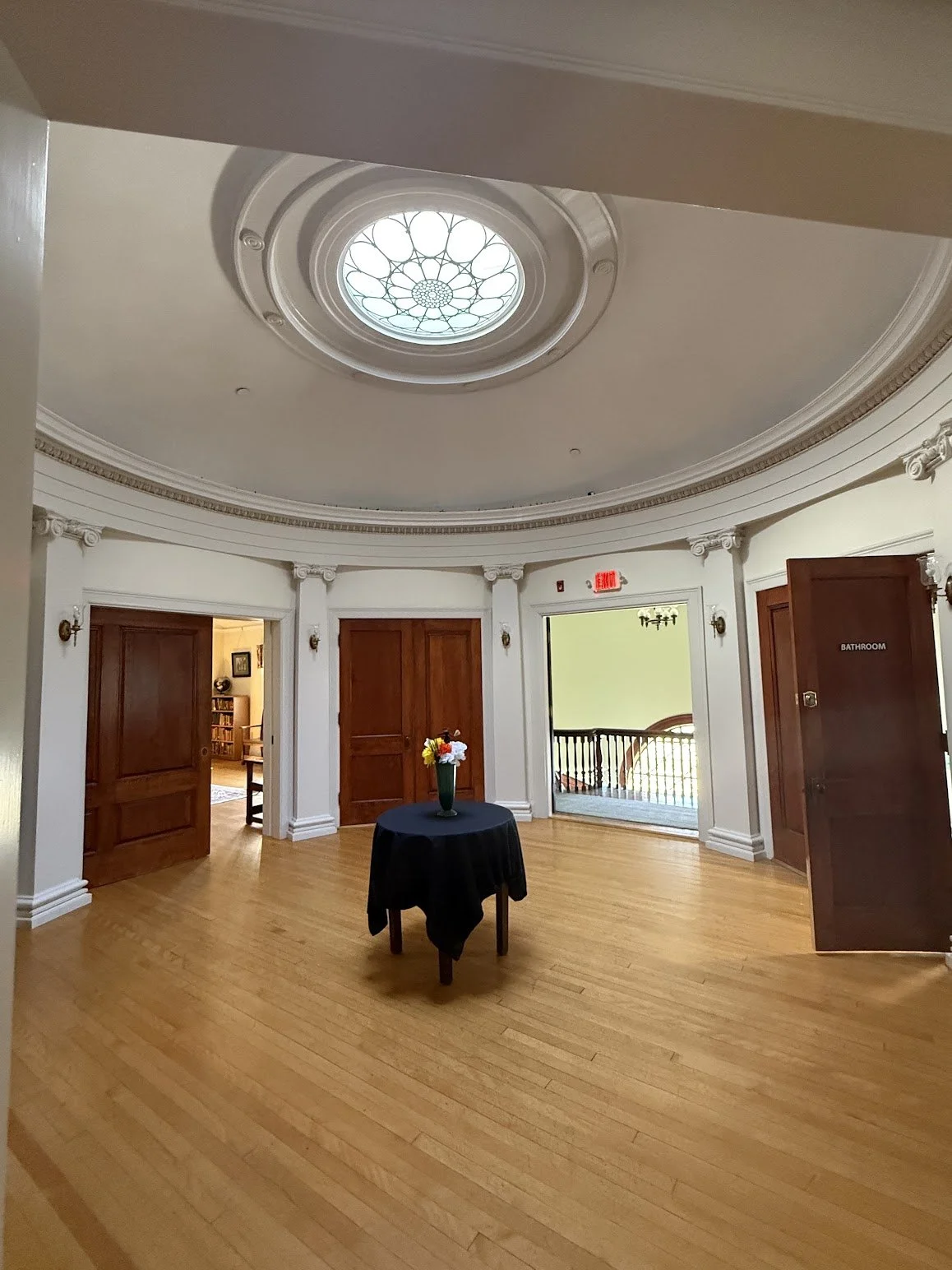
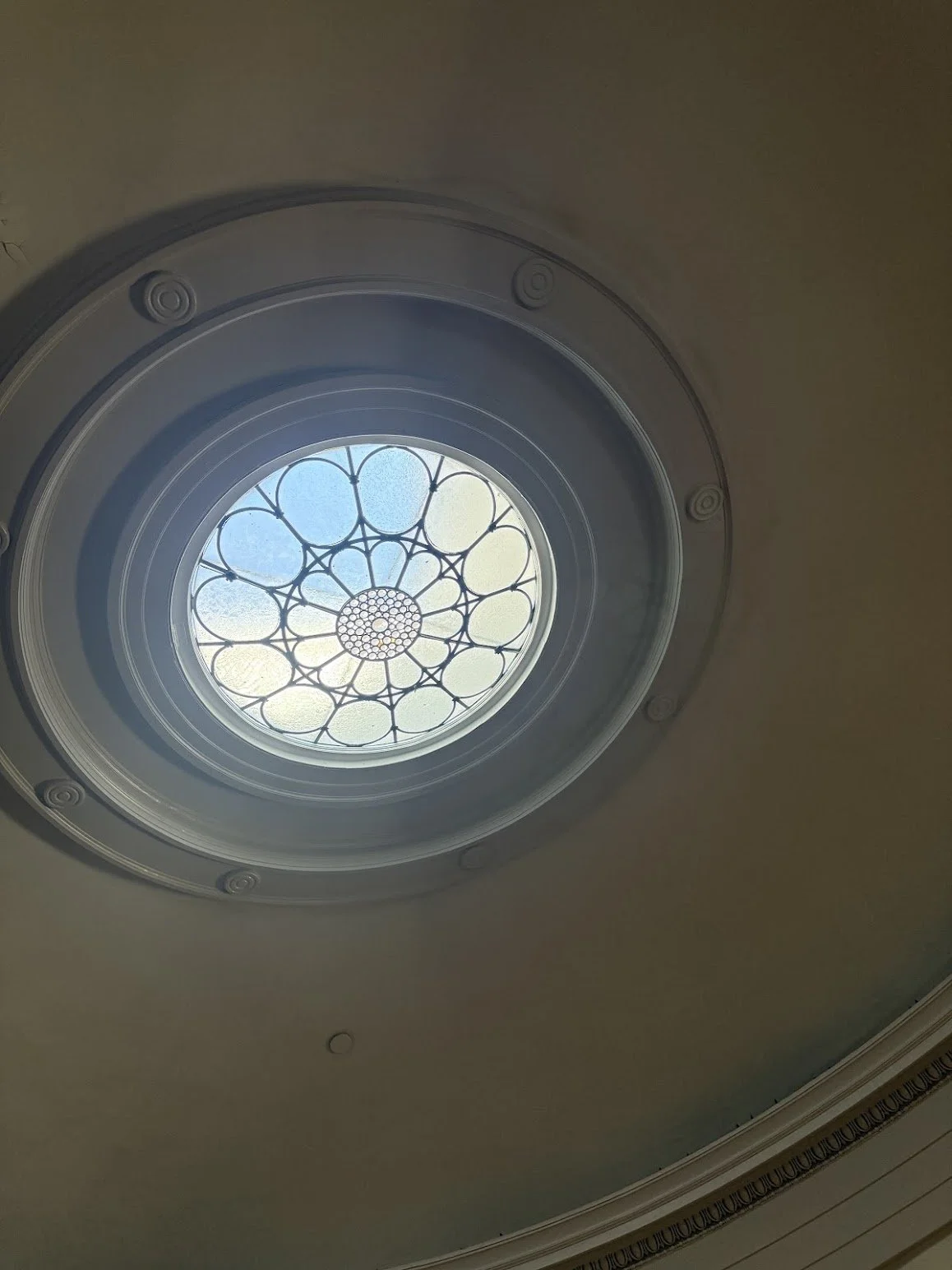
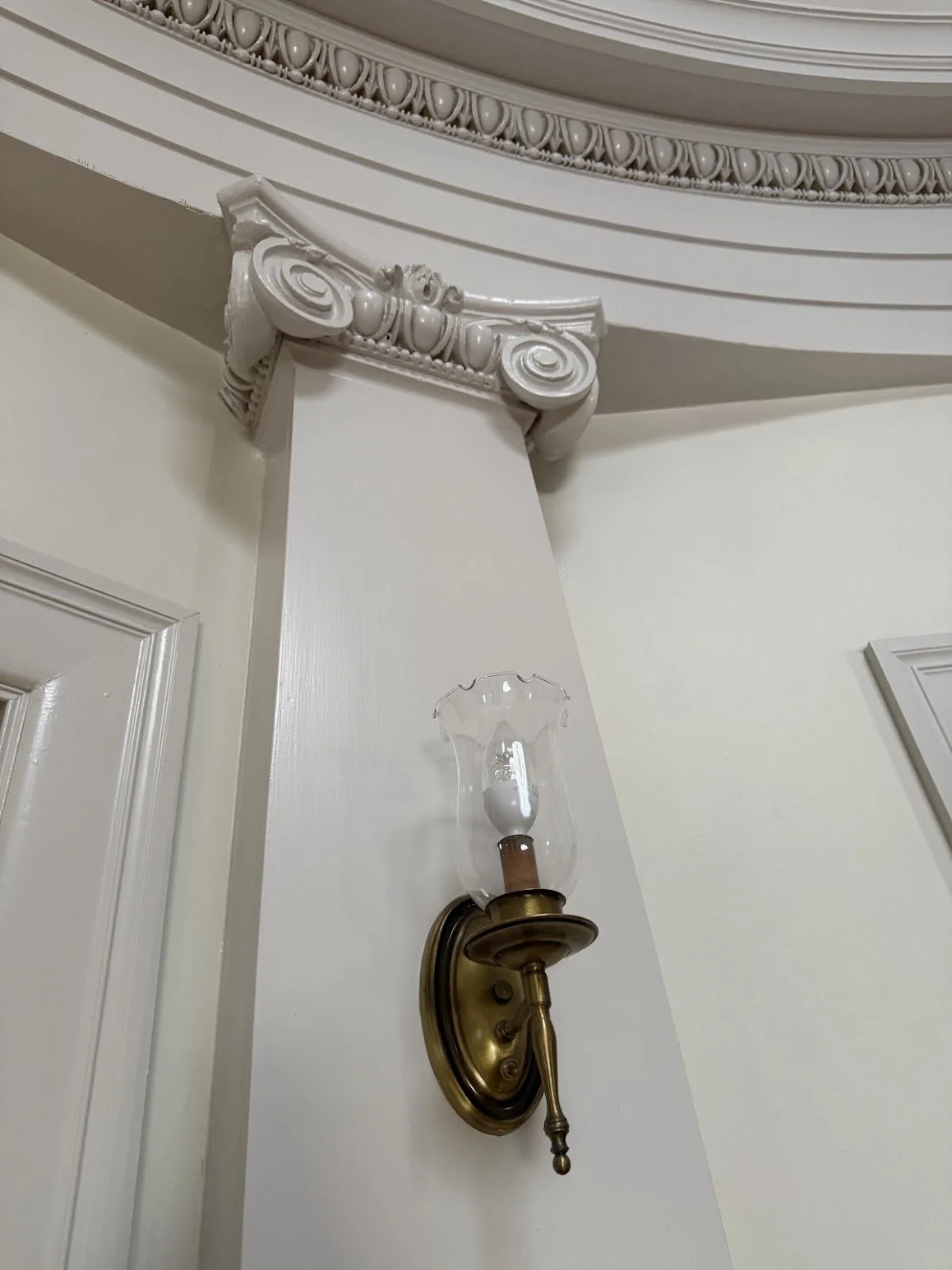
The rotunda is the centerpiece of the floor. It’s octagonal in shape and has a still-working skylight in the center. Double doors open from the curving staircase mentioned above, and another set leads into the auditorium. It’s easy to imagine the space on an autumn evening, with people arriving and mingling before a recital or fête. What special scenes those must have been!
Director Manuel next led us to the basement to see the friends’ book sale space. It was large, neat, and well-organized. It is open several days during the week. While there, we talked more about the community. He wished patrons understood everything the library offers and mentioned Livable Winchendon, which started at the library and continues as an ongoing planning and community-building initiative.
During this visit, the library was active. We enjoyed the familiar, friendly atmosphere among the staff and patrons. This is a beautiful period library, updated and maintained with care and precision. It has kept its original vibe, not as a ghost of its former glory but as a living space that has not deviated from the original version of the library. It’s really outstanding.