
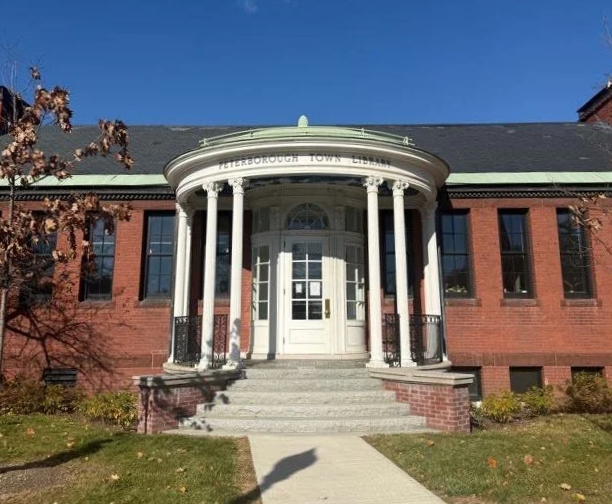
Nestled along the banks of the Contoocook River and Nubanusit Brook, Peterborough is a bustling hamlet of 6,500 in southern New Hampshire. The region was originally home to the Abenaki and Pennacook people before colonists settled there in 1749. The twin waterways powered the community, turning it into a thriving mill town.
As the hands of time turned, manufacturing wound down and Peterborough became a technology and publishing hub. Now it’s known as an arts and cultural destination. The Peterborough Town Library has long been part of that cultural history. In fact, the library lays a strong claim to being the country's first taxpayer-funded library, starting in 1833.
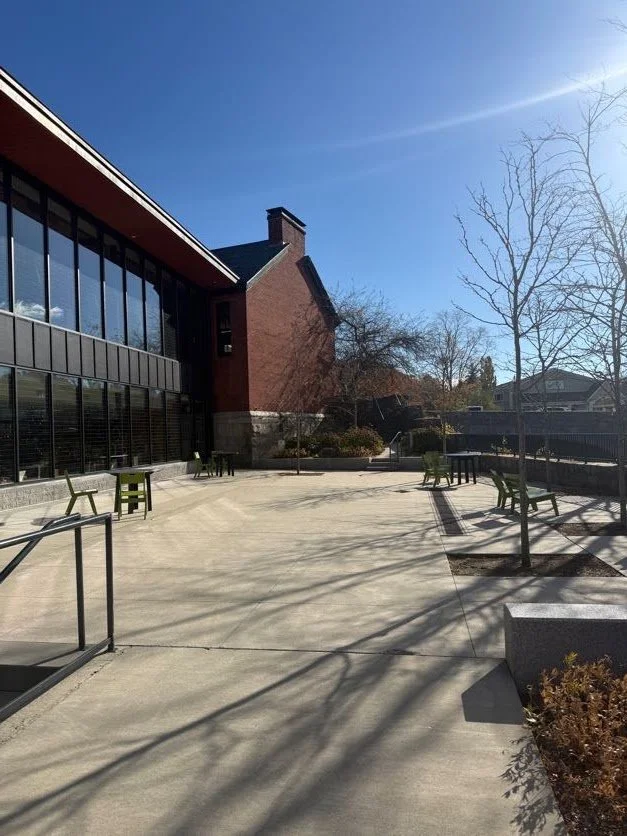
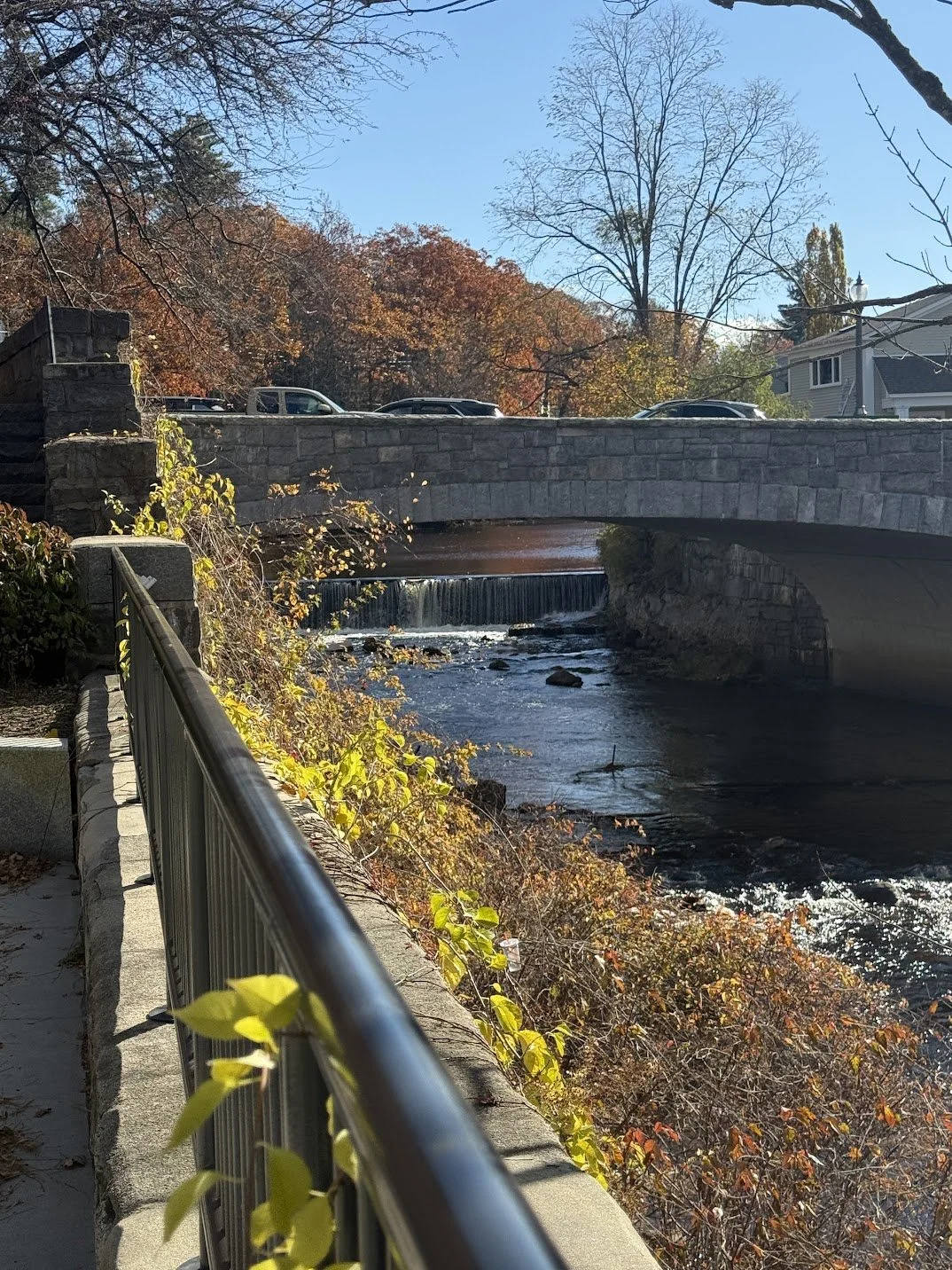
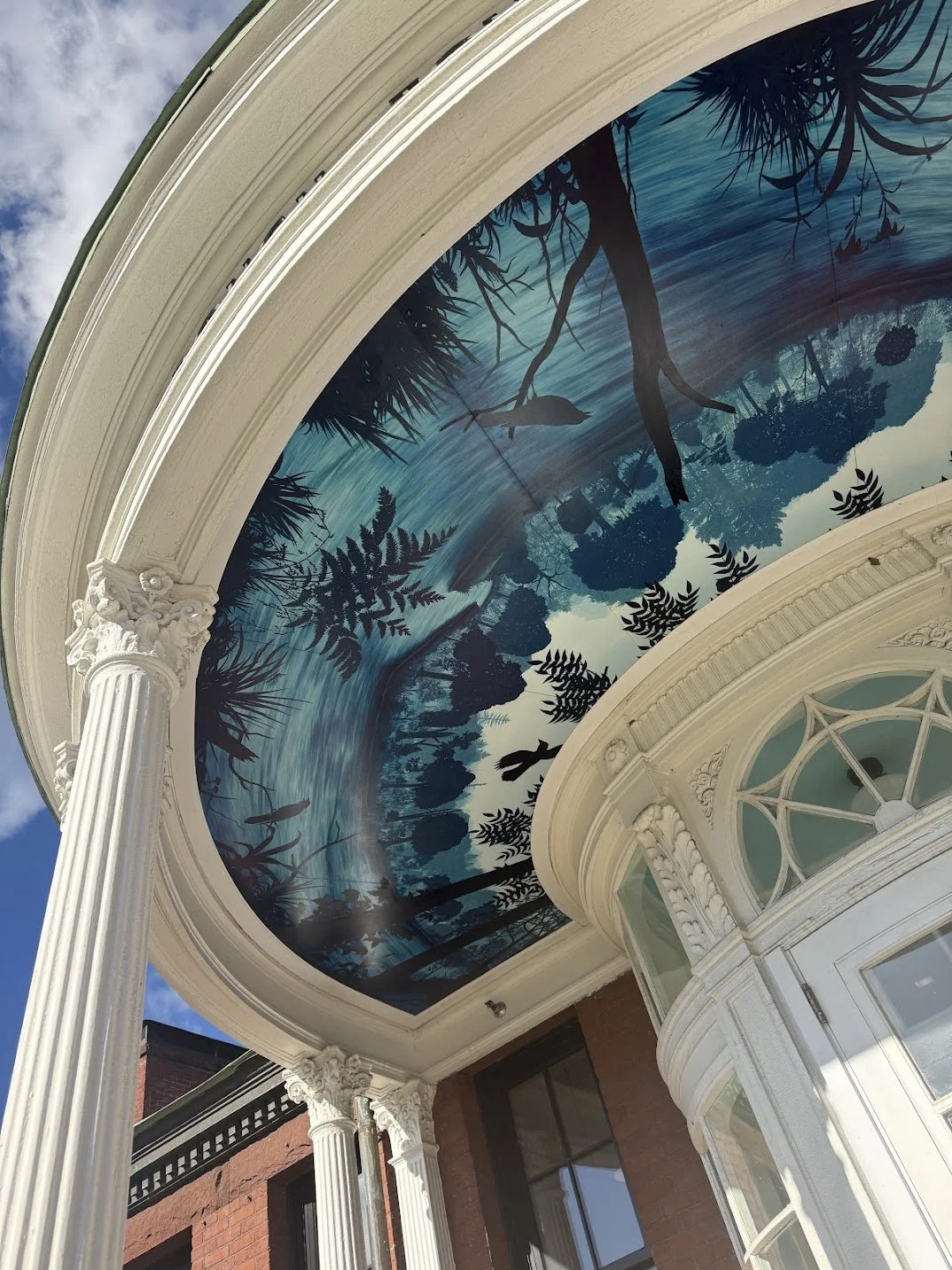
We arrived at the library on a picture-perfect autumn afternoon. The foliage was past its peak, but there was still enough color to catch our attention. Cottony clouds were rolling across the bright blue sky, and that special fall angle of light put everything in sharp relief. Just beautiful.
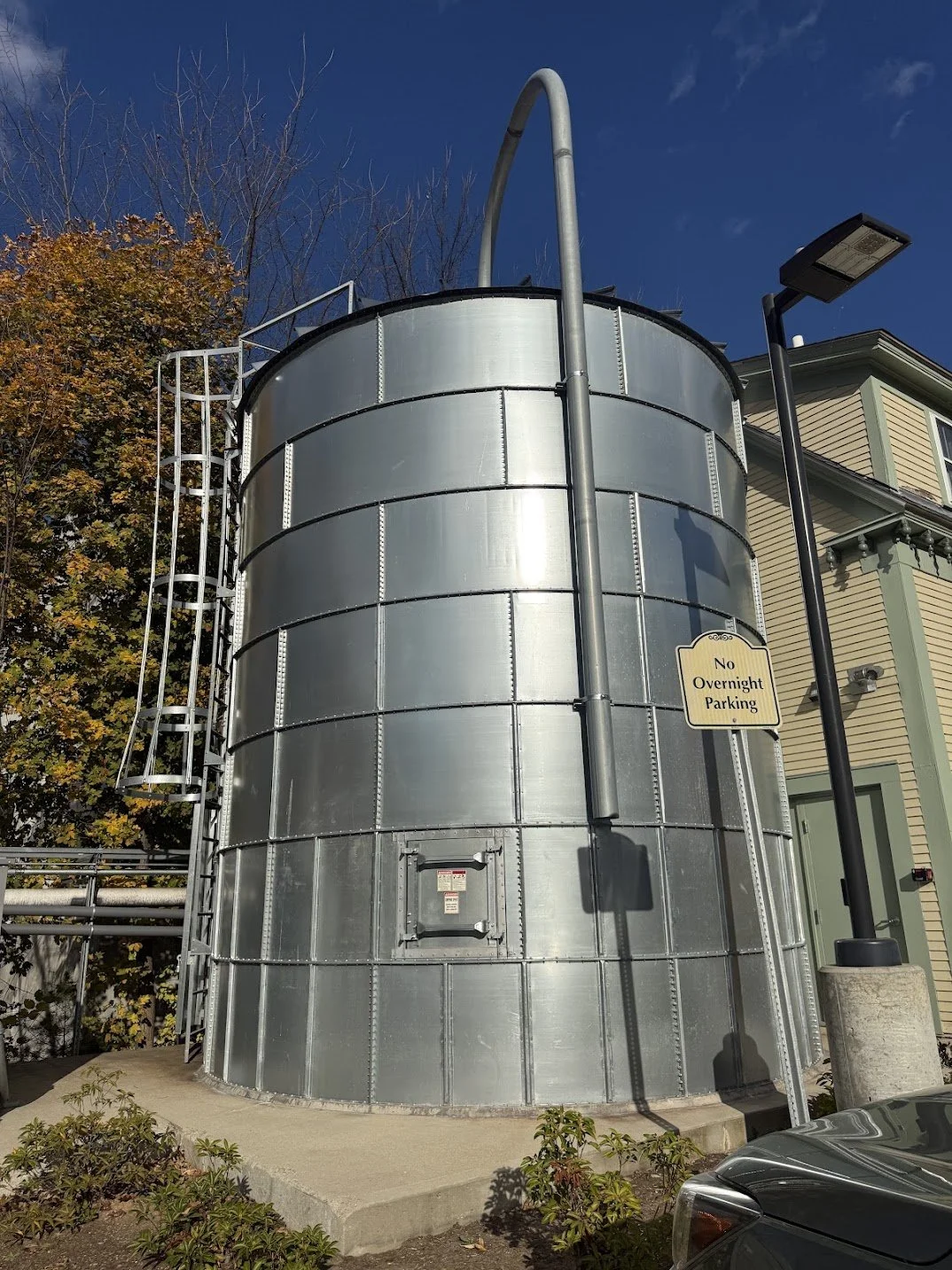
Walking through the parking lot, we noticed a large metal tank. We’d later learn this was a hopper for biofuel. The library is completely powered by renewable energy - whether the wood that fuels the heating and absorption cooling system or the solar array on the roof. Very cool, and very New Hampshire.
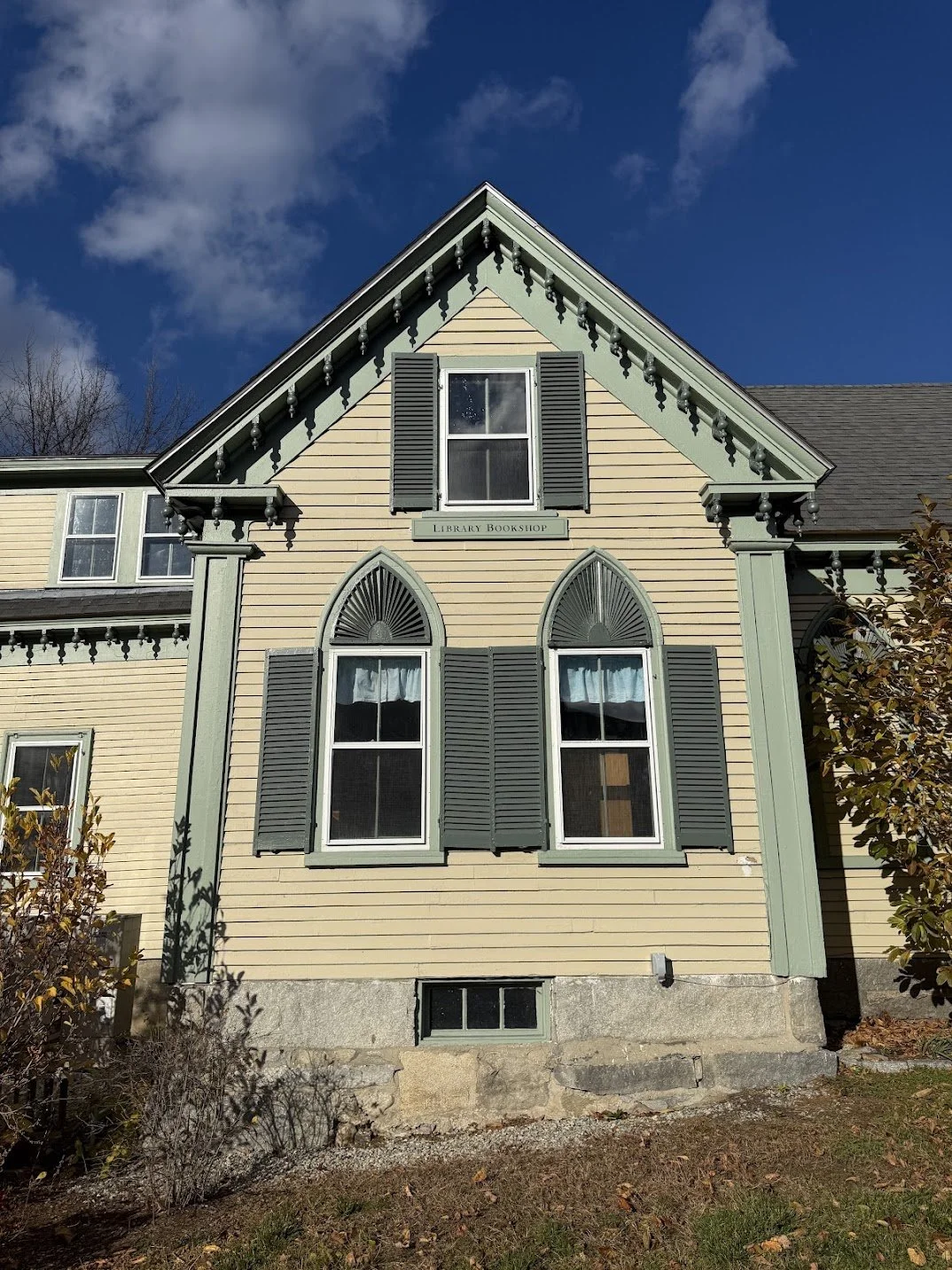
We also saw the library bookstore, which is in a stand-alone antique building off the parking lot. It’s a pretty nice one. Its collection is well-curated with a focus on current fiction and biography. They’re open three days a week and generate about $8,000 per year, a pretty tidy sum.
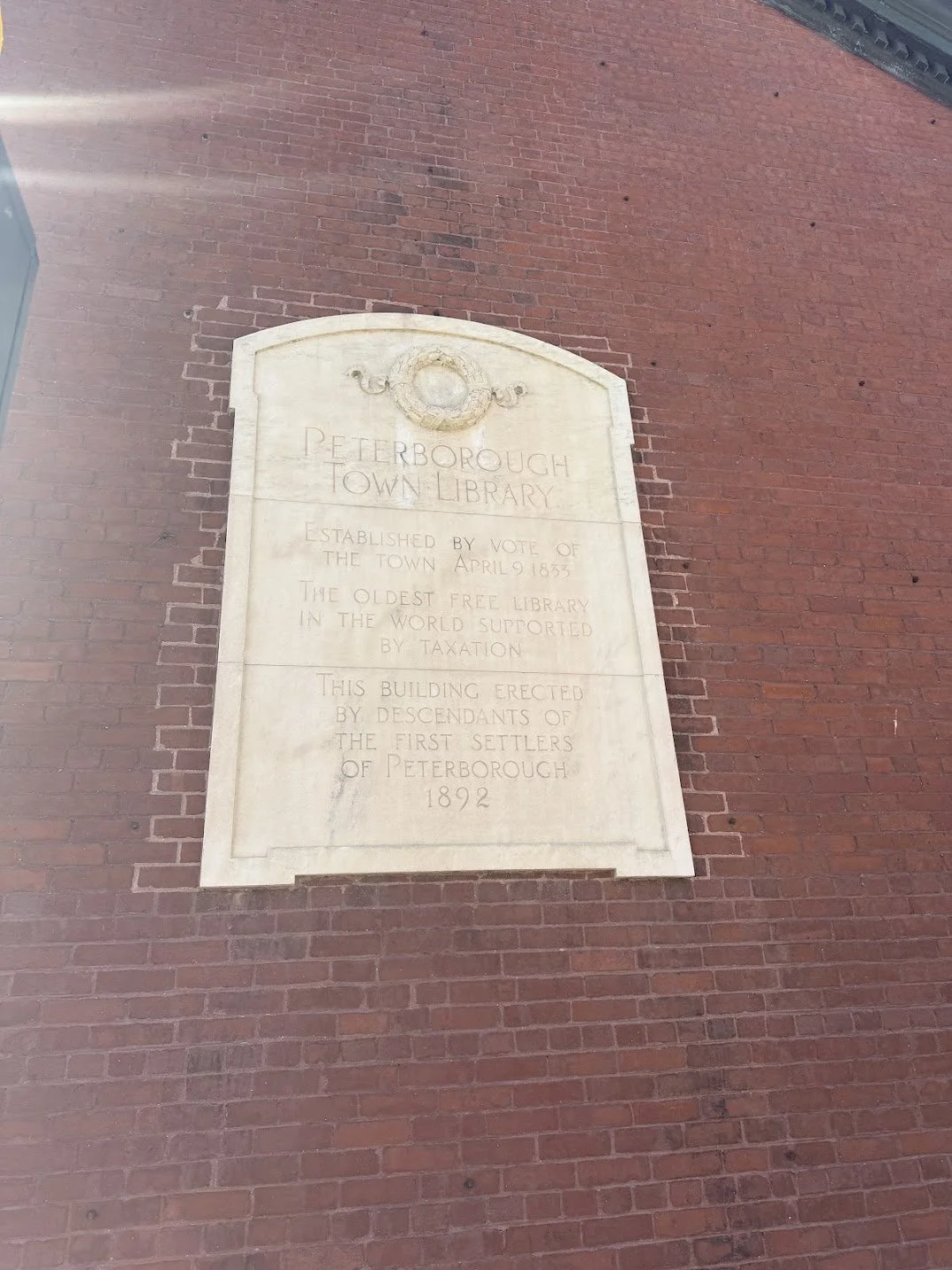
Another notable exterior feature is the large patio beside the river. It includes plenty of seating, which people were using on this crisp fall day. On the side of the library is a plaque celebrating the building's construction in 1892, as well as the 1833 town vote to support the library with public funds.
We entered through an interesting curved foyer. Not only was the porch curved, but so was the glass. It makes quite an impression and will have been critical for maintaining the library’s temperature during cold New England winters.
In the antique section, a reading room is to the left. It is essentially as it was when the library opened 130 years ago. We marveled at the marble fireplace. It’s so striking and uncharacteristic of the period that we were surprised to learn it is original. A pendulum clock is affixed to one wall, and from all around, the faces of past town grandees peer down.
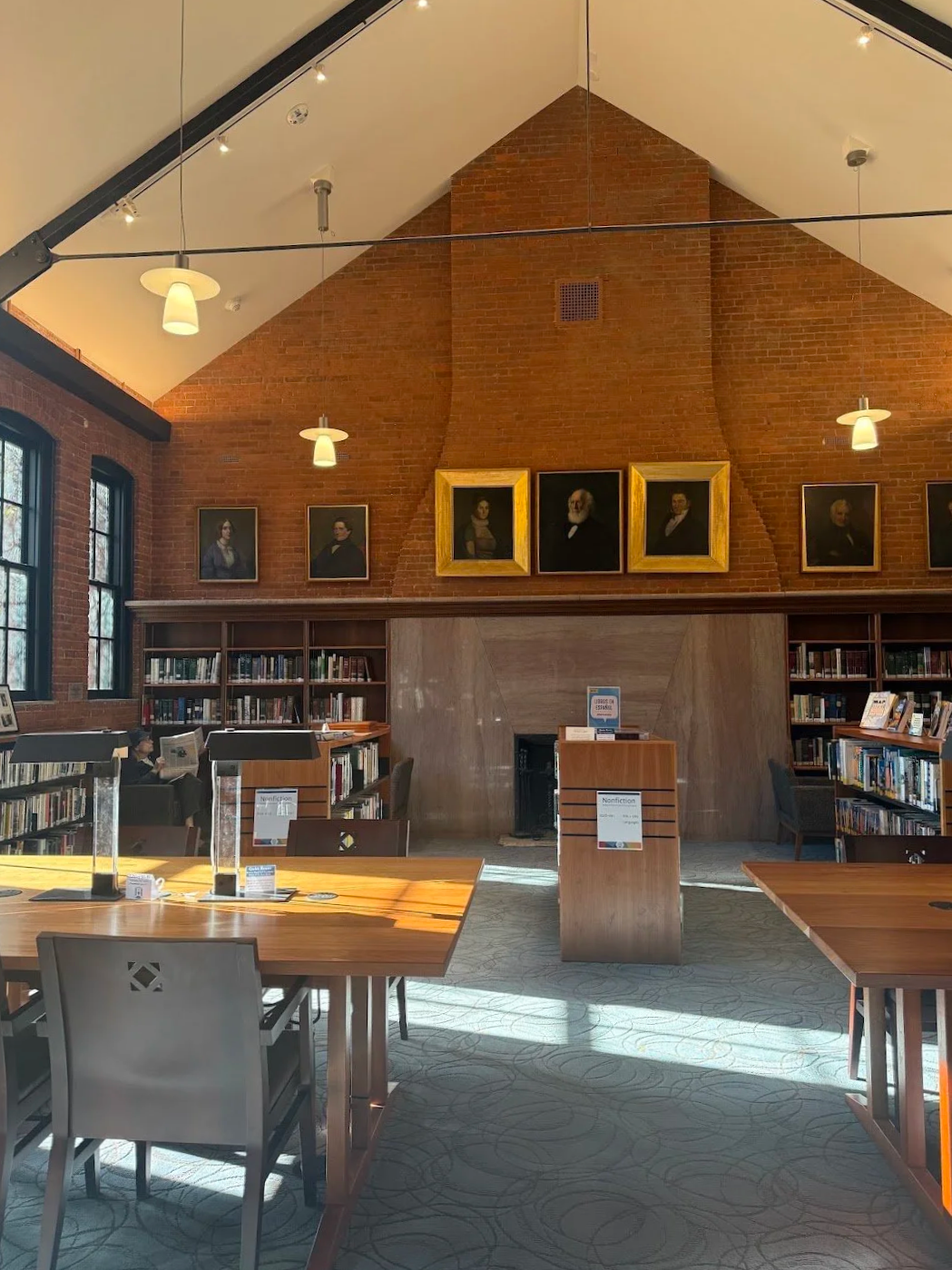
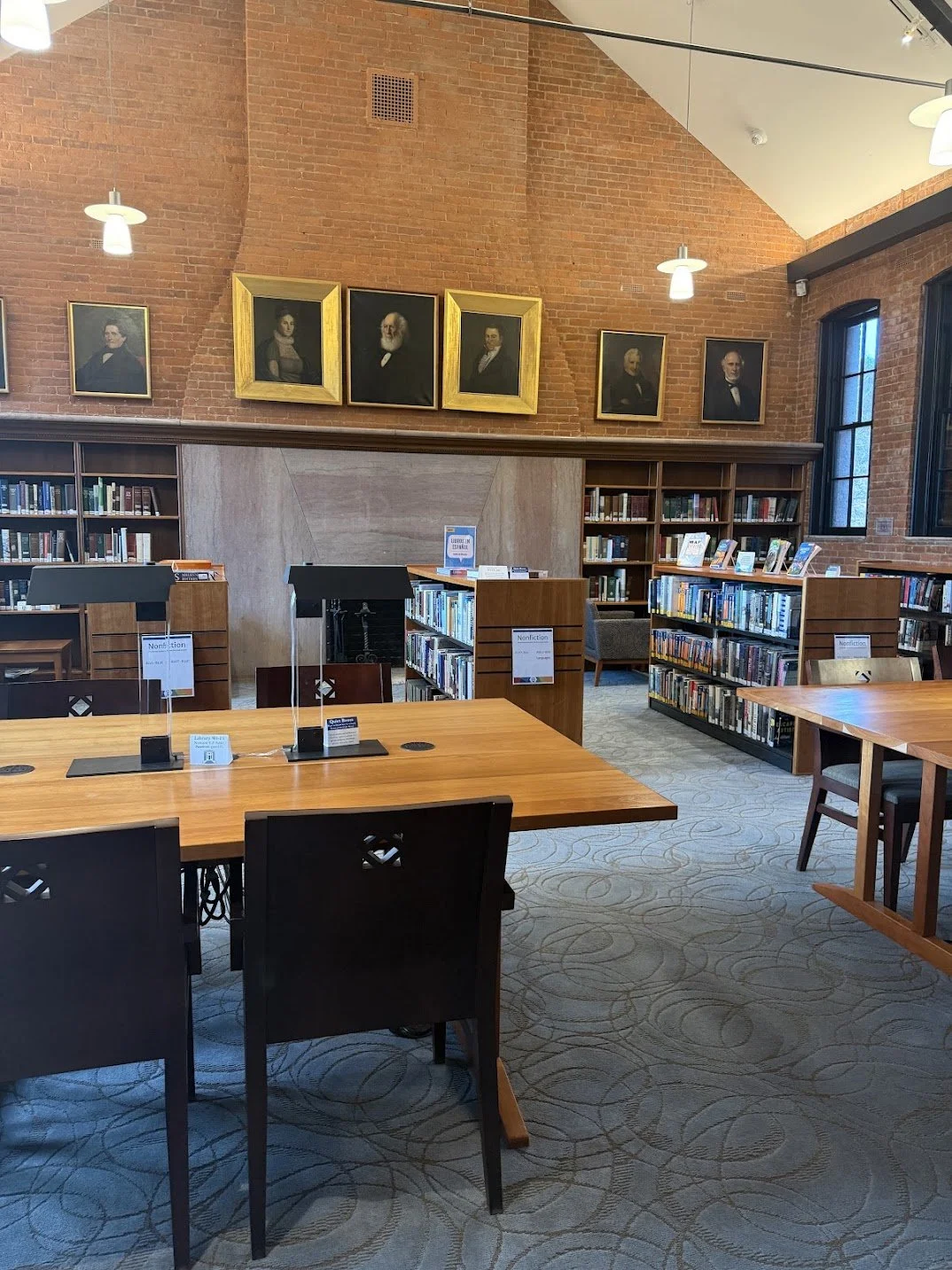
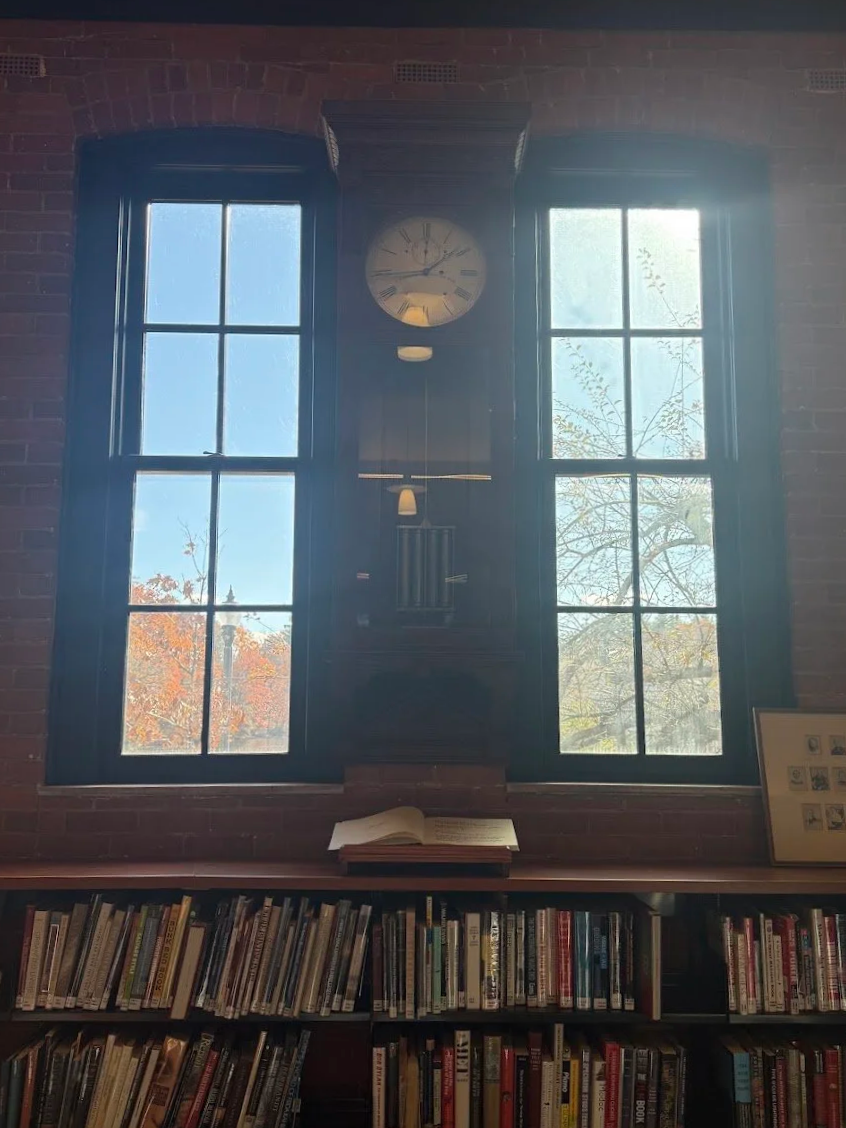
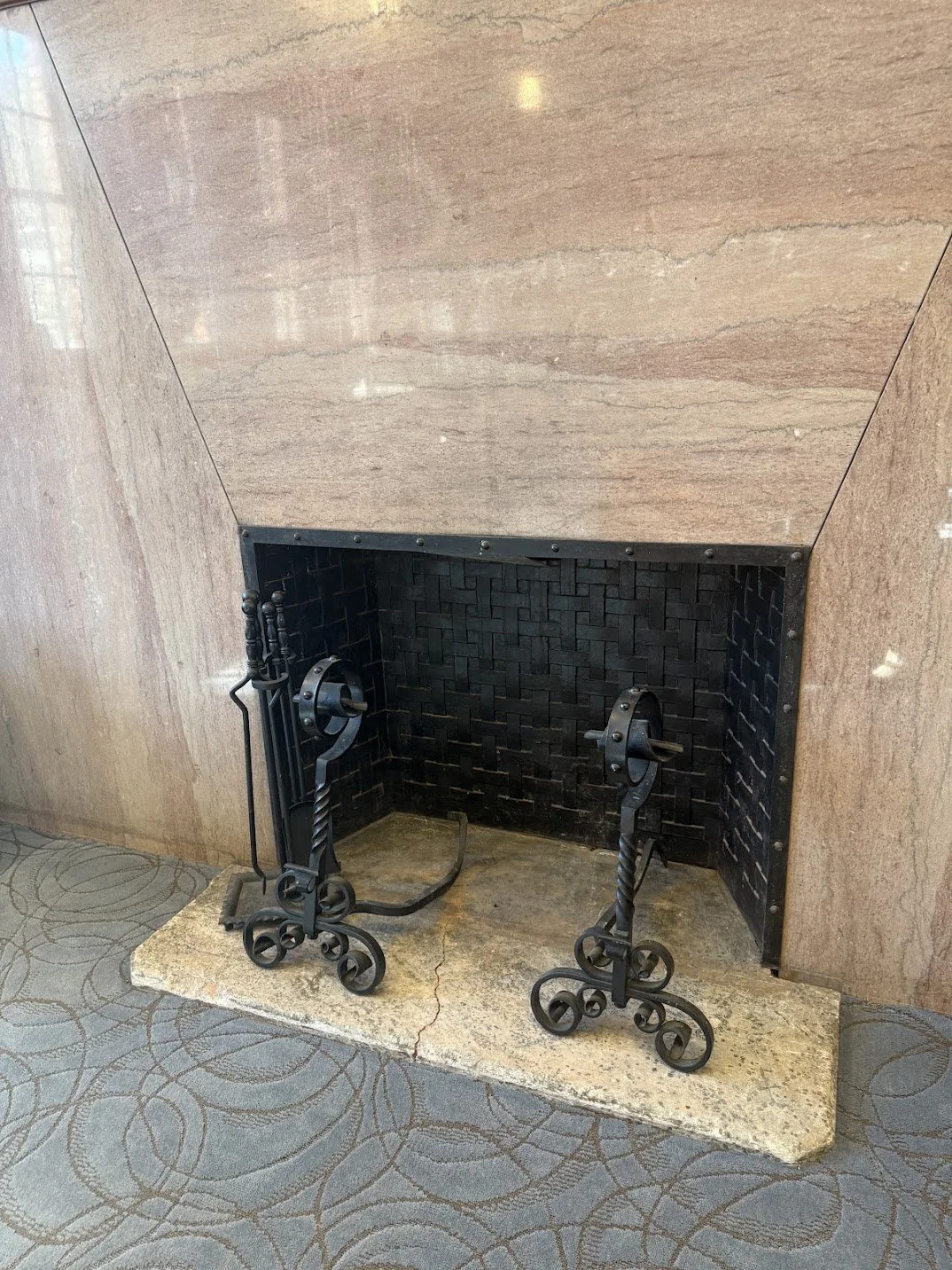
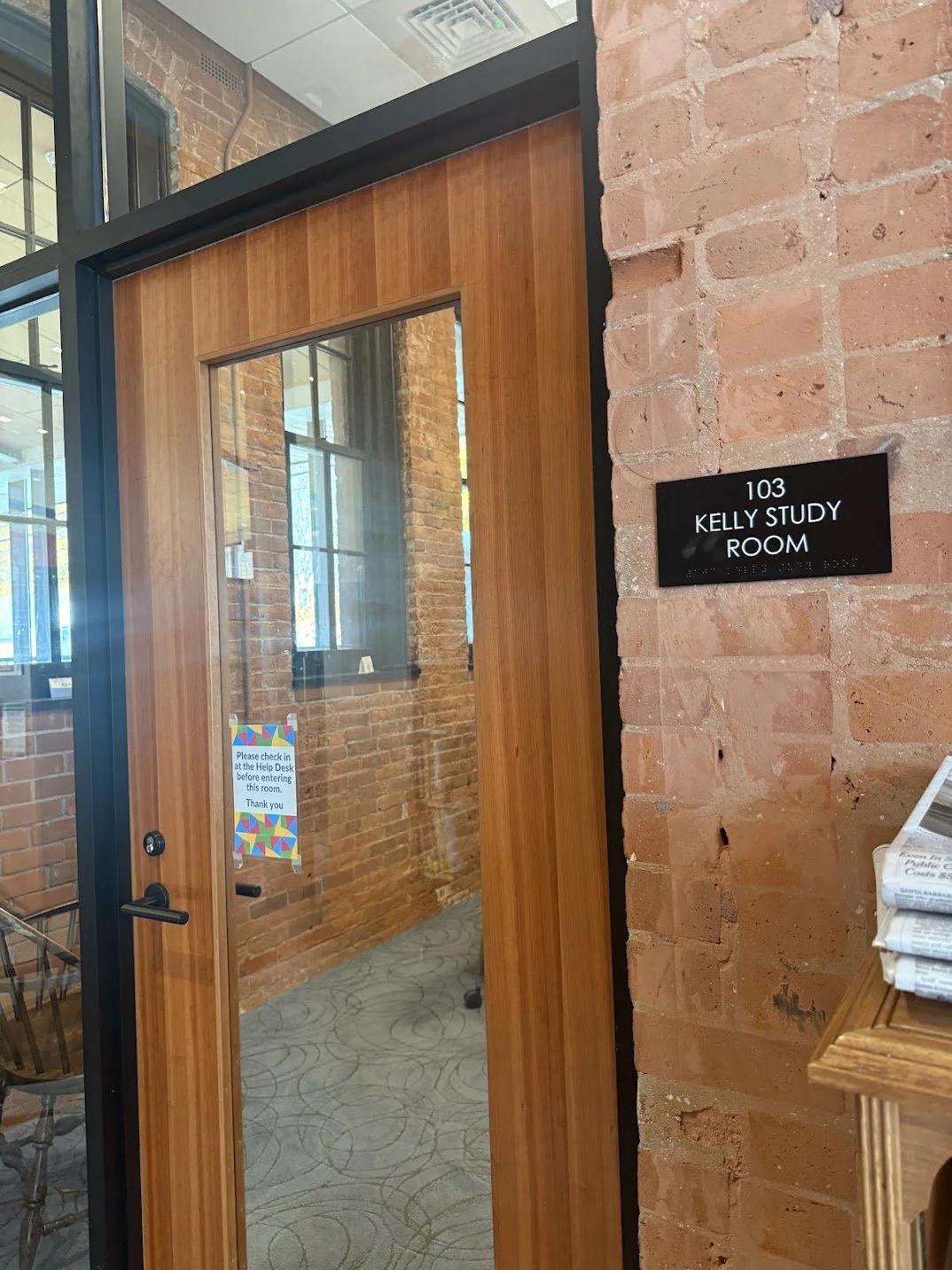
To the right, across from the reading room, is the director’s office and a study room. Lots of work spaces were available throughout the library. One last observation in the antique section: two small doors with no stairs to reach them. We learned that they had once been vaults for the town and library.
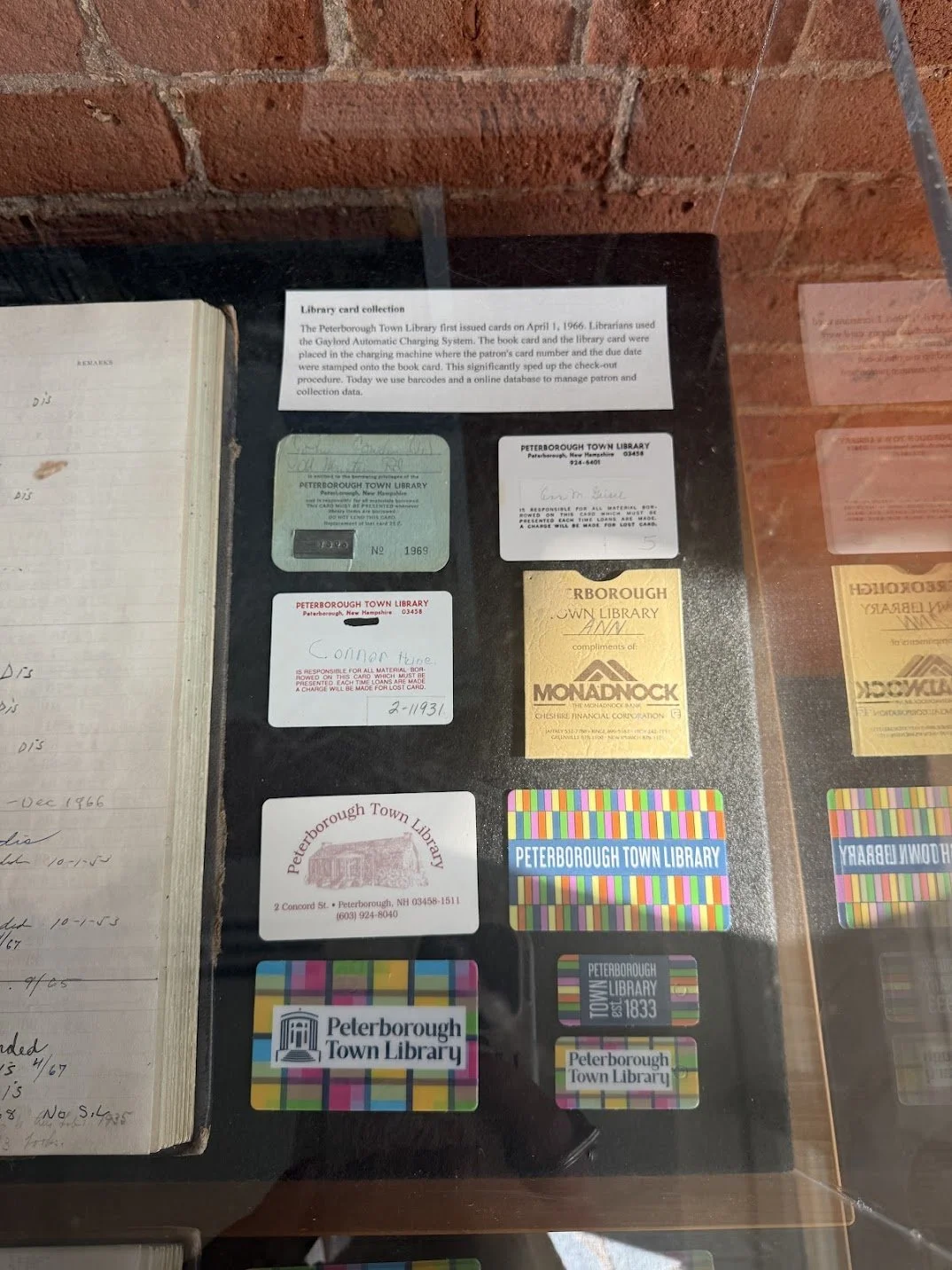
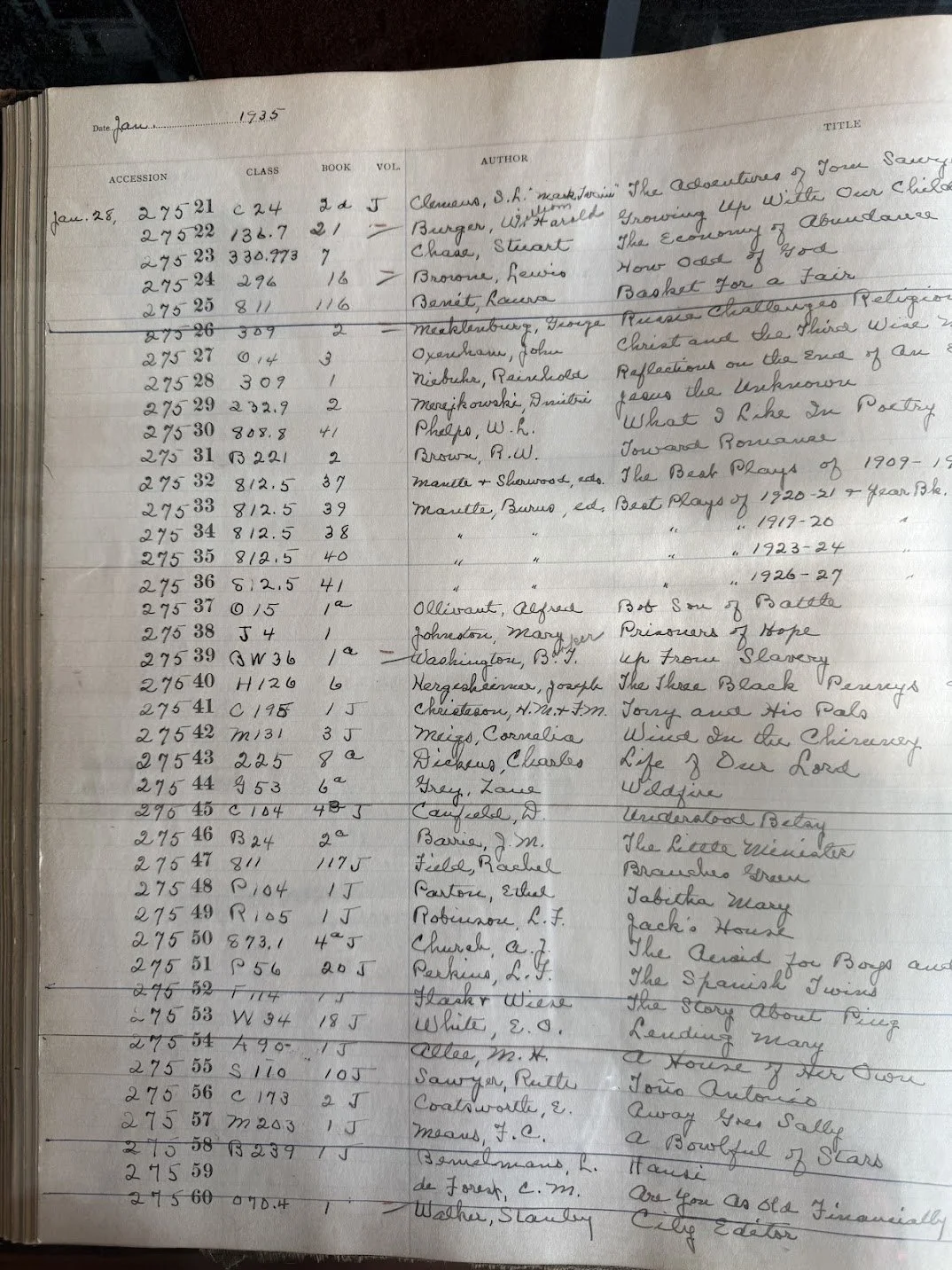
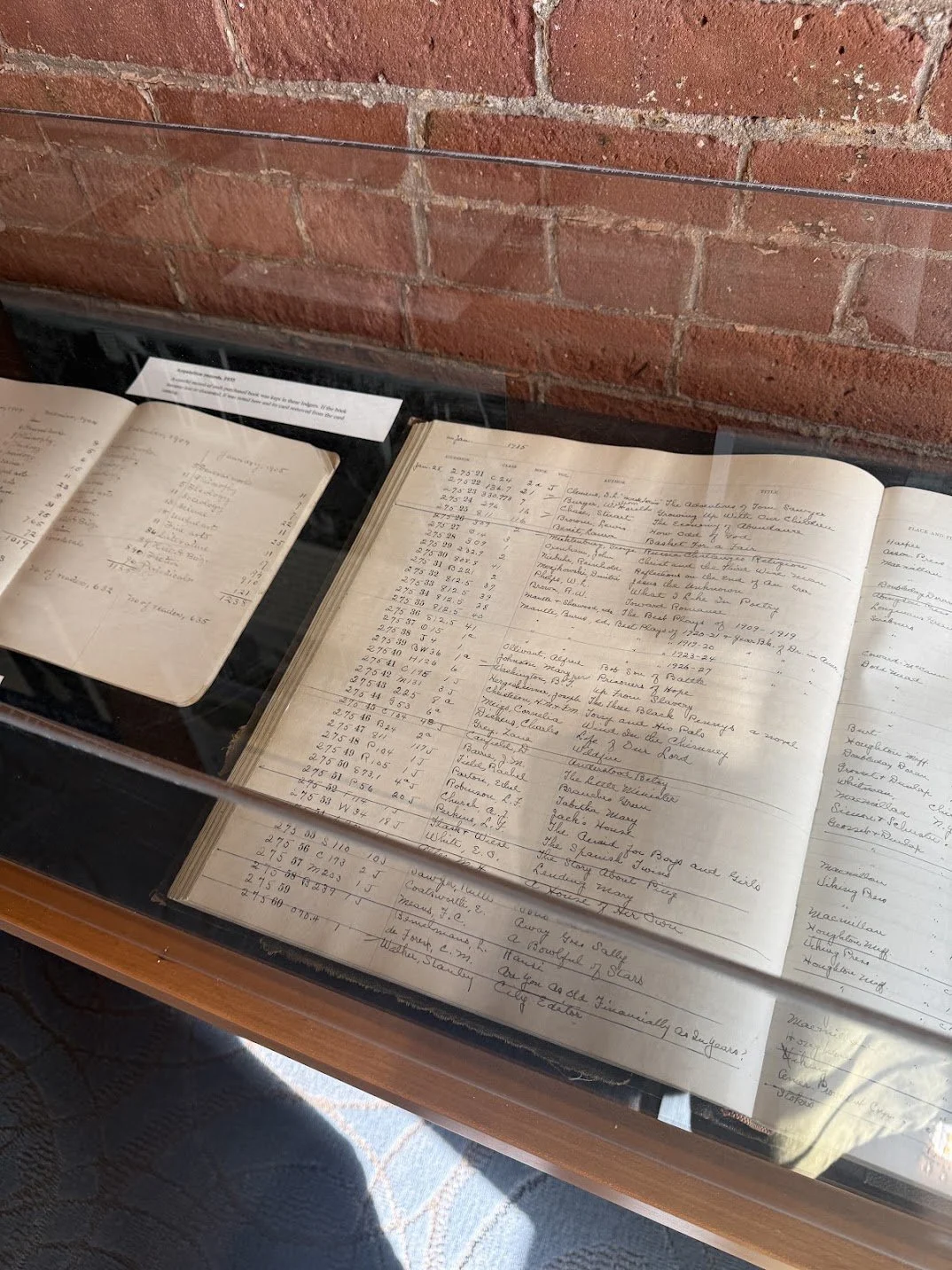
Another interesting thing in this area was the collection of old library cards. It also included a list of residents from the library's early days. Back then, the library sent each household their own handwritten catalog of the library’s collection.
Passing from the antique into the modern 2021 addition, we immediately noticed the differences - as well as some similarities. Johns Hopkins Morison designed the original library. He also served as an engineer on the Panama Canal. The modern section, by Ann Beha Architects, borrows some of the Canal's mechanical motifs in its design.
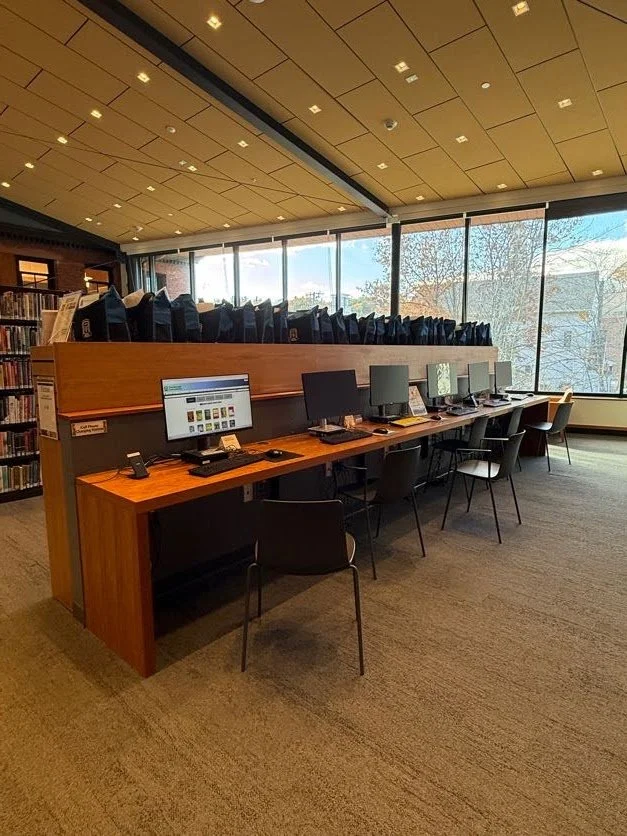
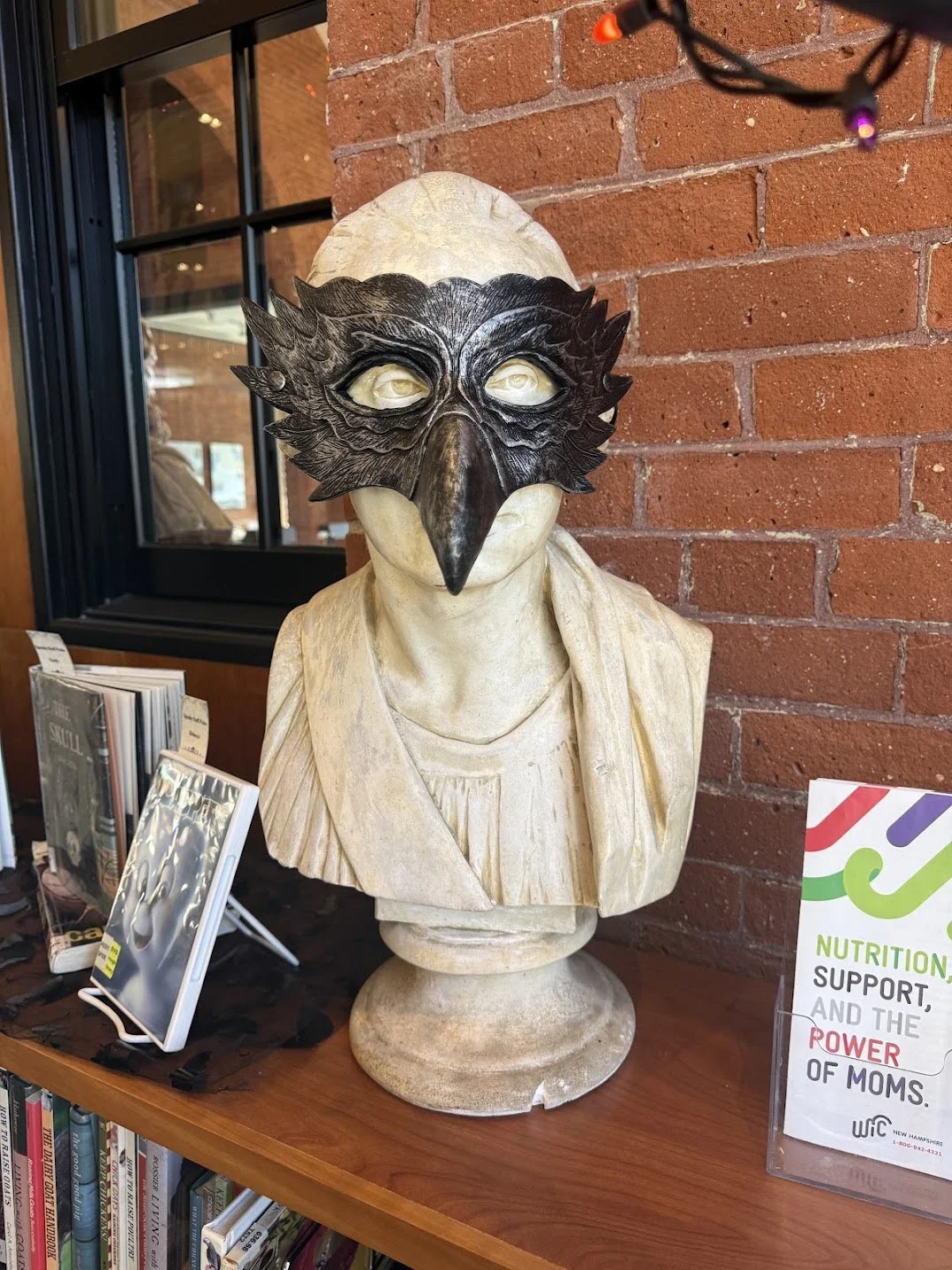
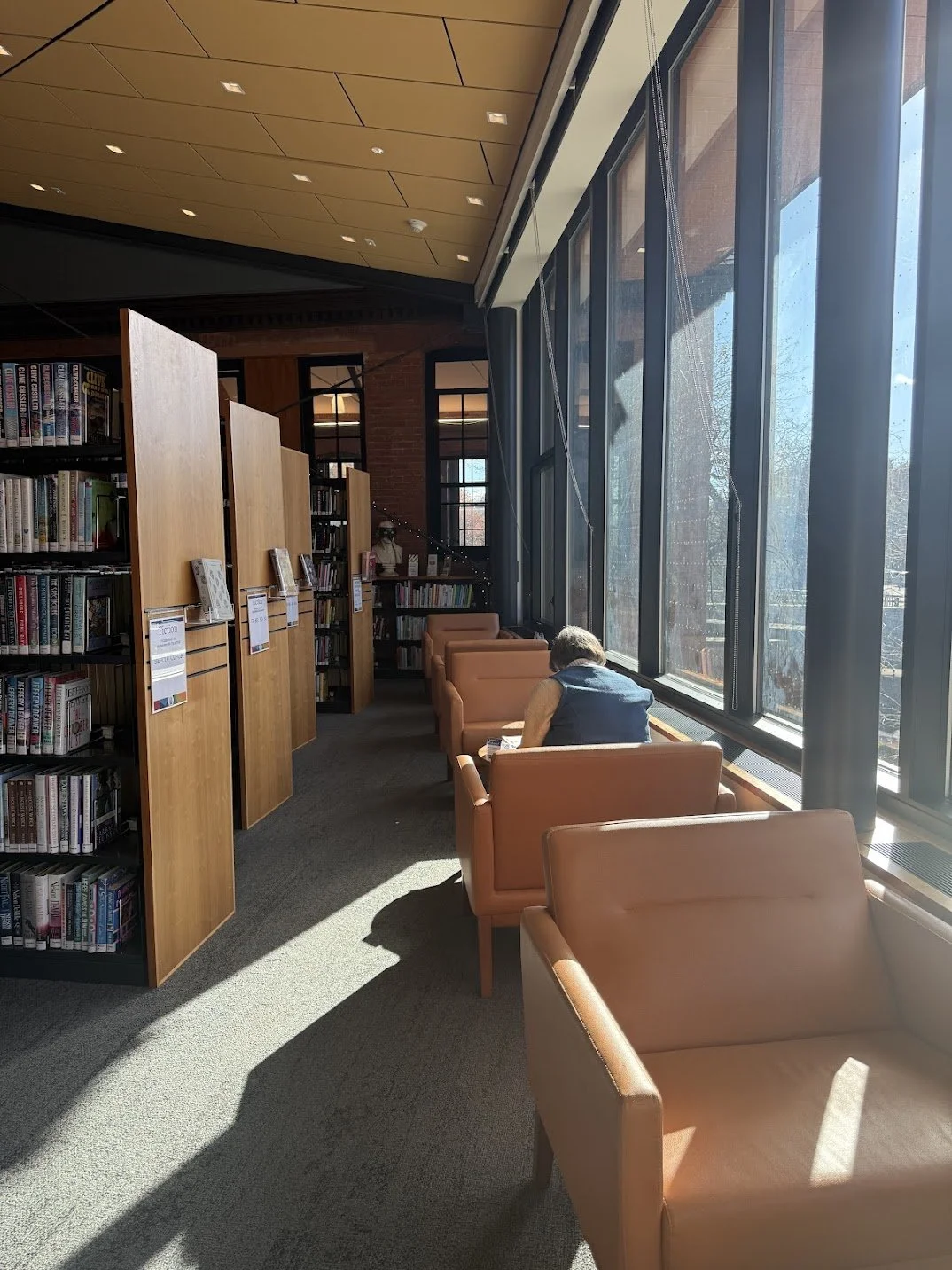
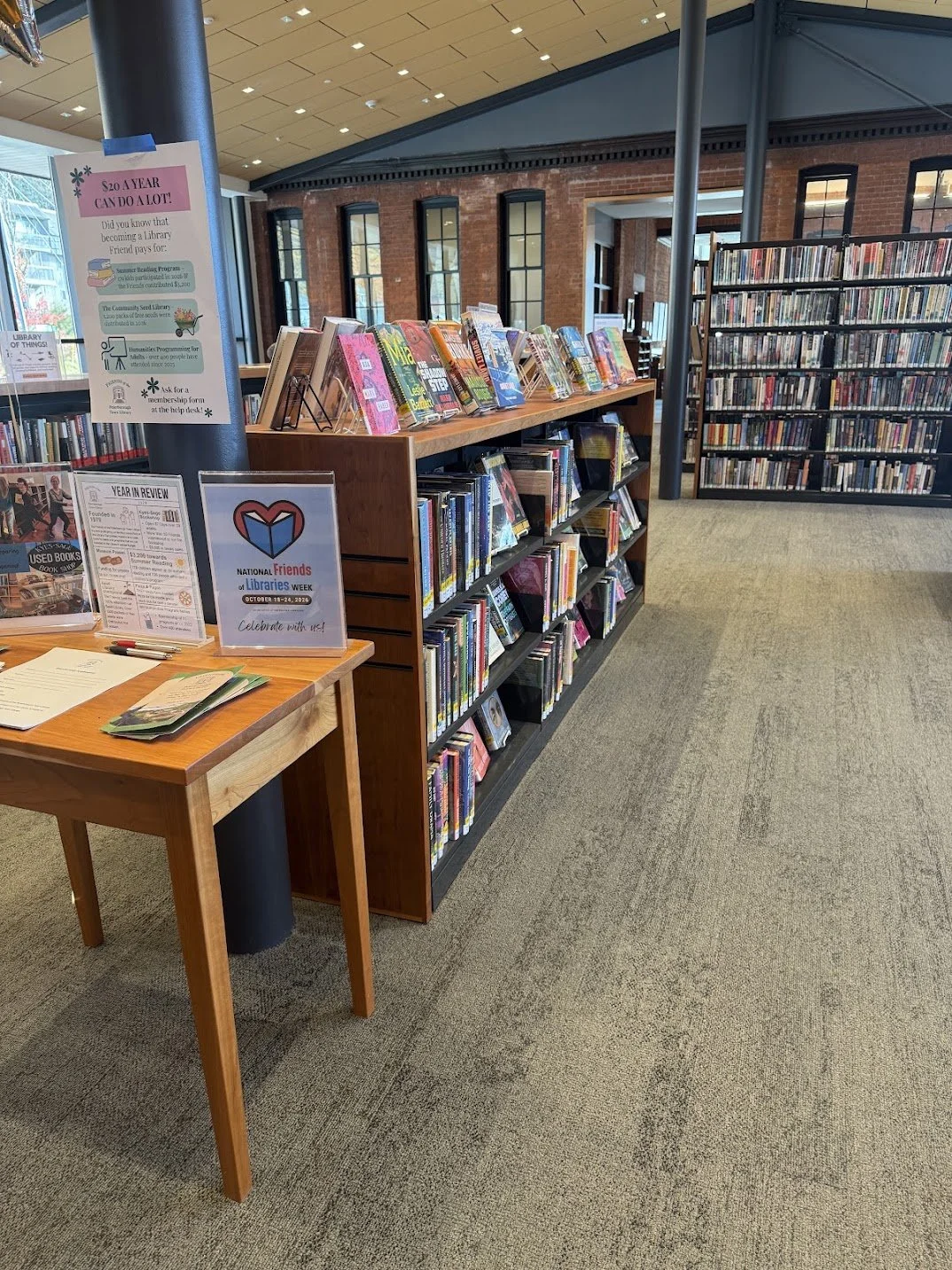
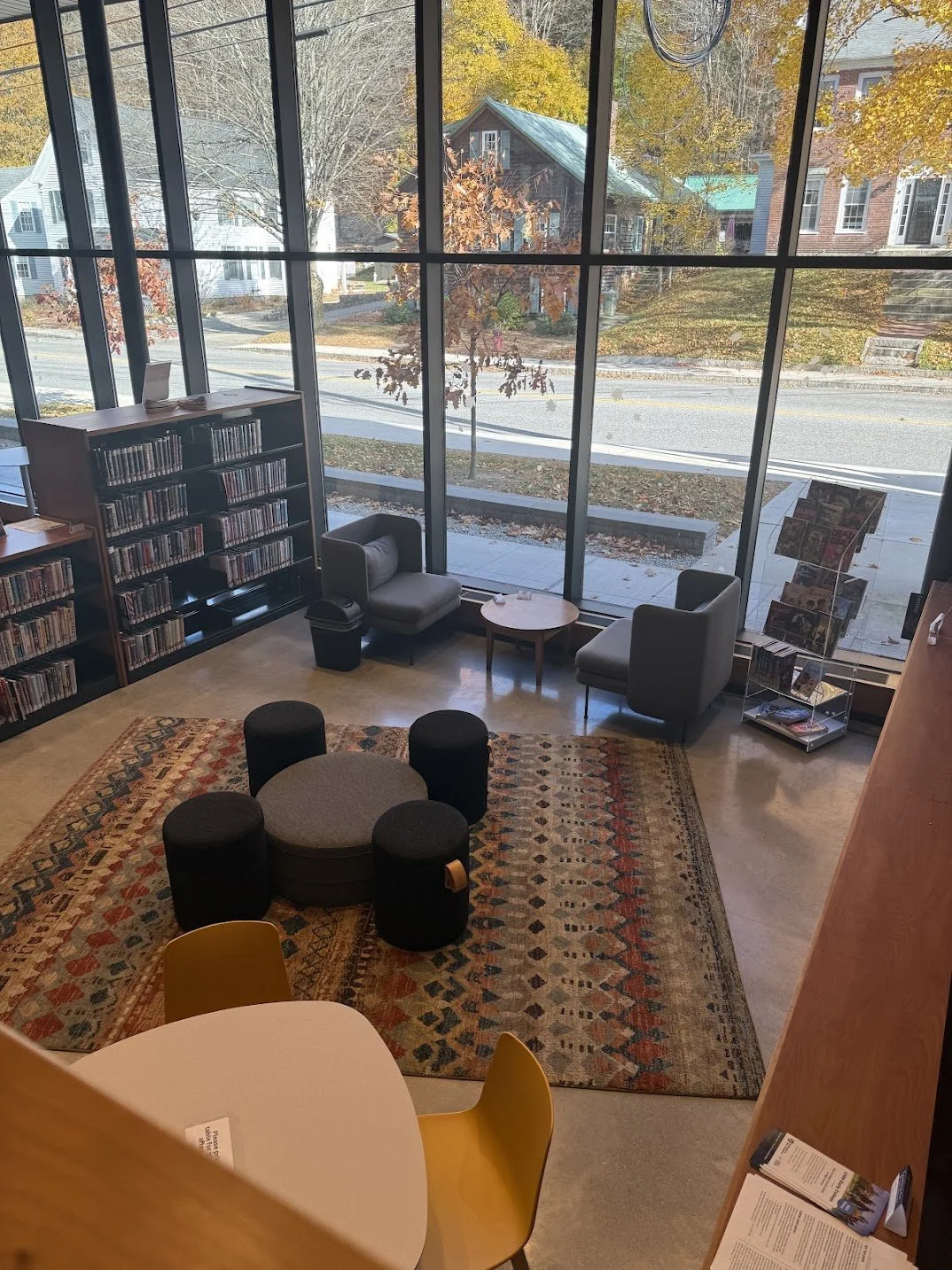
The main part of the library’s collection is on the building's upper level. Large windows offer views of the river, and the high ceiling creates a real sense of openness. It’s a nice effect. The main floor overlooks the lower level, where YA and large print are located. Exploring those sections, we were struck by the variety of furniture - there was a space and seat for every taste.
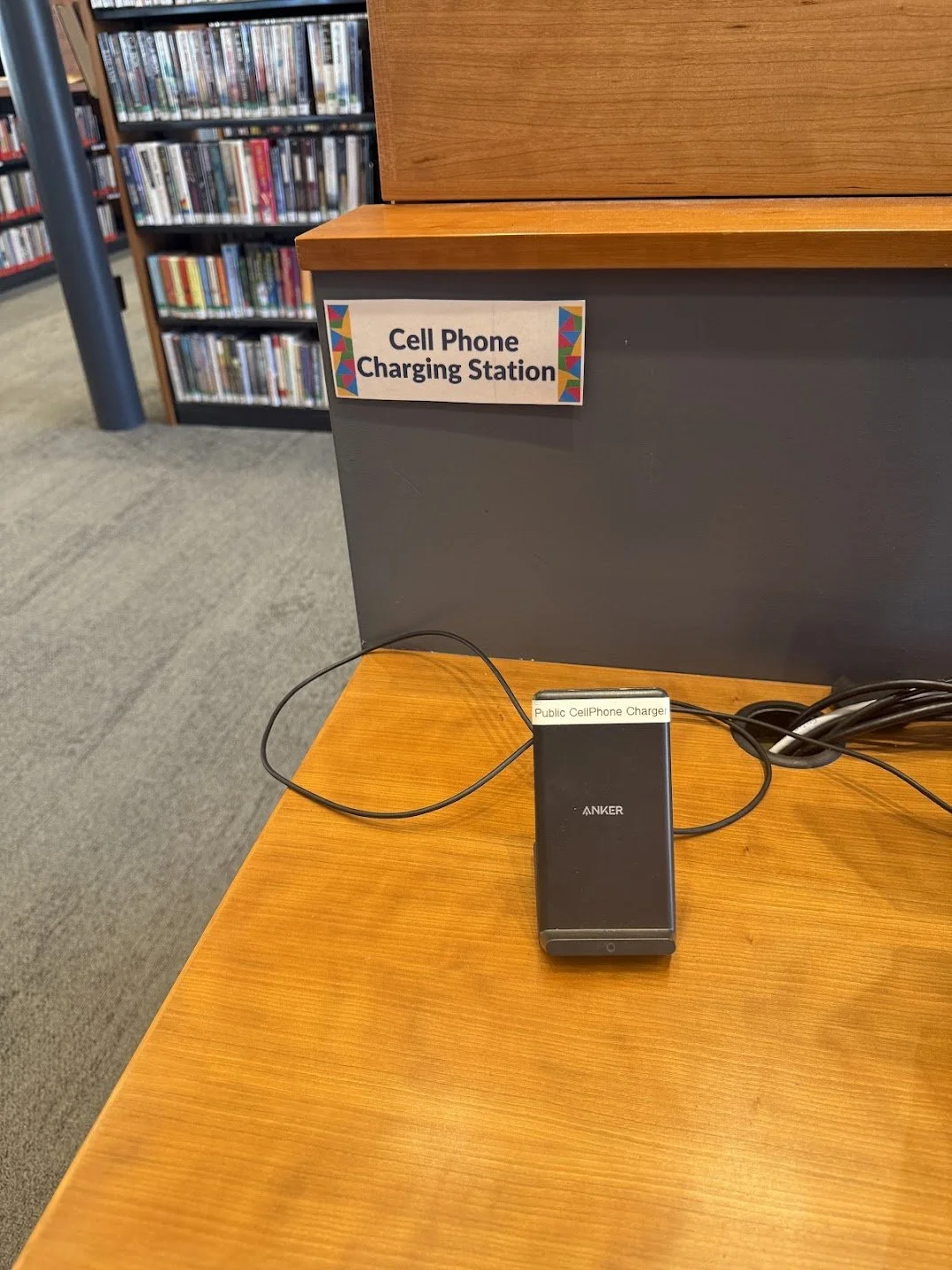
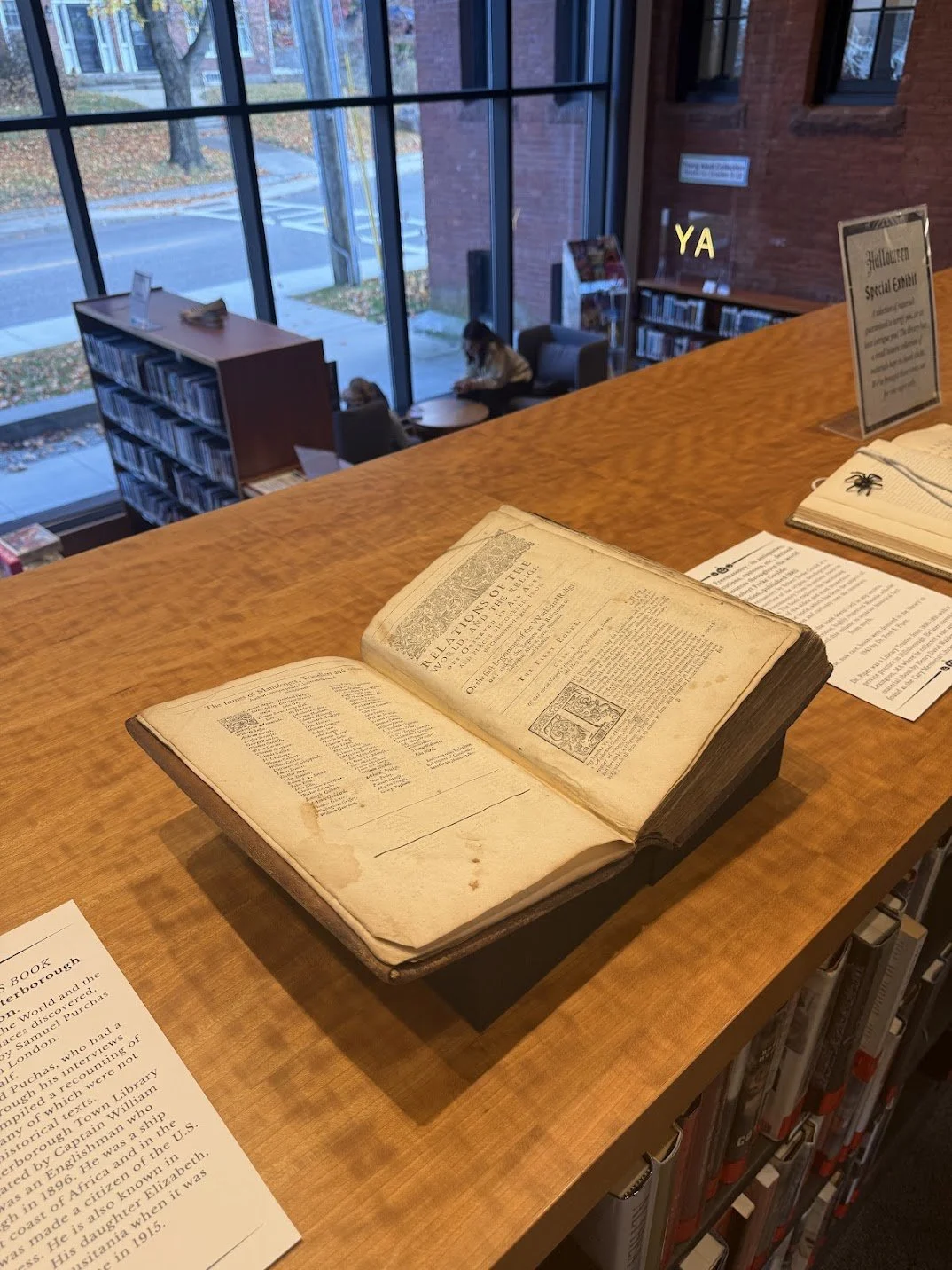
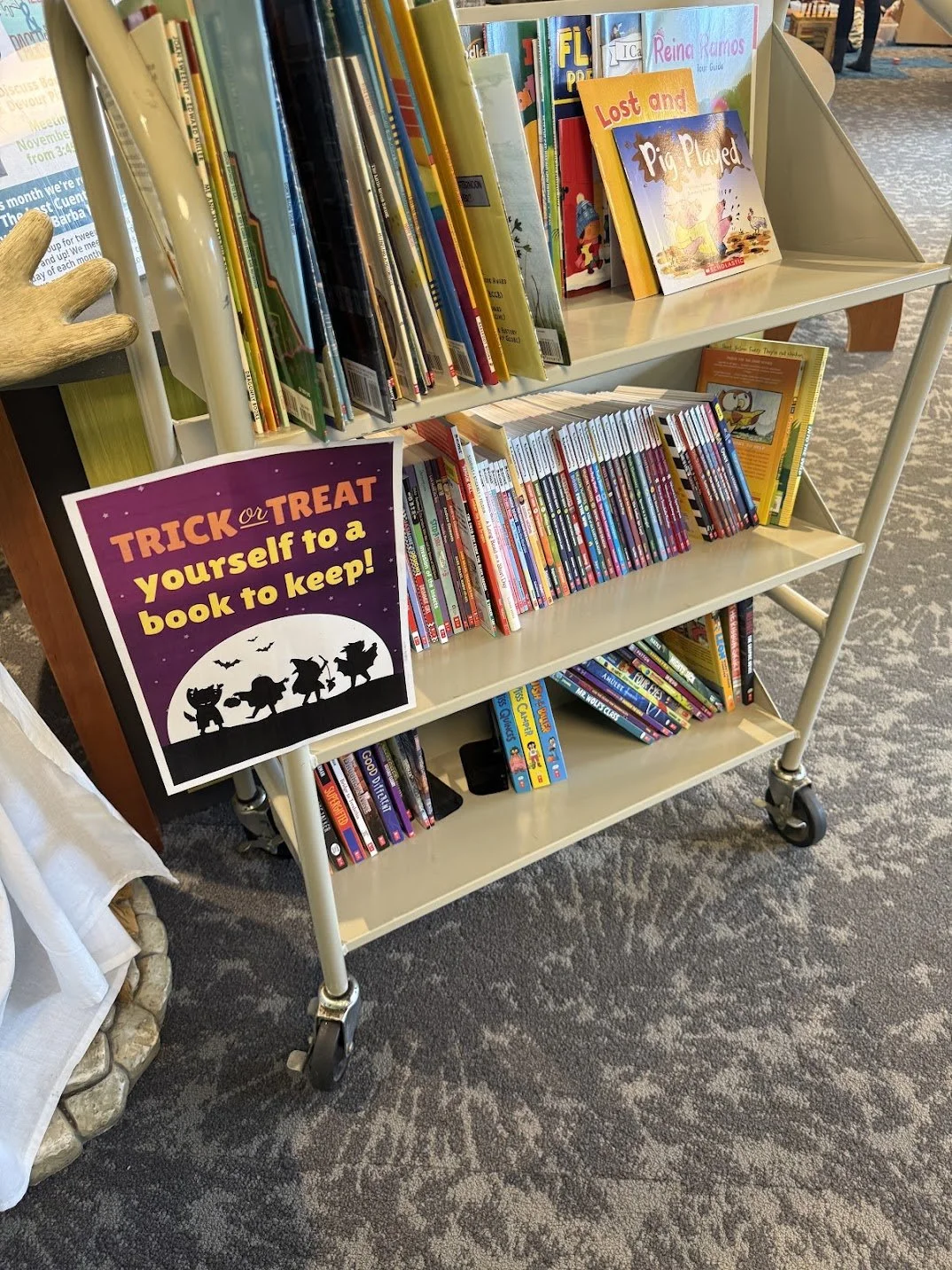
Let’s not get ahead of ourselves. Still on the main level, we saw plenty of public technology, the service desk, and a great Halloween display - including the library’s oldest book, a 1617 volume of sailors' stories. So cool to see!
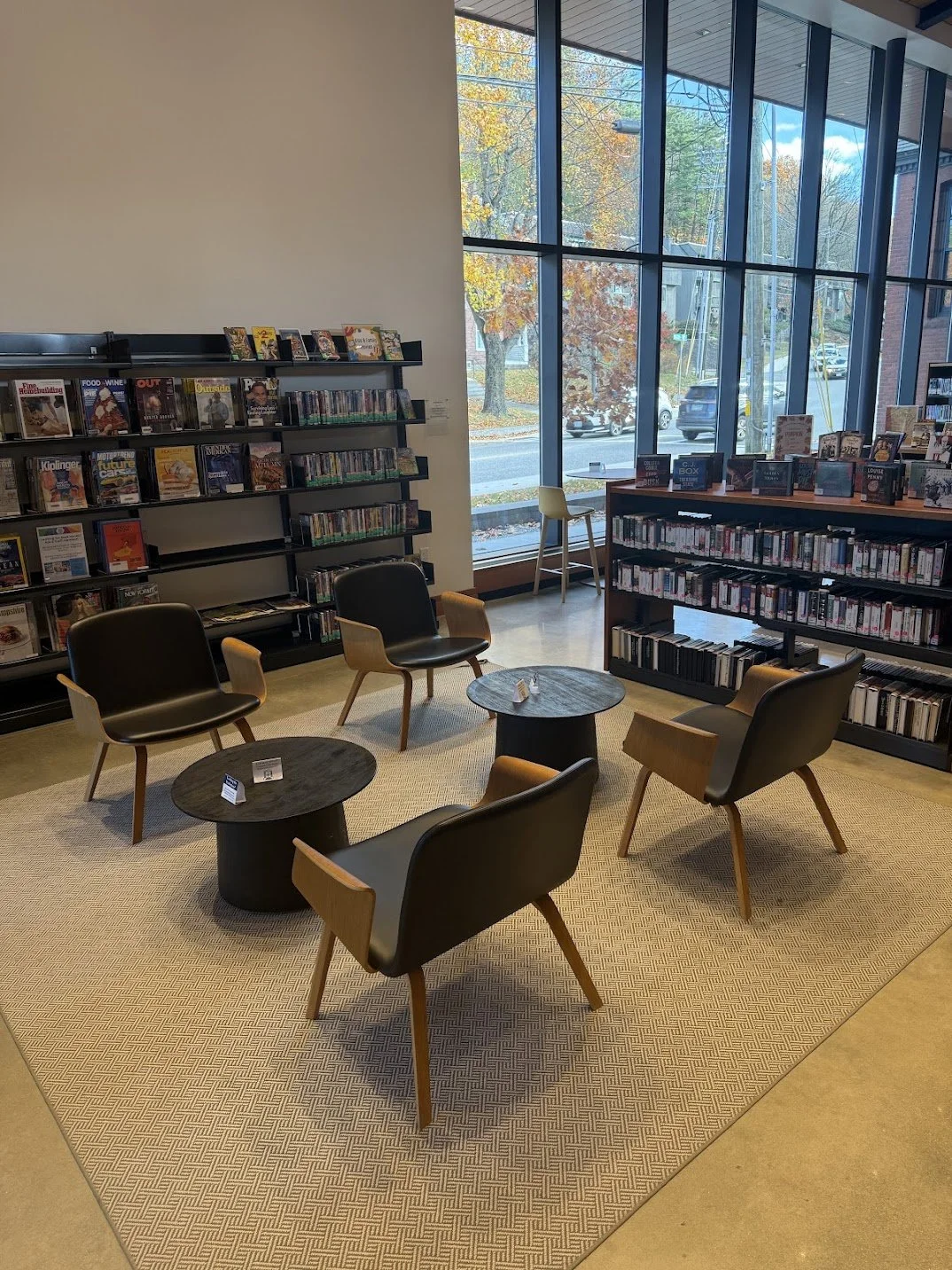
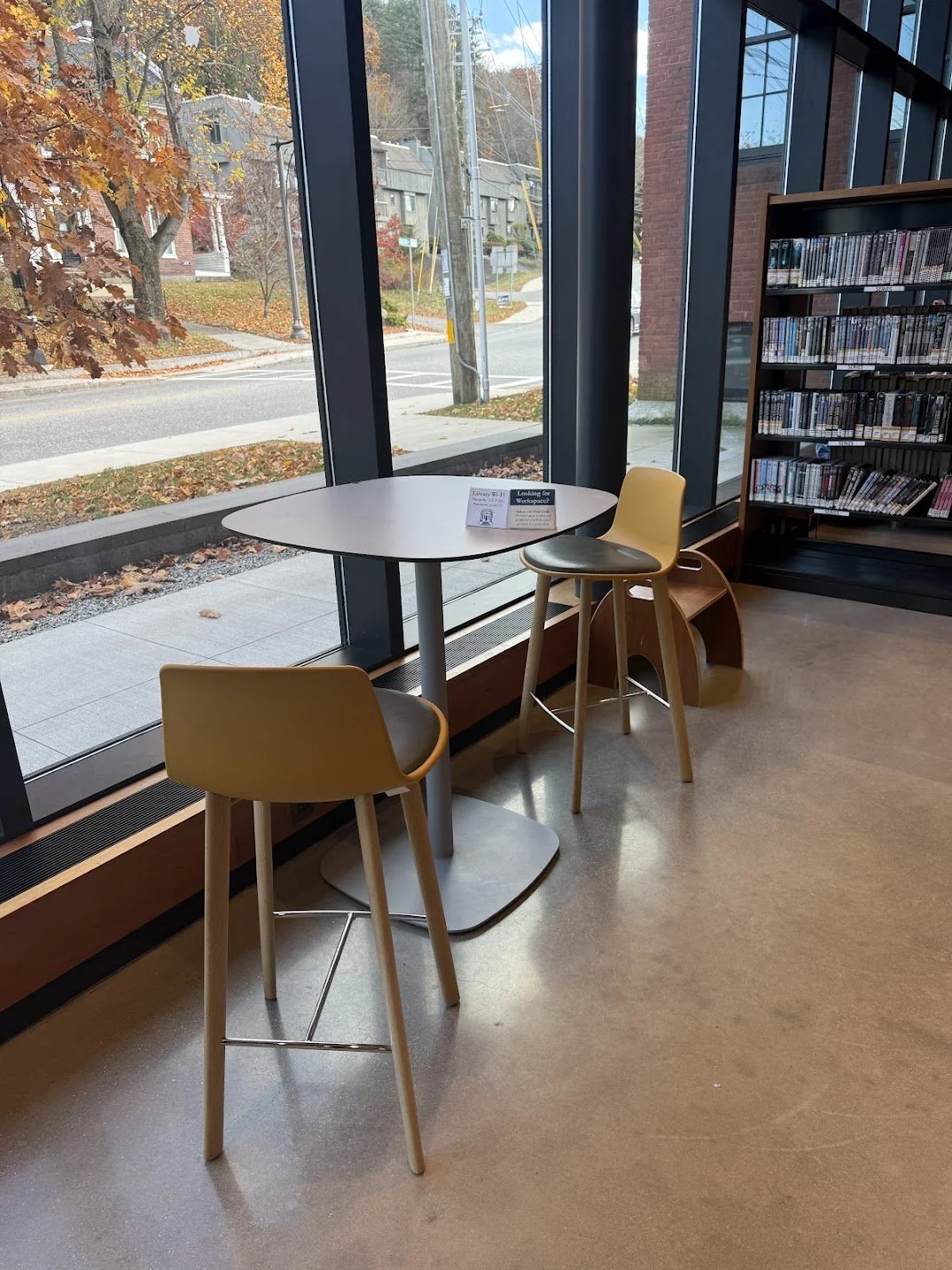
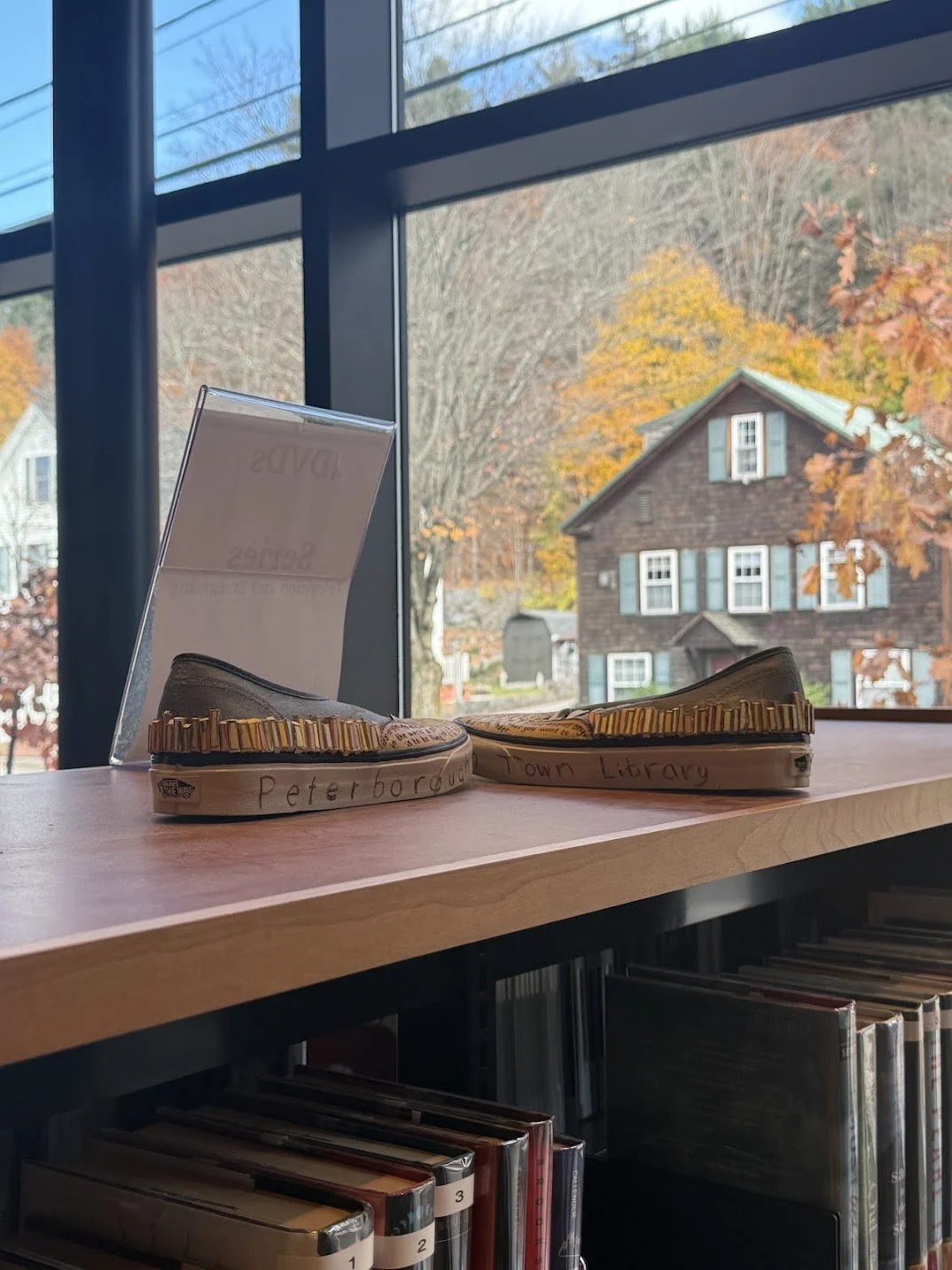
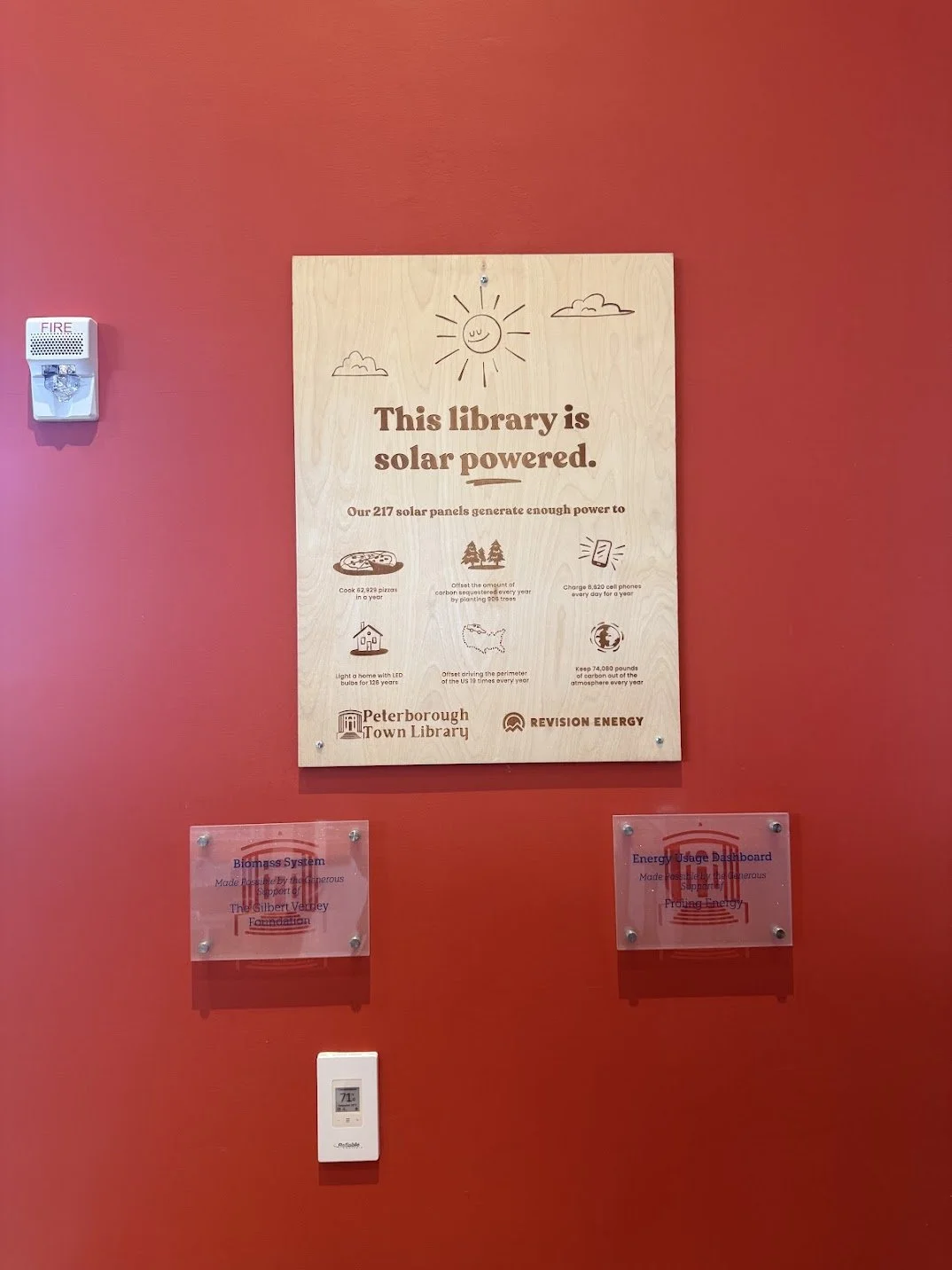
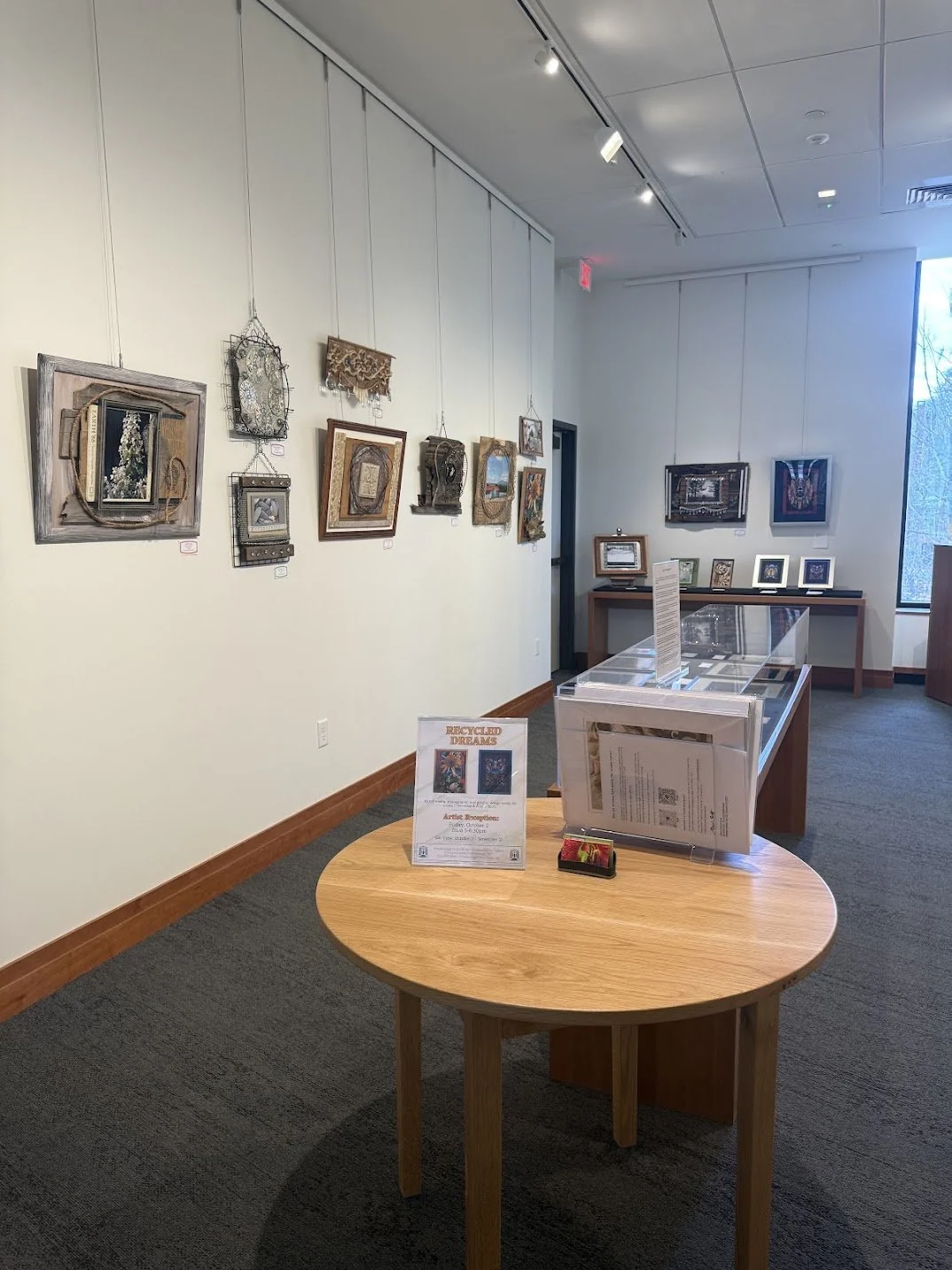
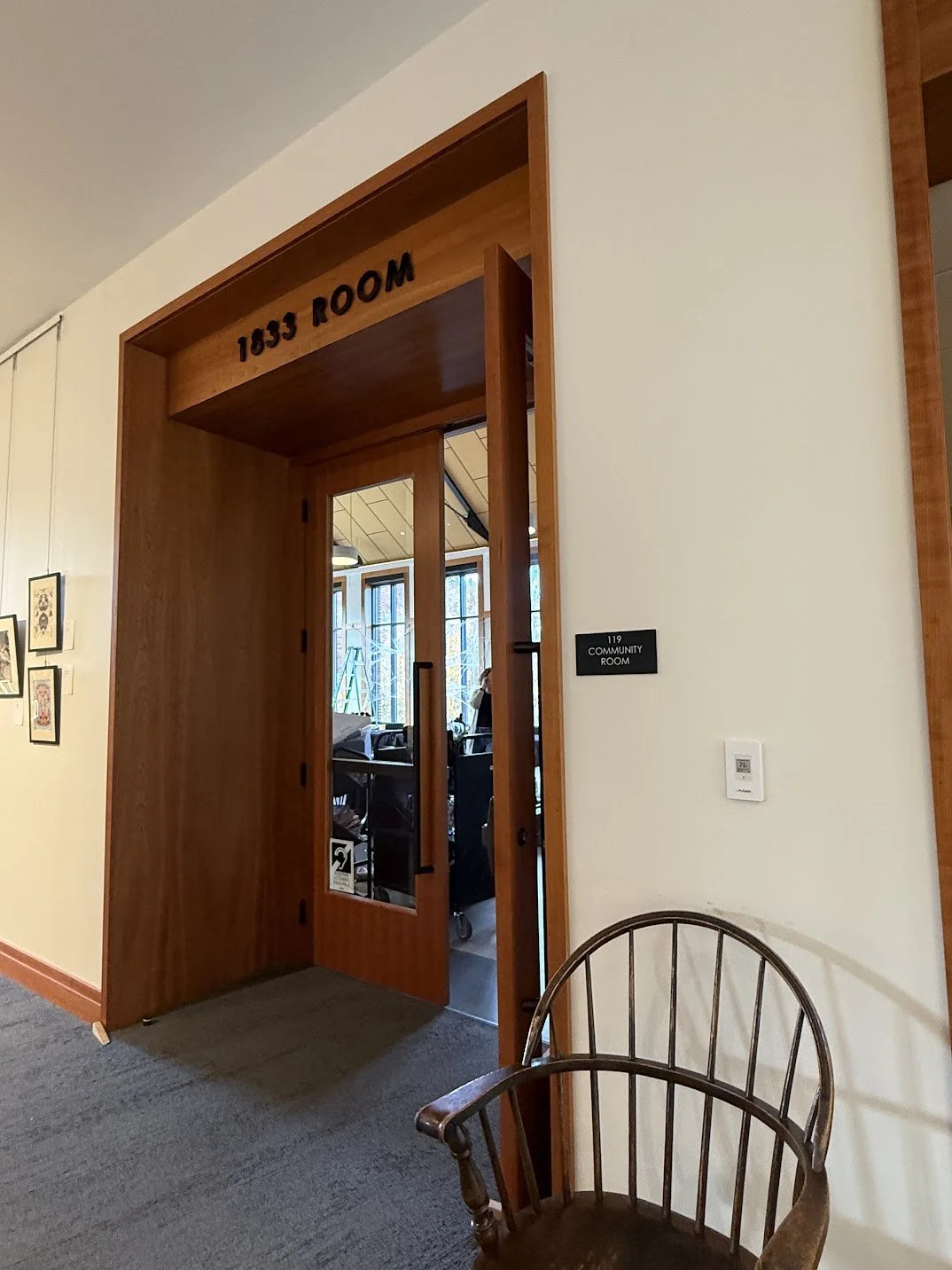
Behind the service desk are a nice art gallery, the 1833 Room (used for events and programs), and a second program space. We really liked that the event space is available after hours.
Chatting at the service desk, we met Linda, a technical services librarian, and Corrine, the library director. Both were in costume for the holiday. Director Corrine told us her favorite thing about the library was how busy it is. We saw that for ourselves. We’ve seen many larger libraries with far less traffic.
We’ve mentioned the number of spaces and variety of furniture. It’s definitely a library built around people and their needs. That’s actually one of the things Corrine is proudest of - they thought about the things the community needed and designed spaces for them to do those things.
As busy as the library is, Corrine still wishes people knew all of the resources and services the library provides. This is a constant refrain, regardless of the community's or the library's size. Libraries need to do better at tooting their own horns. That makes outreach and marketing librarians so critical, but so often overlooked.
Corrine has been with the library for sixteen years and was intimately involved with the expansion. The one thing she wishes they’d done differently is the size of the HVAC vents in the program rooms. It’s a seemingly small detail, but we can attest that the sound in small spaces is noticeable.
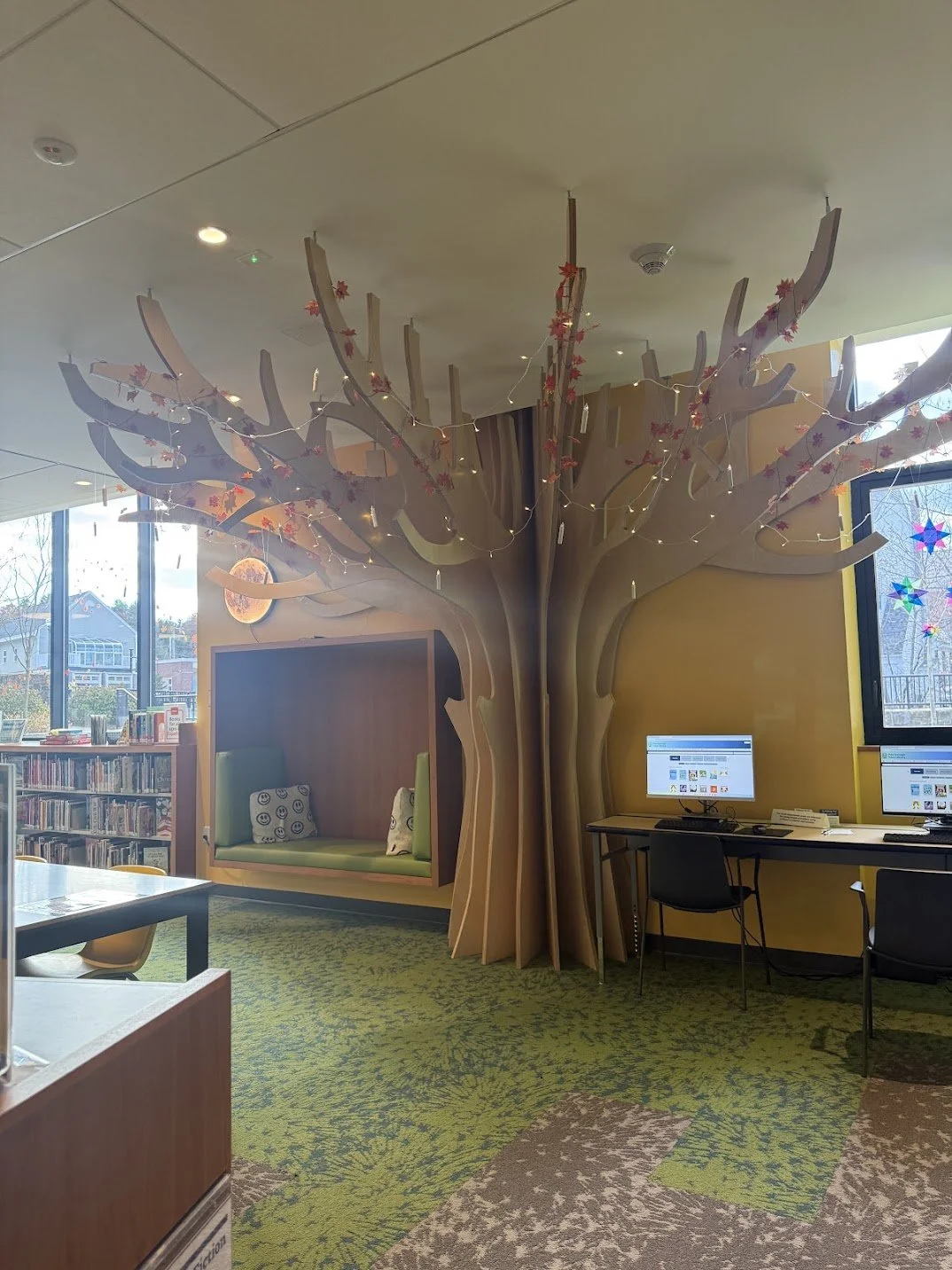
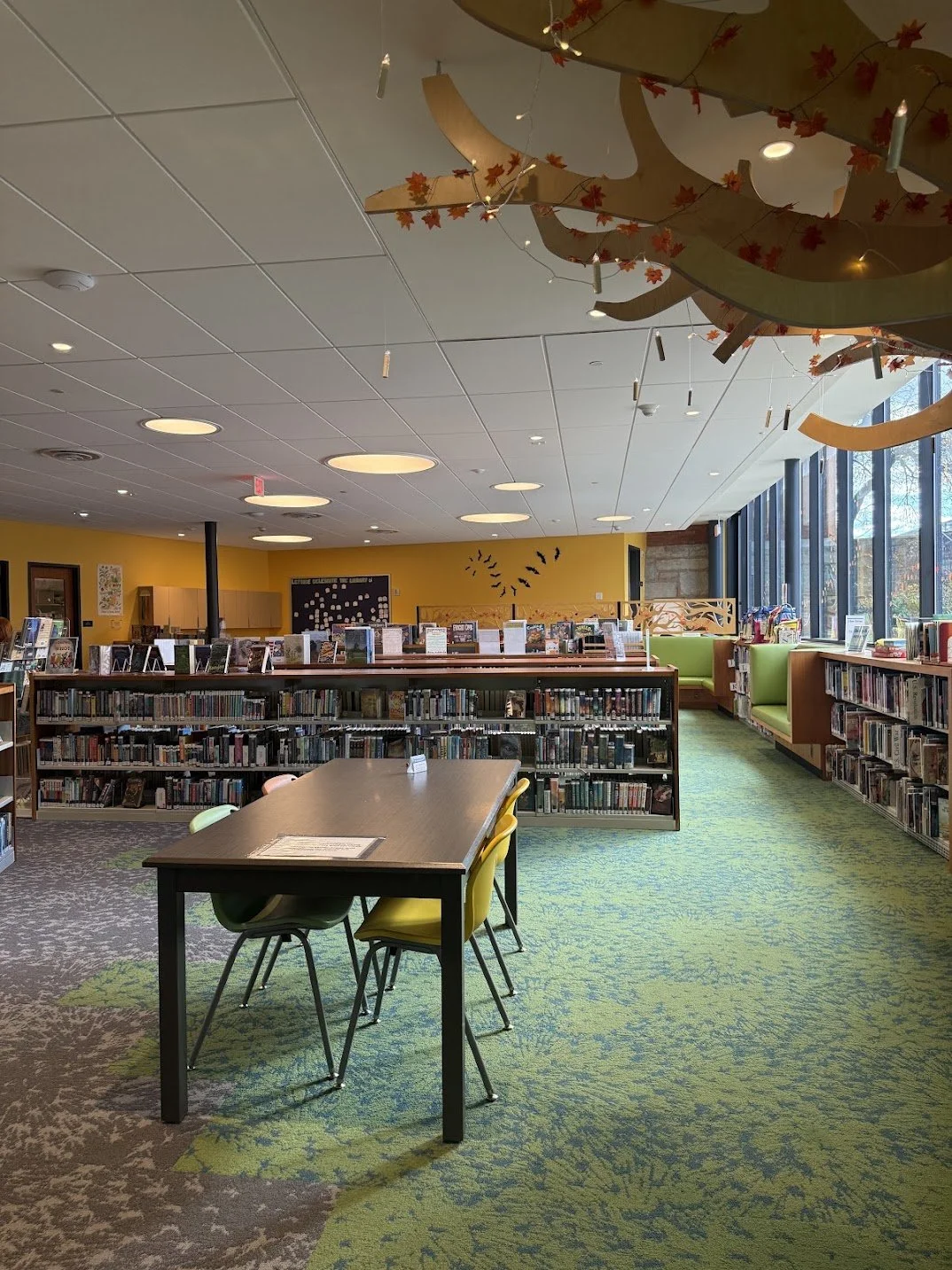
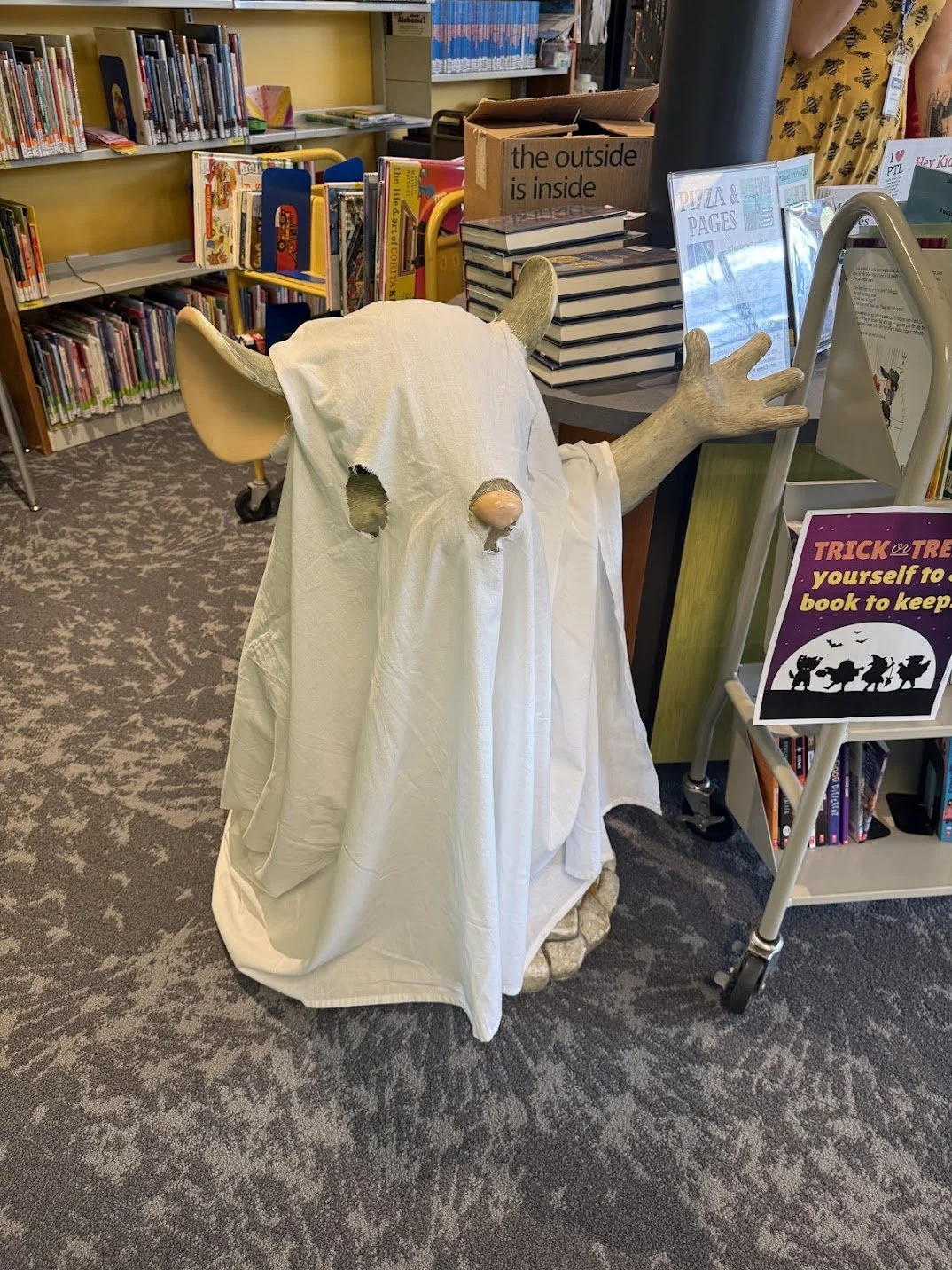
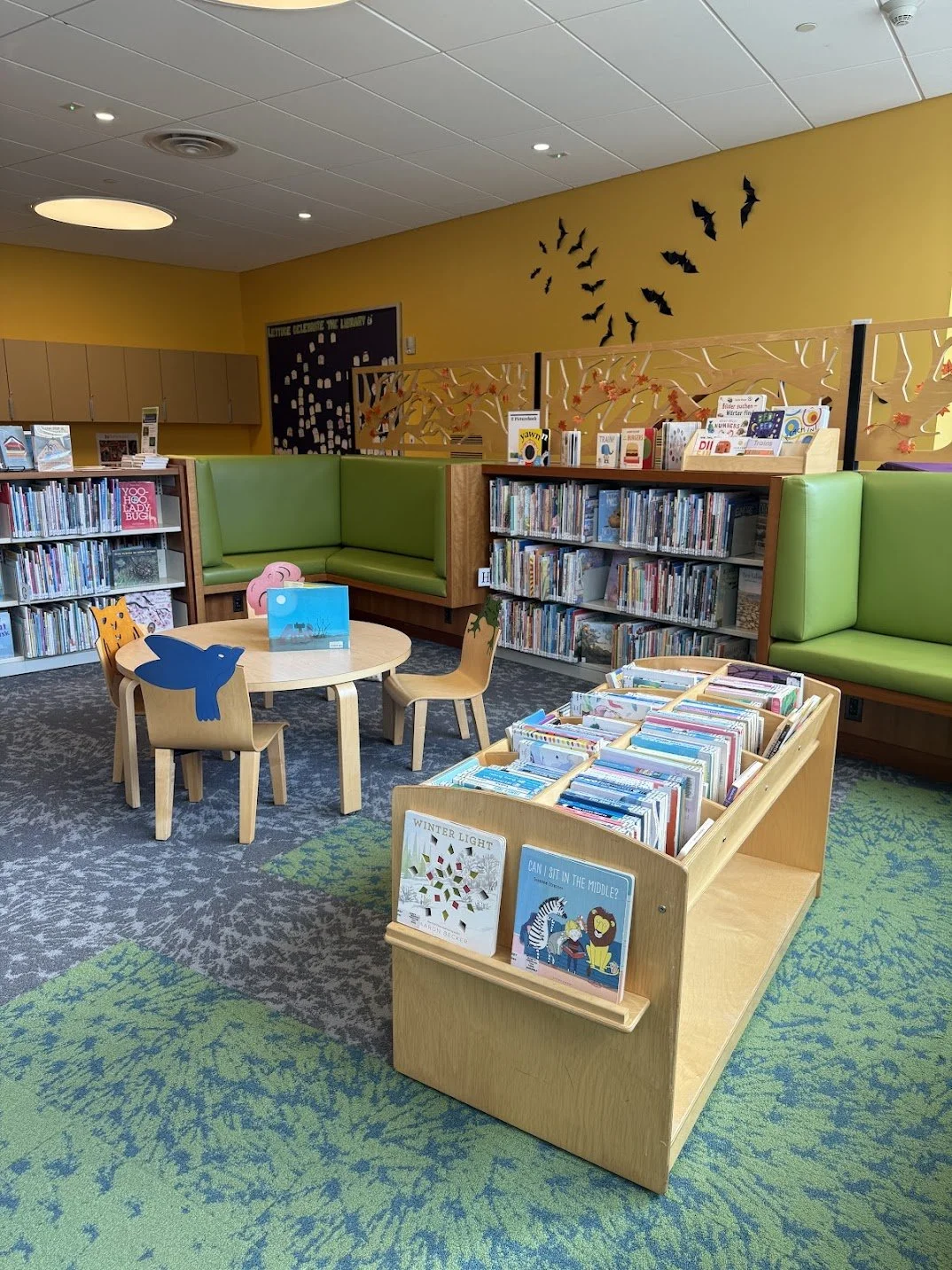
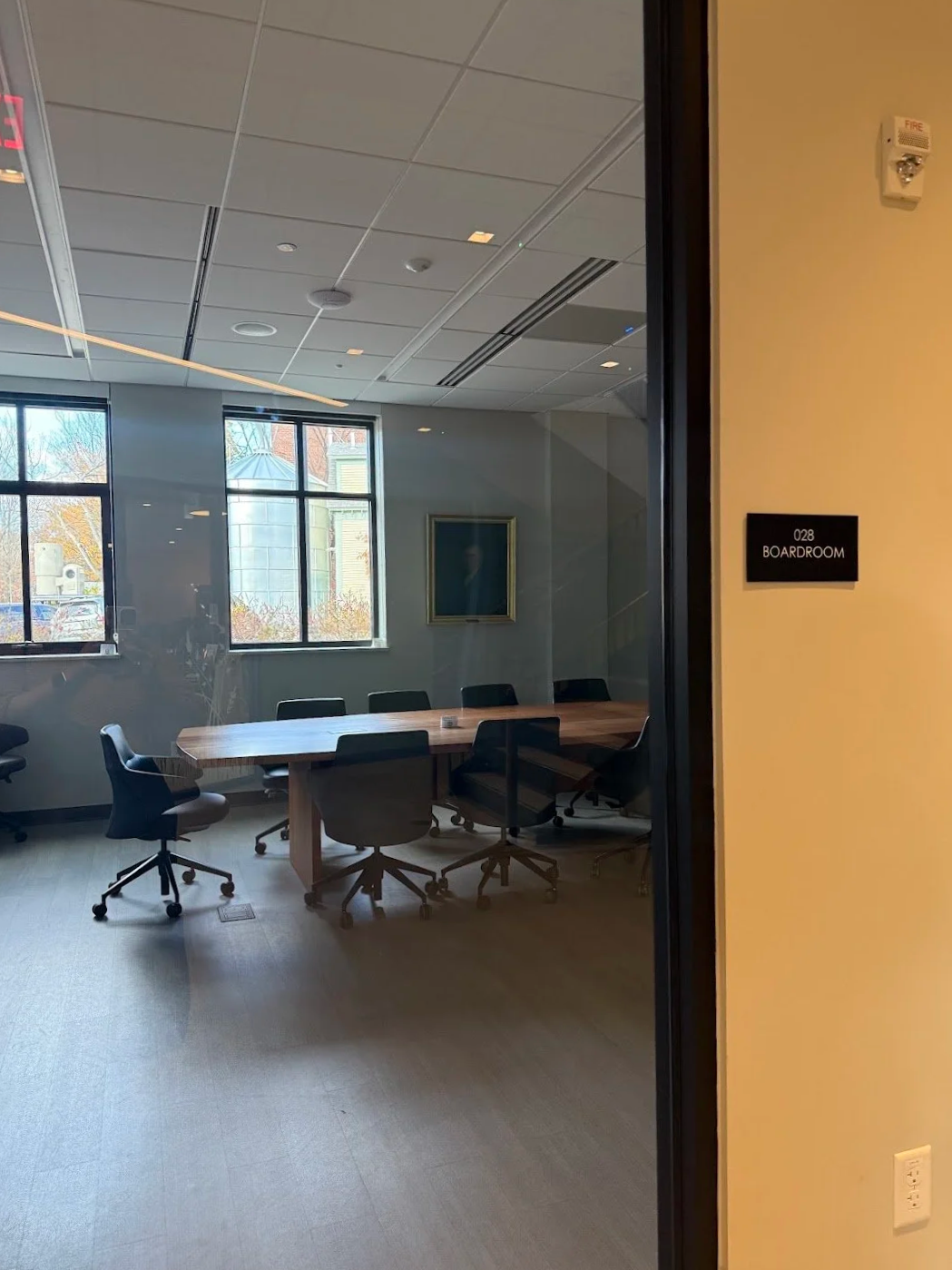
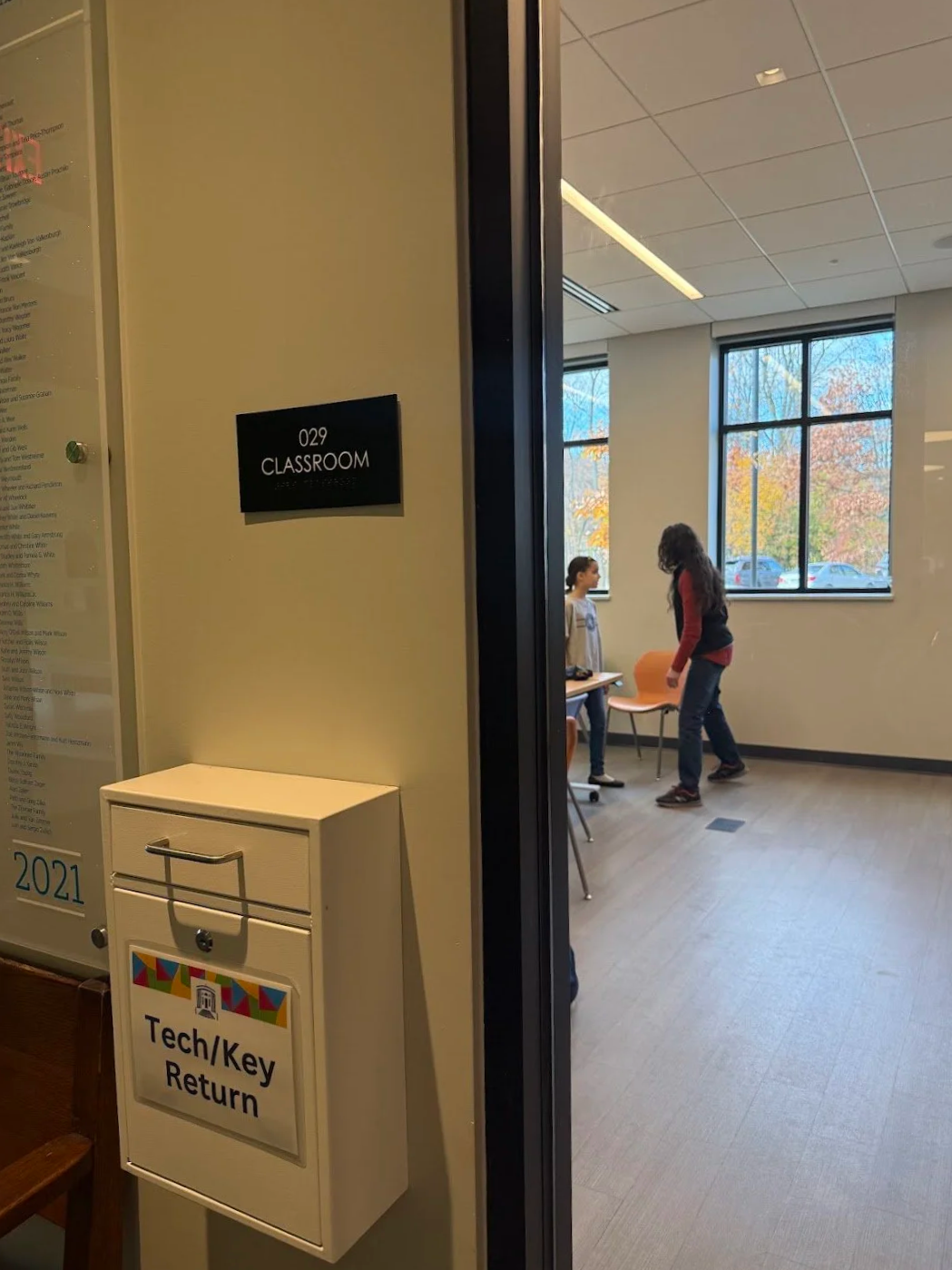
Going to the basement - the final space - we saw Children’s, the trustees’ room, and a classroom. The latter two are nice amenities, especially since they are available 24/7. The Children’s room was outstanding. It’s large and bright. It’s hard to miss the tree on one side or the giant mouse on the other. The mouse's provenance is lost to time, but it’s been at the library for more than 30 years.
This is a well-supported library, as shown by its healthy budget and the community's enthusiasm. All of the staff we met were incredibly friendly and informative. Corrine, in particular, was generous with her time. It’s always fun visiting a library, but even more fun when it’s one as great as the Peterborough Town Library!