
Jefferson-Madison Regional Library, Charlottesville, Virginia
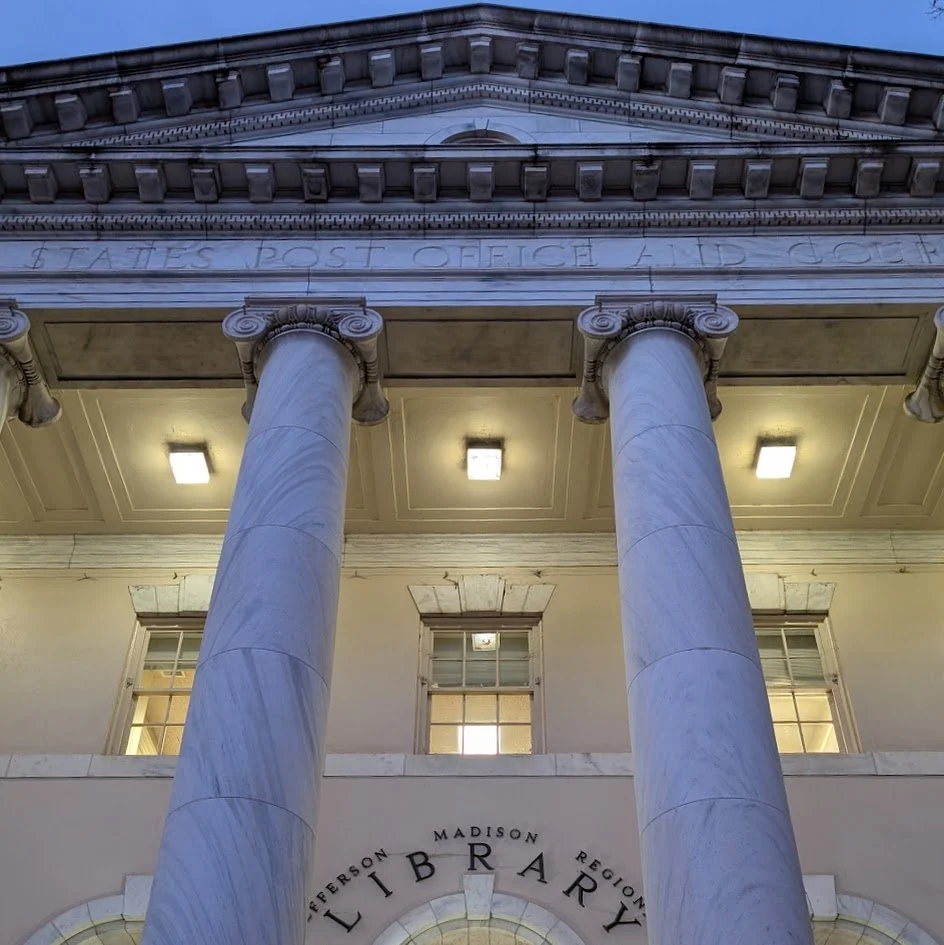
In early December, we found ourselves in Charlottesville, Virginia. The main point of the trip was to visit Thomas Jefferson’s home, Monticello. More on that later in the post. Being in Virginia was, of course, an opportunity to visit a library, and we’re sure glad we did. The Jefferson-Madison Regional Library was full of nice features and surprises.
The library is housed in an imposing brick building. It was built in 1904. Before serving as a library, the building was a federal building that served as a post office and courthouse. That leads to one of the surprises: a courtroom on the upper floor. What’s even more curious is that there’s a jail cell at the library! We’ve seen and heard about many curious features in public libraries, but this was a first. Sadly, since the cell is located in someone’s office, we weren't able to explore it during this visit.
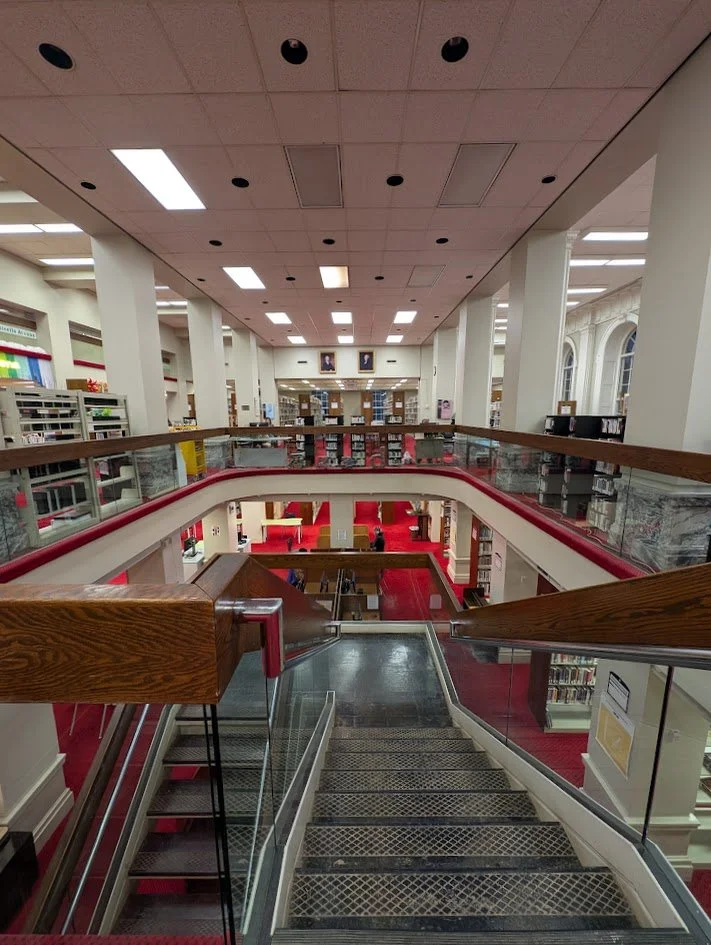
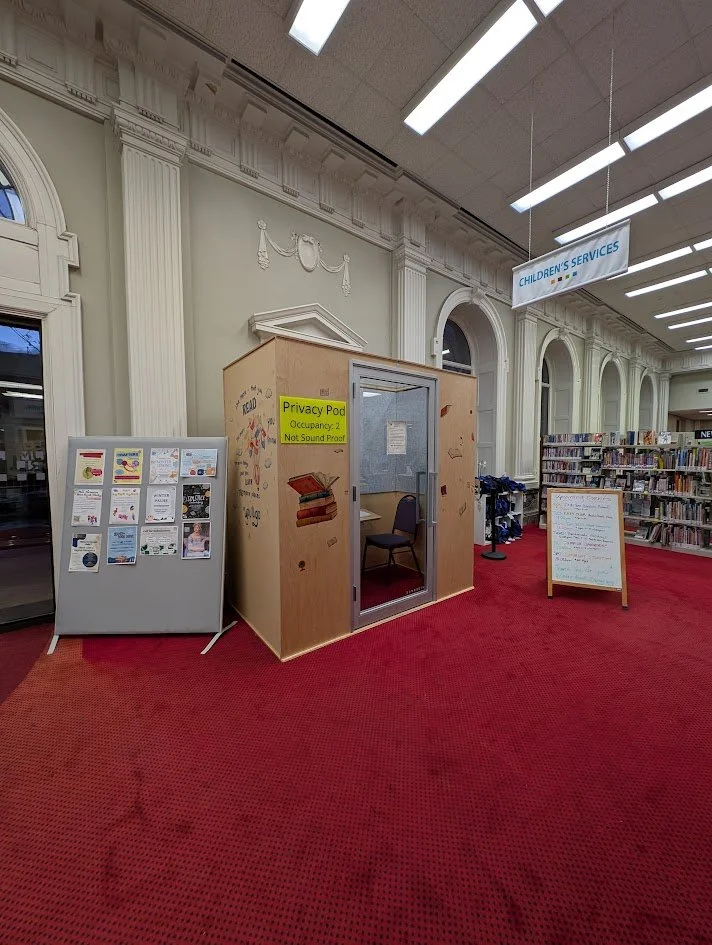
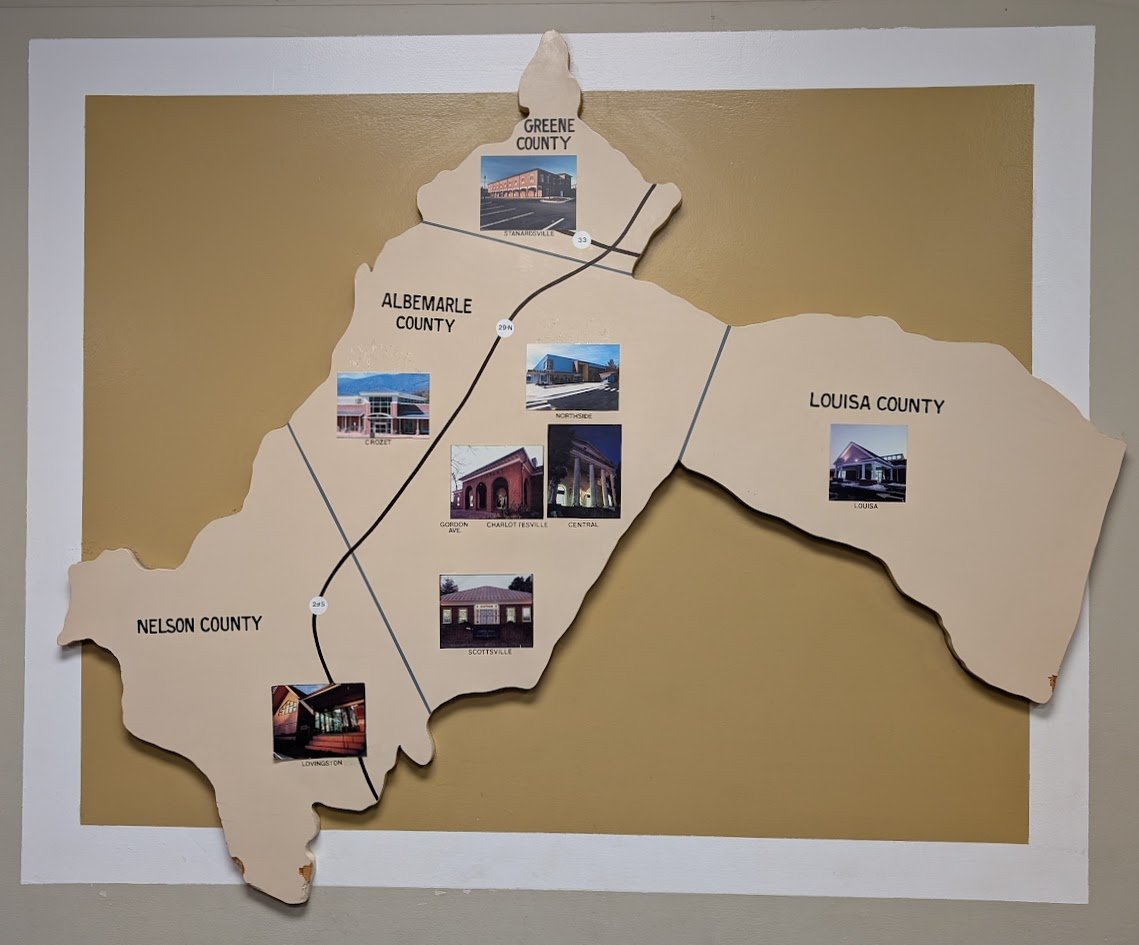
The building was converted into a library in the early 1970s, and it’s of that era: drop ceilings, fluorescent lighting, dated but sturdy furniture, etc. The library has two main floors. As you enter, you find yourself in a large, high-ceilinged room with pillars and a bright red carpet. Fiction and media are located on this floor. There is also a neat little two-person “privacy pod” on this floor. While it might appear to provide privacy, the sign on it alerts users that it isn’t soundproof.
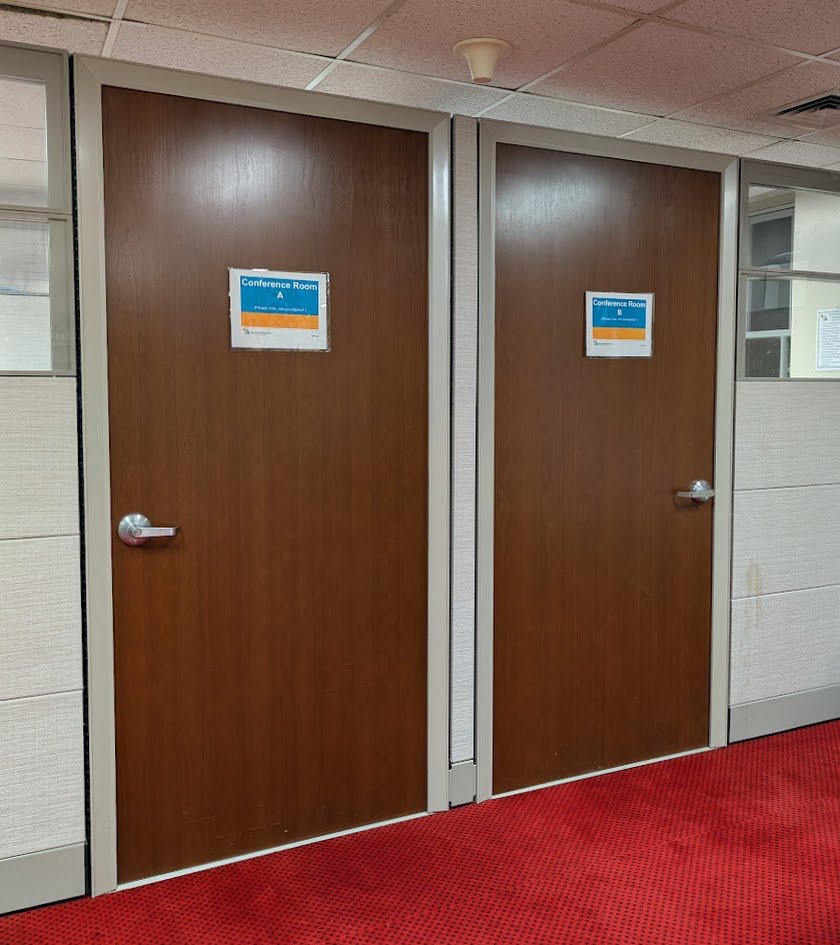
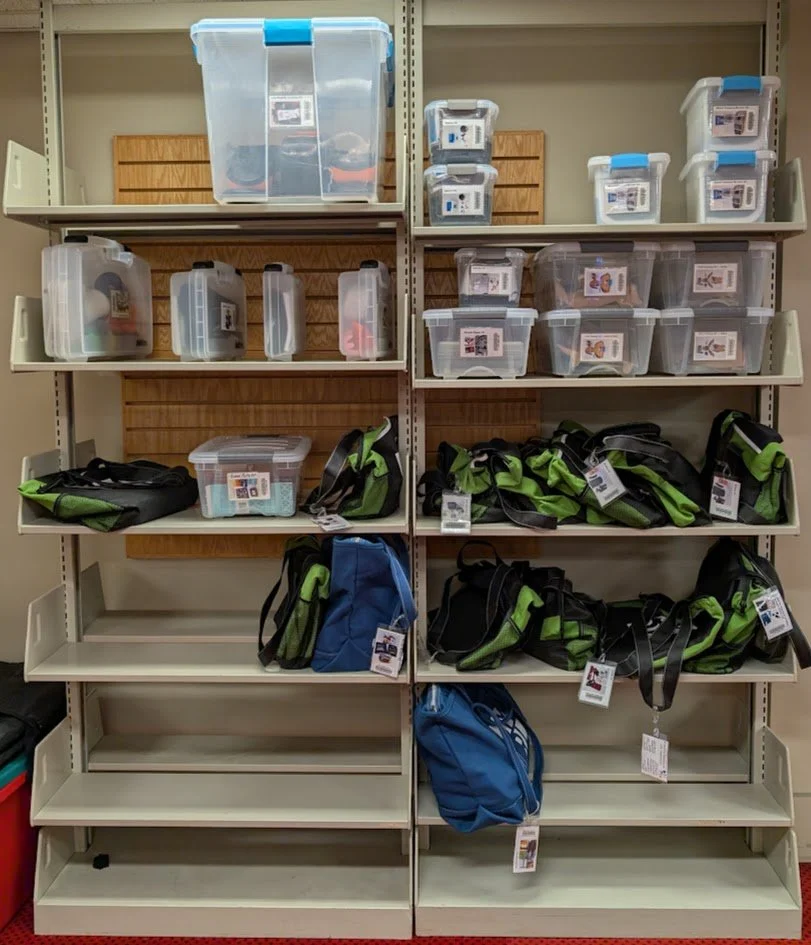
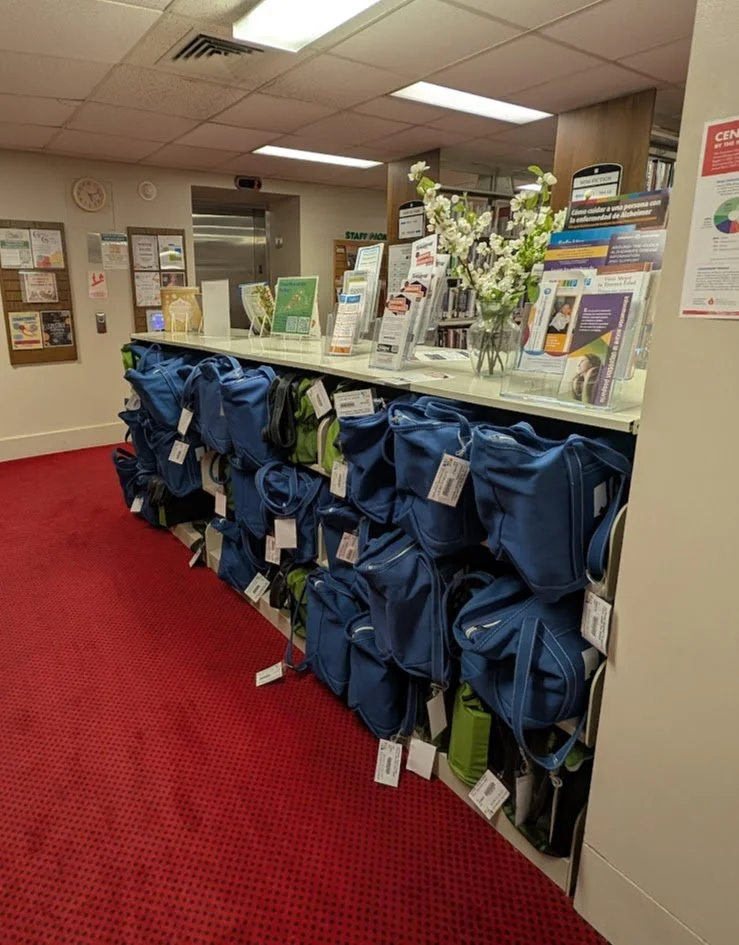
On the lower level, you’ll find the non-fiction collection, a handful of public computers, two study/meeting rooms, and periodicals. There’s also the Library of Things, as well as book club bags that include everything needed to start and run a book group.
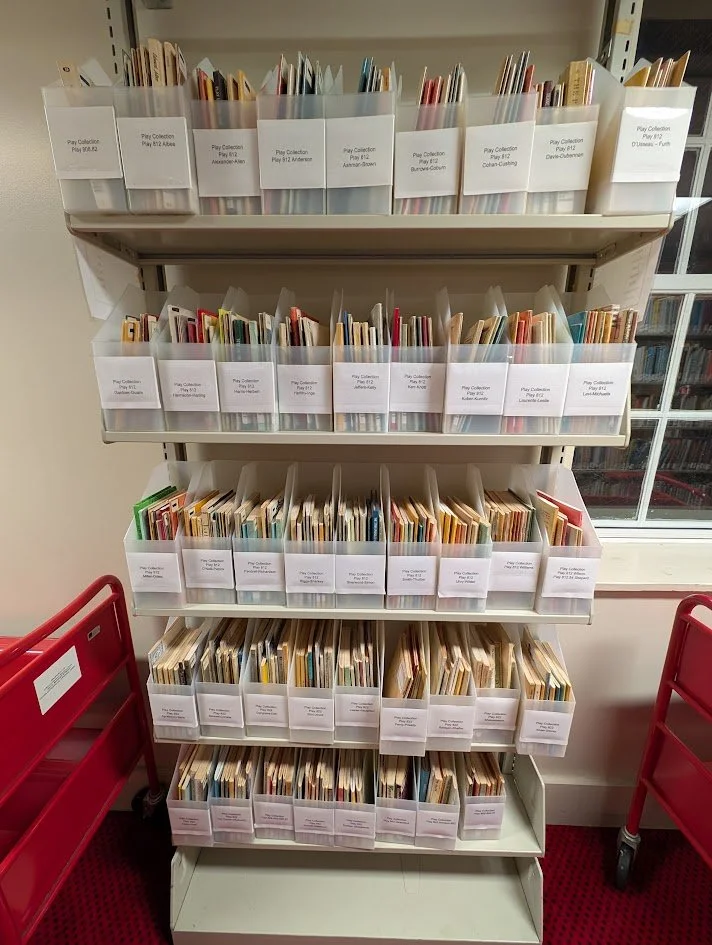
A few things caught our eye on this floor. One was access to resources on food and housing in the area. The other was an absolutely giant collection of plays. We liked the fact that the plays were broken out of the 800s and had a full set of shelves to themselves. Perhaps it was that separation, but it really made the collection look big!
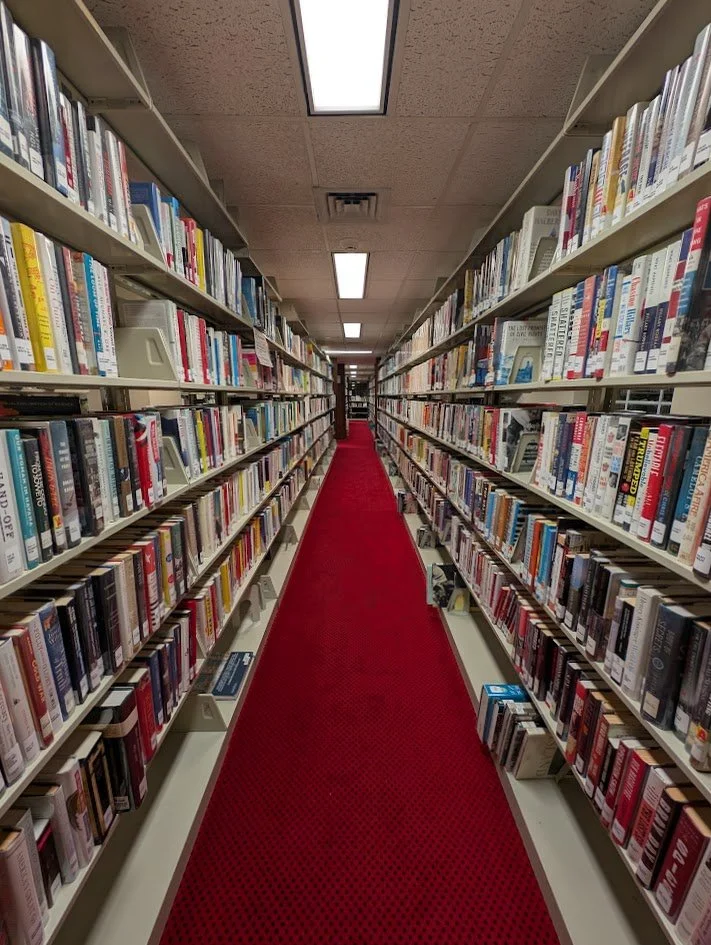
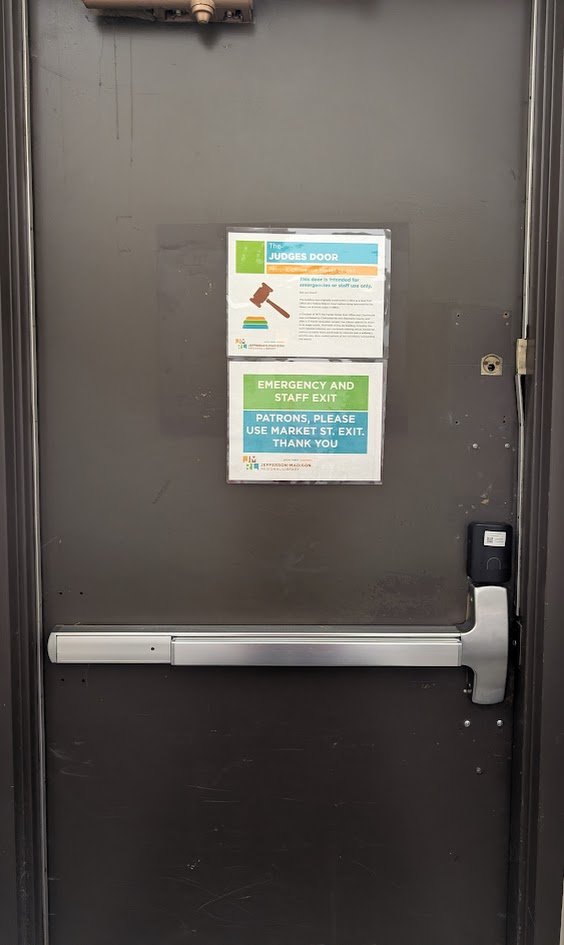
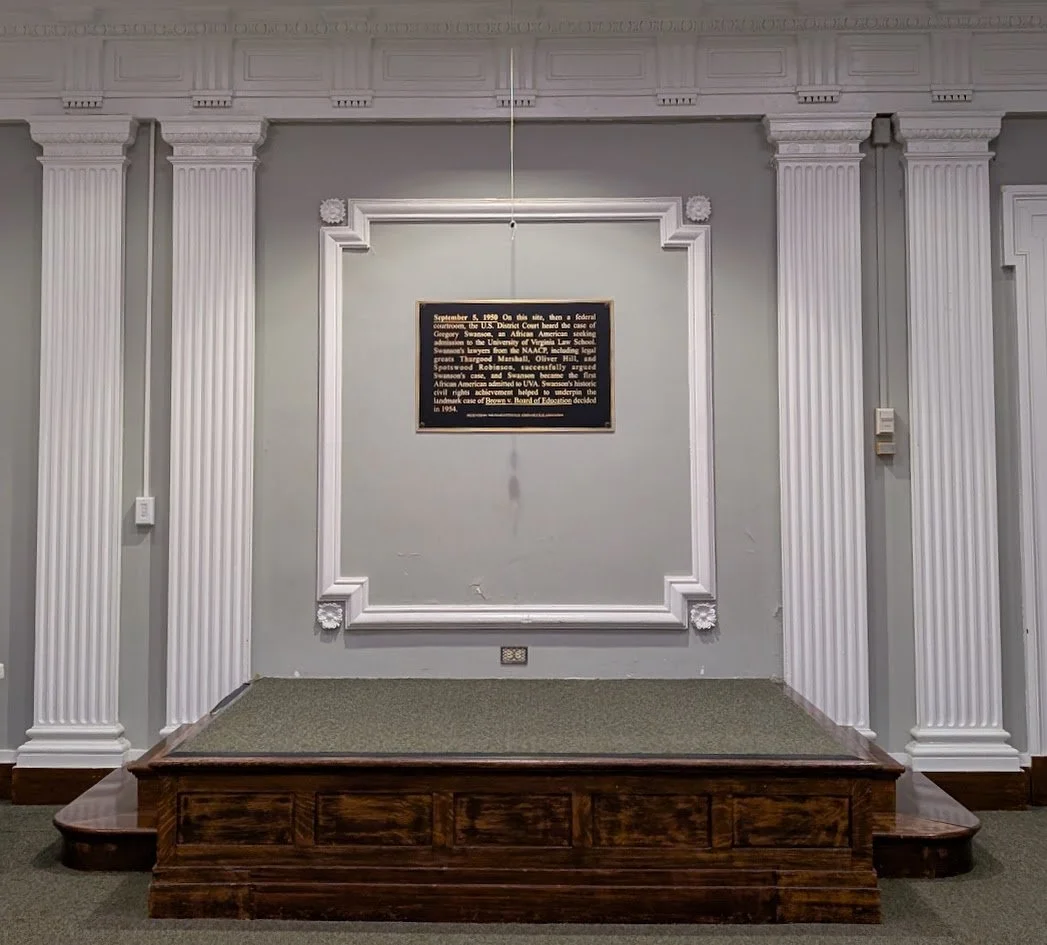
Those were the main floors, but there were others - and one of them in particular was interesting. Climbing the stairs to the top floor, we saw The Judge’s Door. We mentioned the building’s history as a courthouse, and here was the first evidence. We were fortunate to bump into Crystal, who works in children's. She brought us into the courtroom, which is now used as a programming space. The dais that once held the judge’s bench is still there. It was also she who told us about the jail cell, as well as details on the library’s history and community.
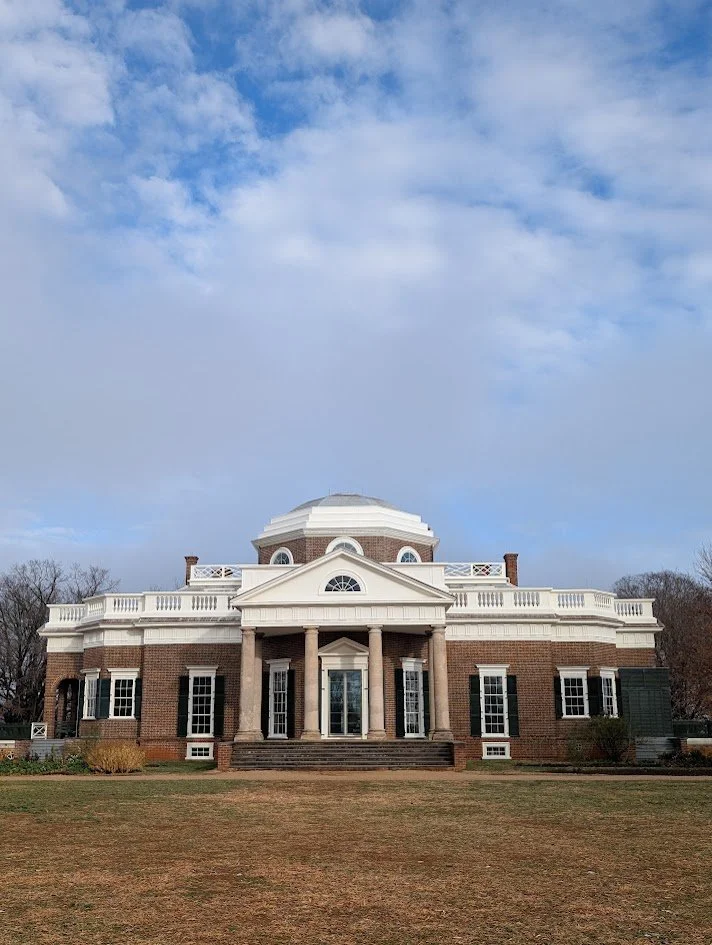
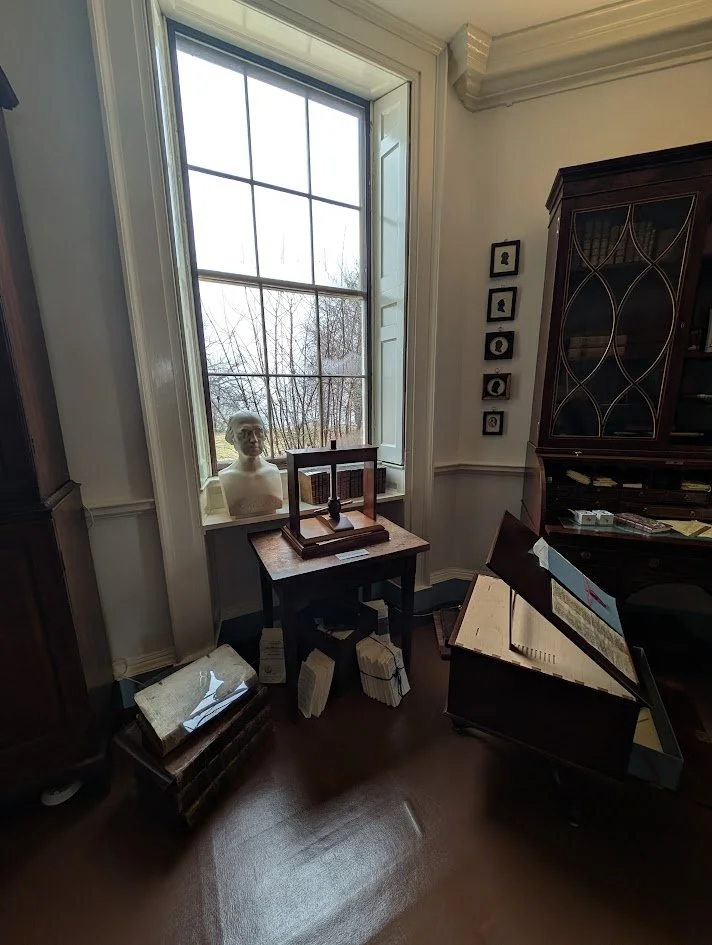
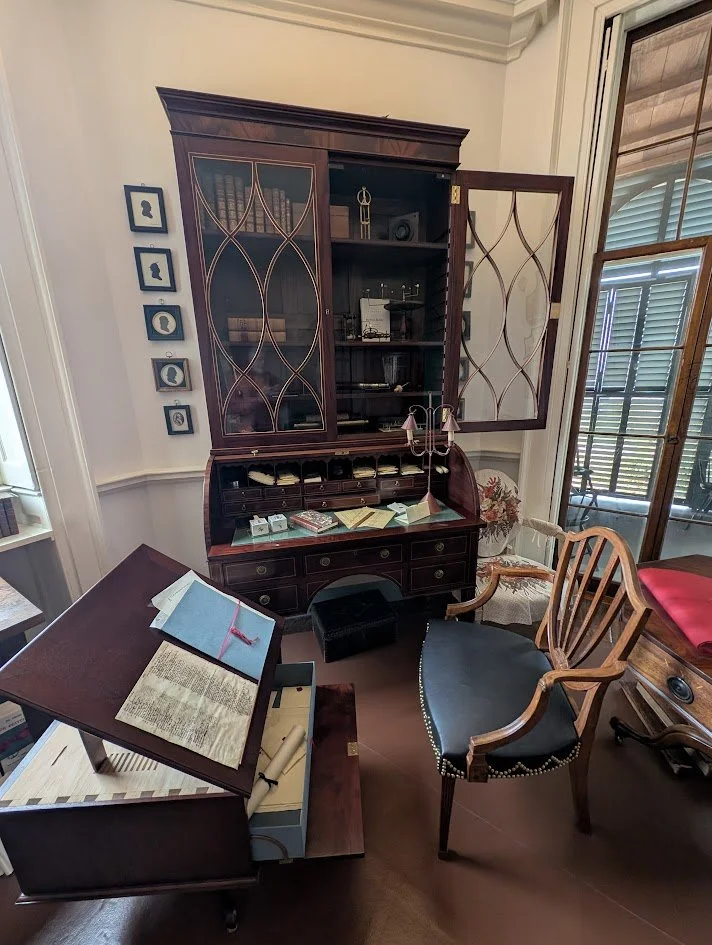
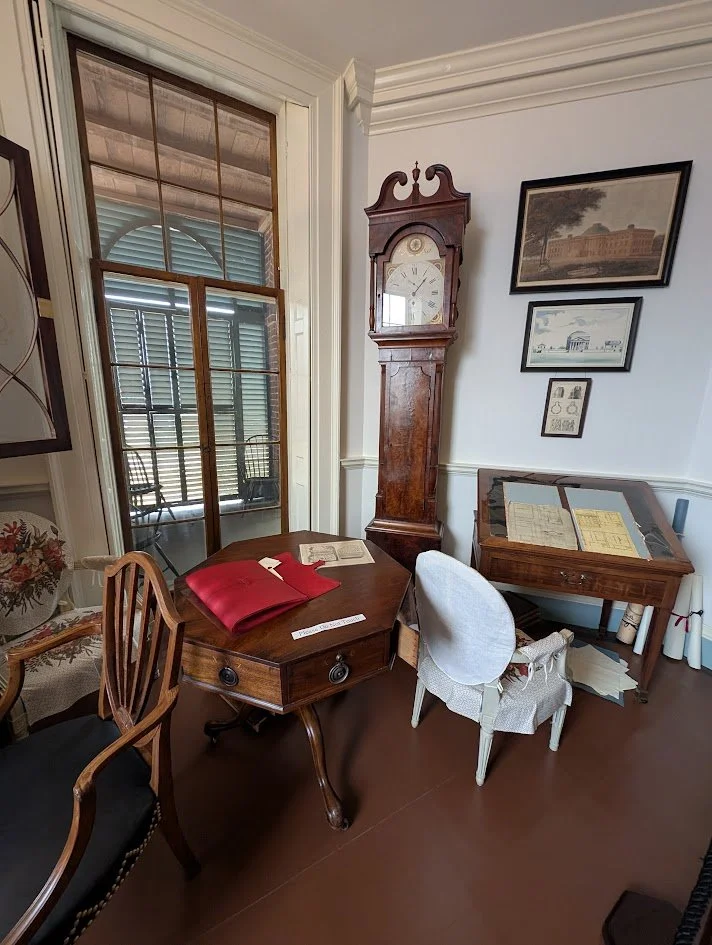
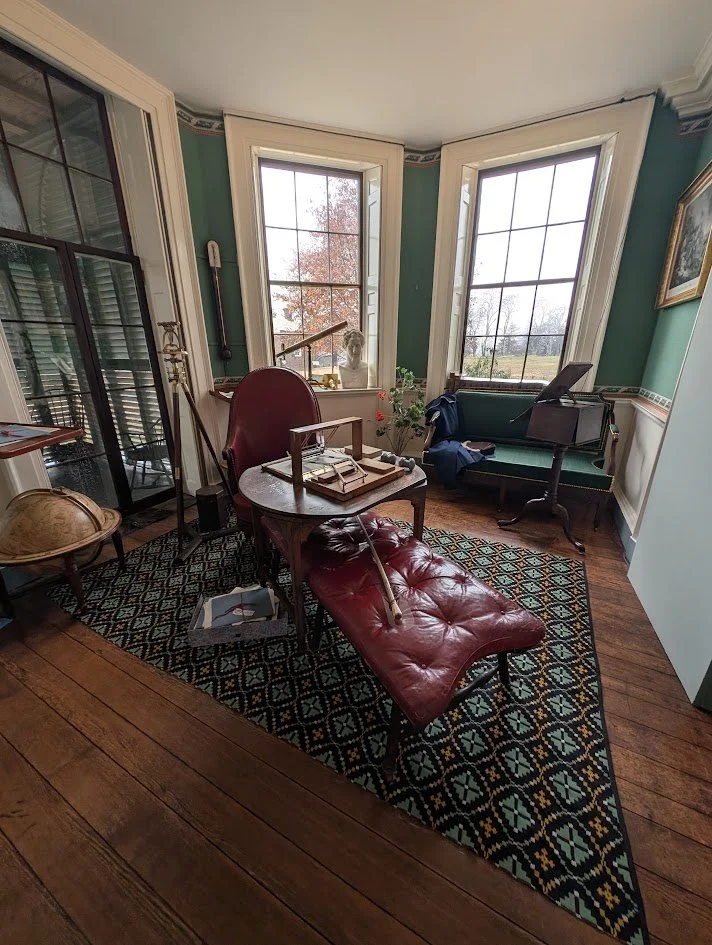
The library’s 1970s roots are clearly on display - but don’t view that as a ding. Several cool features made this an interesting visit. This was a briefer visit than we might have wanted, but it was what we had following our visit to Monticello. Speaking of which, during our visit, we saw Jefferson’s library and study. His library was once much larger than the one on display. This is because he sold his collection to Congress to replace the library burned by the British during the War of 1812. His books formed the core of what is now the Library of Congress.