
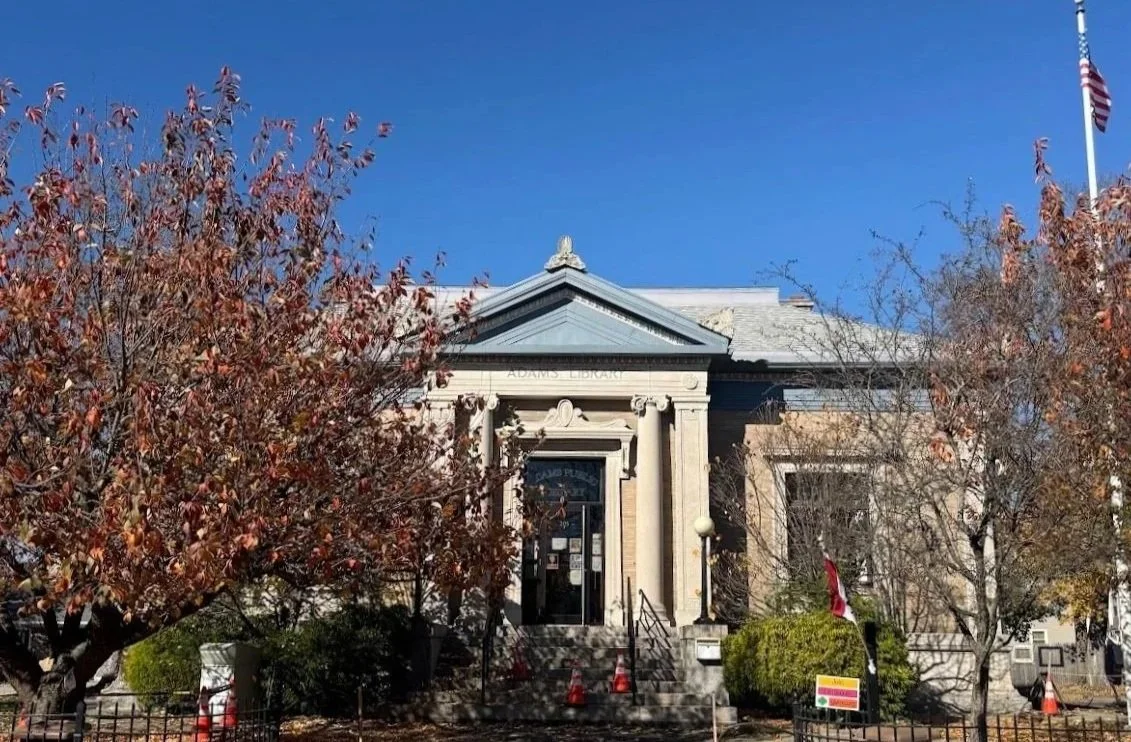
We see a lot of libraries with all the bells and whistles, and they are amazing. The true test of a library is when it doesn’t have the funds for makerspaces, media labs, or the like. We have seen a lot of libraries do amazing things on a shoestring, striving to serve their communities with everything they have - even if they have very little. That was certainly the case on our recent visit to the Adams Public Library in Central Falls, Rhode Island.
Before we dig into the library, we need to put it into context. Central Falls is the smallest community in the smallest state. It has an area of less than 1.3 square miles, a veritable postage stamp. In that space live more than 22,000 people, making Central Falls one of the most densely populated cities in the country.
It is also one of the state's poorest cities. In fact, Central Falls went bankrupt in 2011 and reemerged a year later after layoffs and budget cuts. The library closed and hasn't seen a budget increase for years. The city contemplated selling the library property but was thwarted by the fact that a trust actually owned it. High need and low resources have demanded creativity and resistance. Thankfully, the Adams Library has plenty of both.
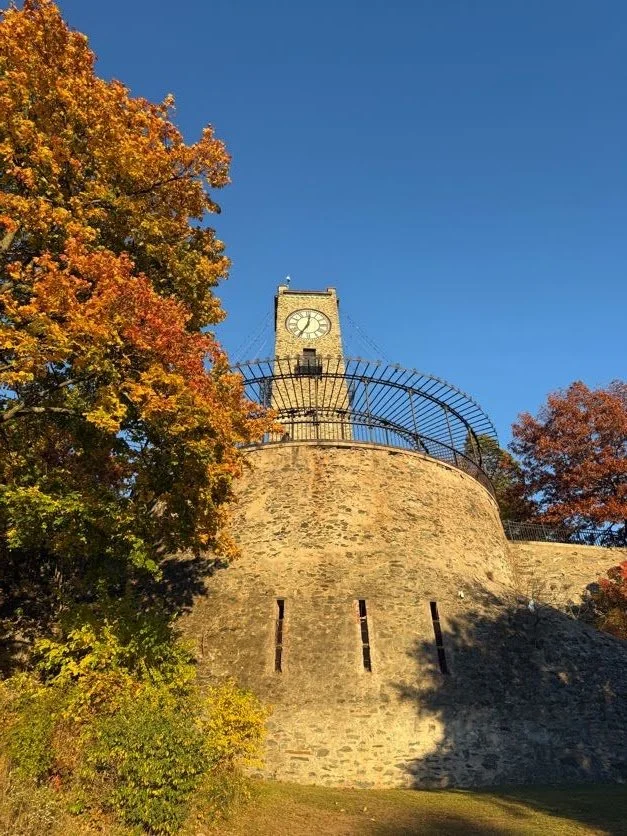
Originally the home to the Nipmuc, Wampanoag, and Narragansett people, it was settled by Europeans in 1675. The next year, it was the site of a battle in King Philip’s War. The victims of that battle were captured and killed. A memorial to the Nine Men’s Misery is on the grounds of the nearby Cumberland Public Library. The city’s role in that war is also memorialized by the Cogswell Tower, which stands on a hill used as a lookout.
Like many of its neighbors, Central Falls became an industrial town in the 18th and 19th centuries. Unlike the others, its main industry was chocolate, earning the city its “Chocolateville” moniker. In the ensuing years, the city's demographics changed, and the industry disappeared, ultimately leading to the aforementioned bankruptcy.
When we arrived at the library, we first had to deal with a series of road closures that kept us from accessing the parking lot. That was fine, since plenty of street parking was available nearby. The library was built in 1910 and has many hallmarks of libraries from that era - its neoclassical facade, yellow brick exterior, and wrought iron fence - all come to mind.
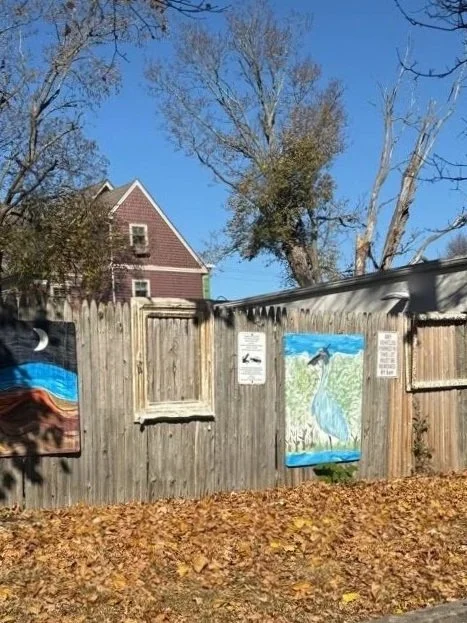
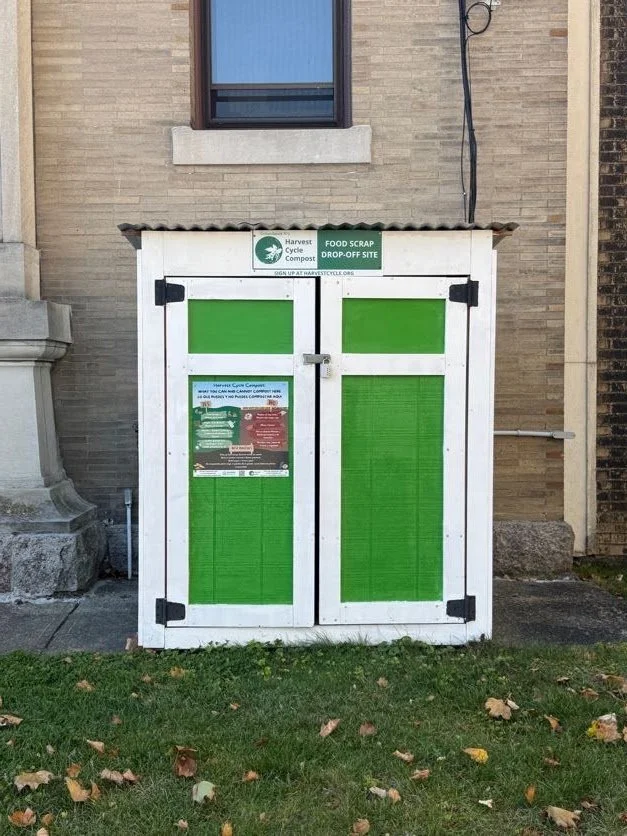
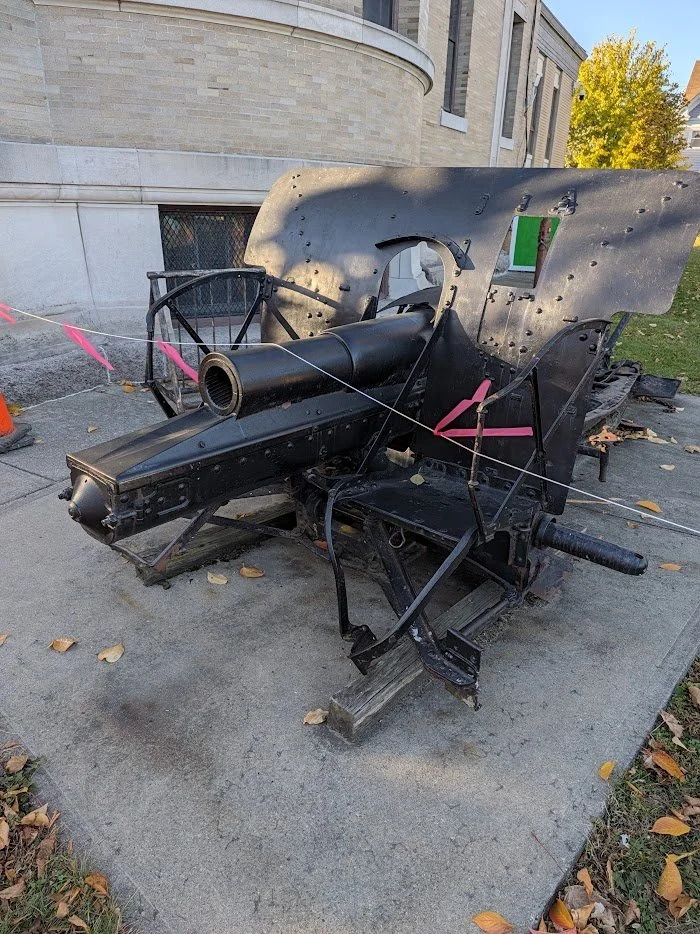
Because of the construction, we went around to the rear entrance, where a kindly facilities person let us into the building. We noted the large driveway, interesting public art, and a large carriage house that is now used for storage. We later learned that the house next door is also owned by the library. We also saw a black-painted 75 mm field gun used during the First World War.
The library is on the second floor, so we headed upstairs. We’re going to scramble our tour like eggs to make it make more sense. Imagine with us as we enter from the street. In the vestibule, there were two alcoves in the walls. No idea what may have been there once, but they look cool. The floor in this section is a beautiful mosaic. Finally, there are the interior doors. These are sturdy things with magnificent hardware. Each had a small socket that fit a hook built into the radiators. All nice and interesting details.
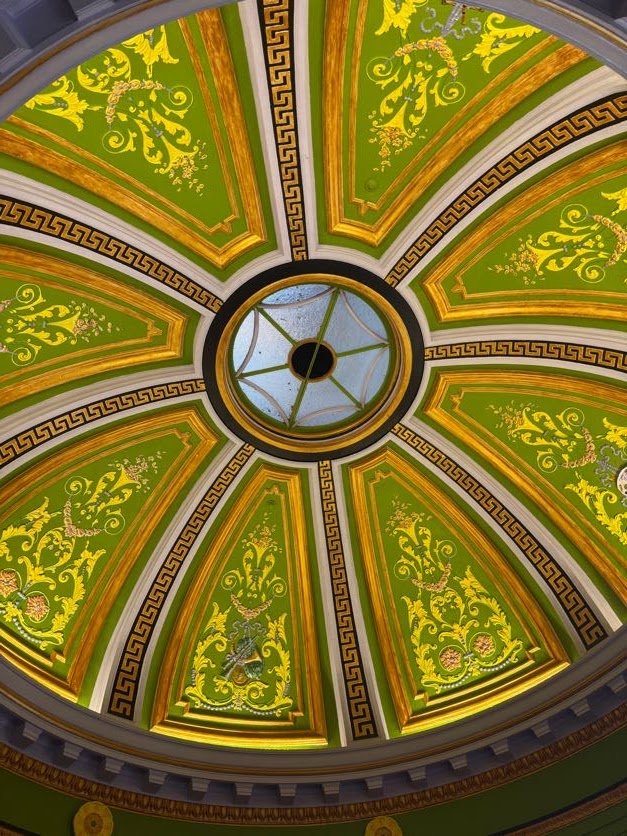
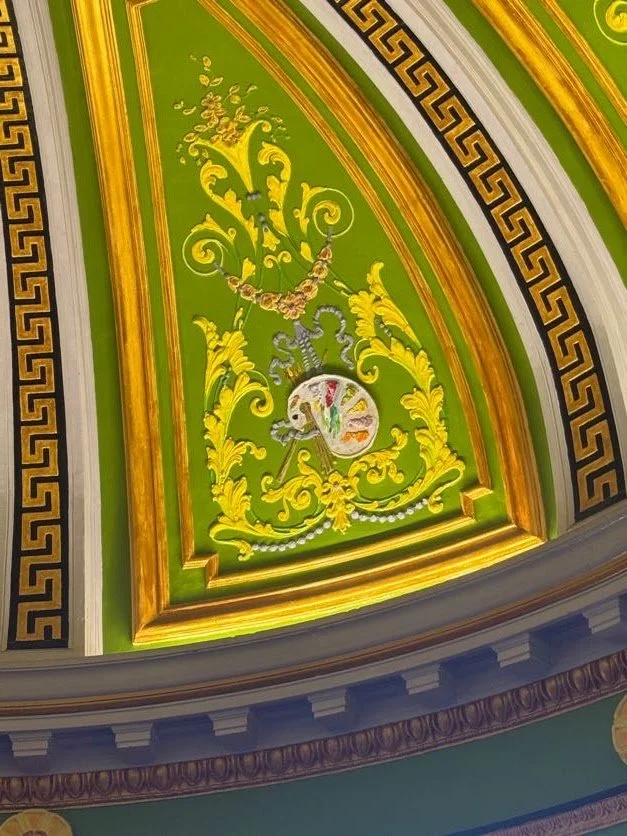
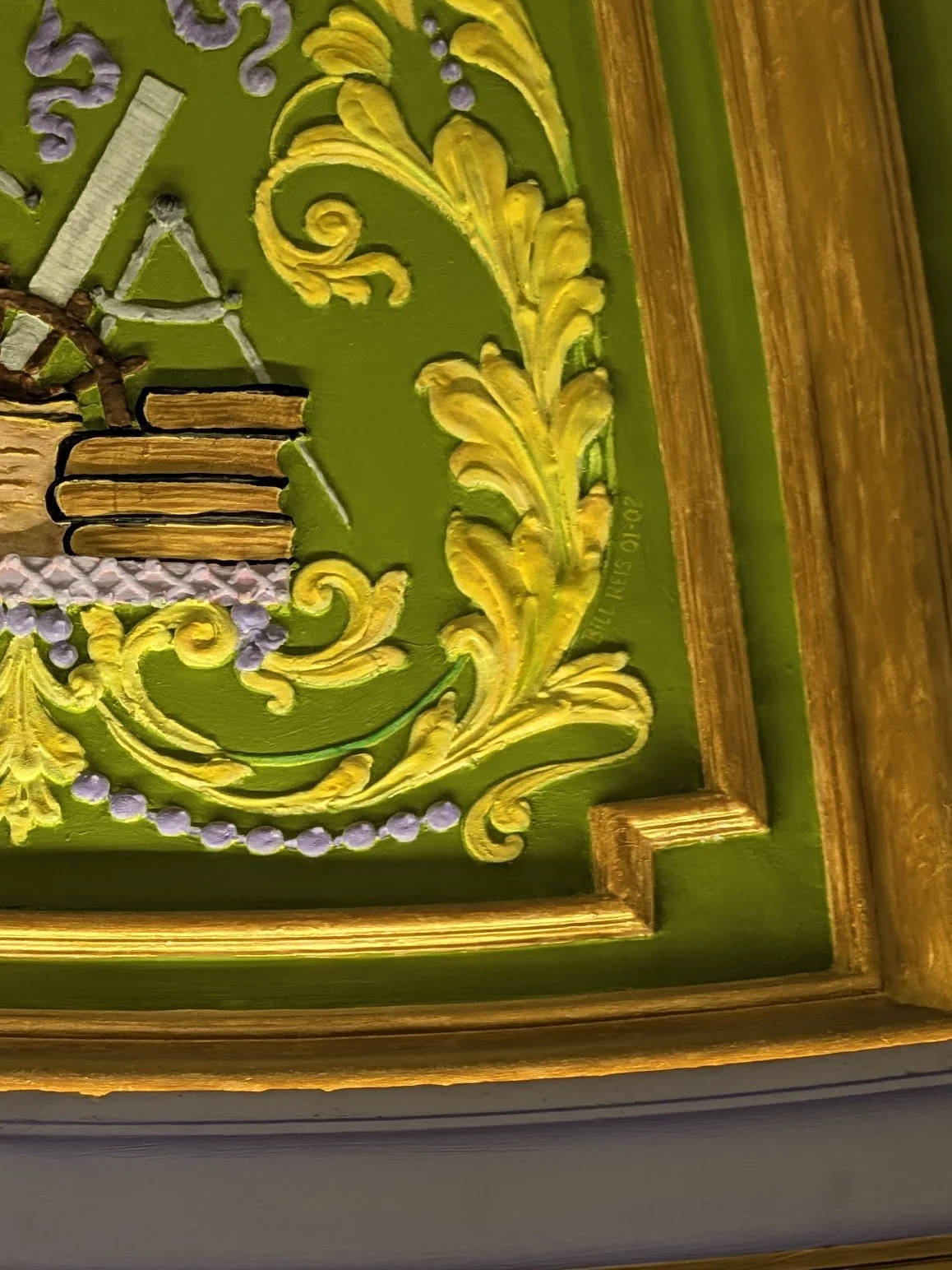
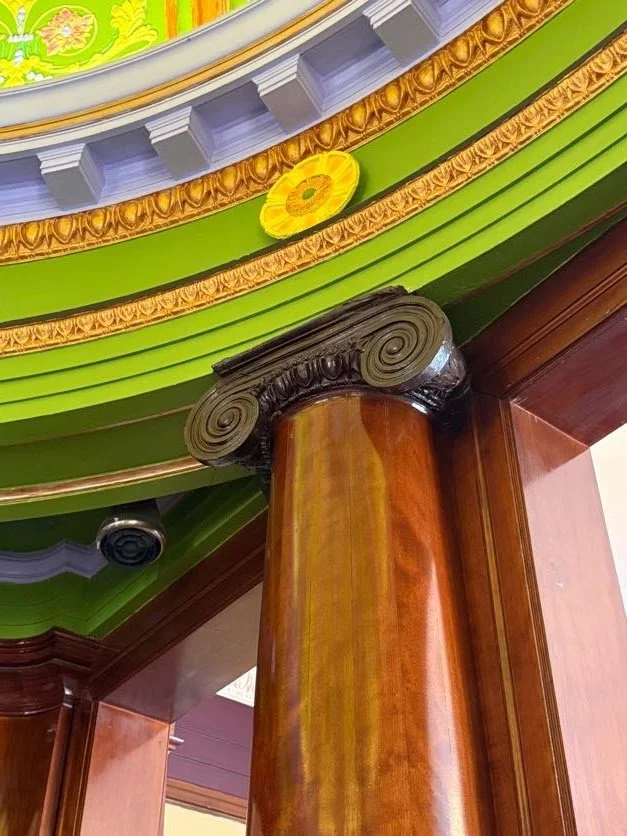
Entering the library itself, one thing draws all your attention. That is the rotunda. We love these things, but this one is in a class by itself. It is painted bright green and gold with emblems in half of them celebrating some branch of the arts. A Greek key is painted between each section, which ties in nicely with a similar pattern on the floors. Taking it in took time; it was worth the visit all on its own.
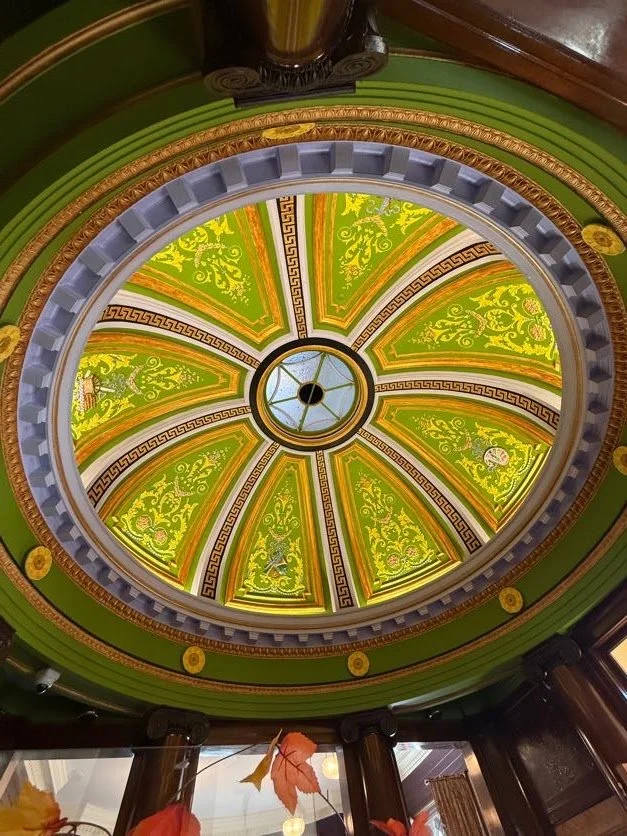
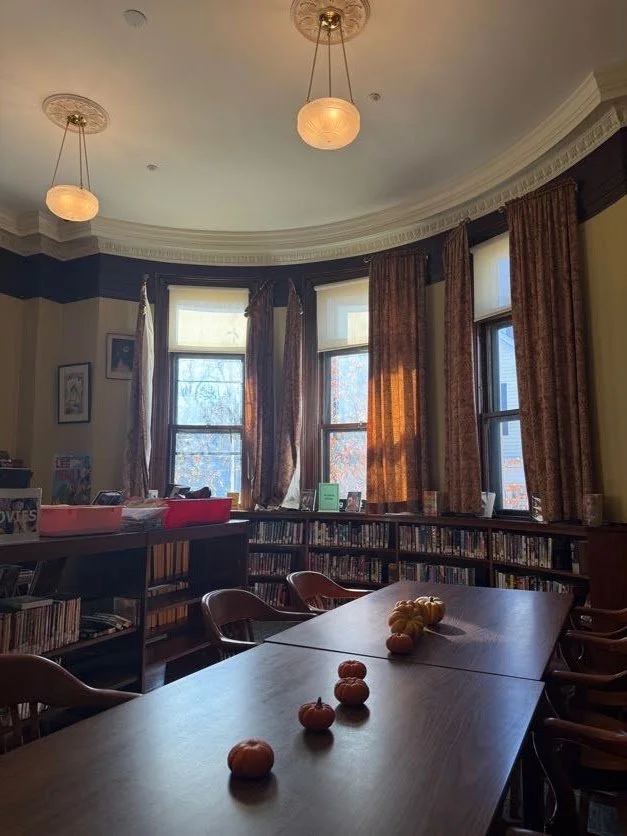
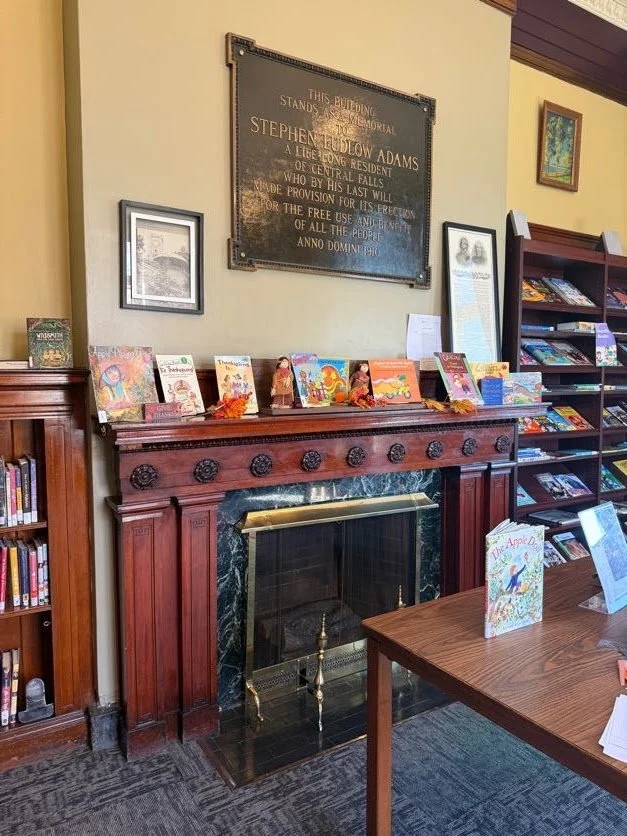
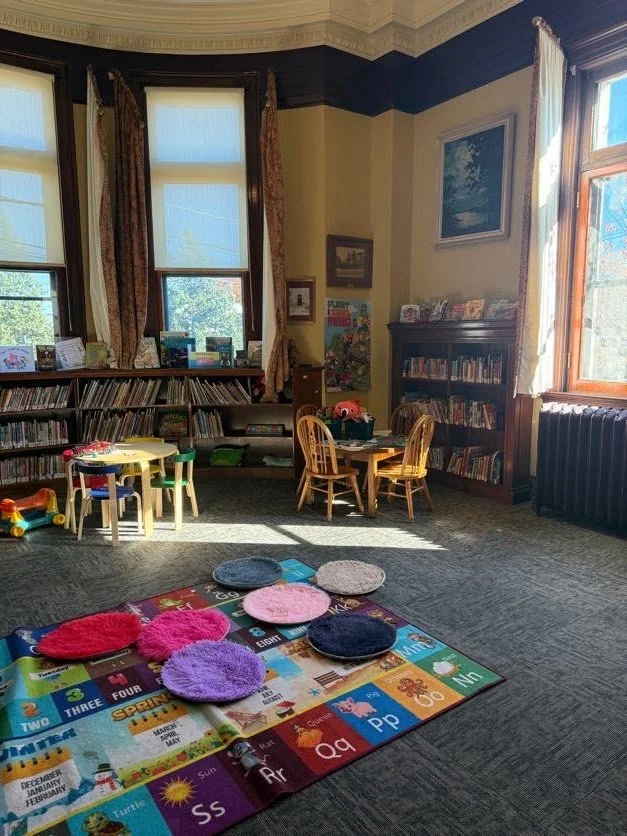
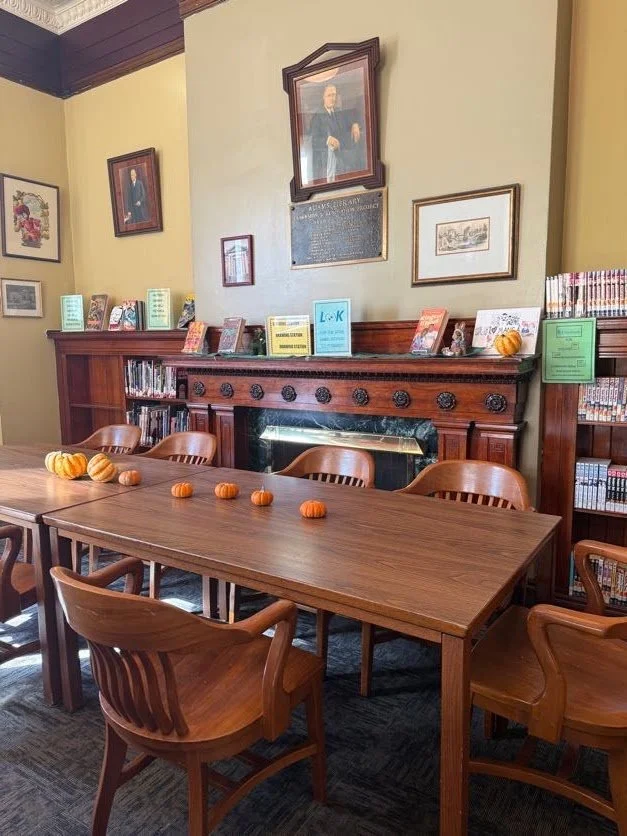
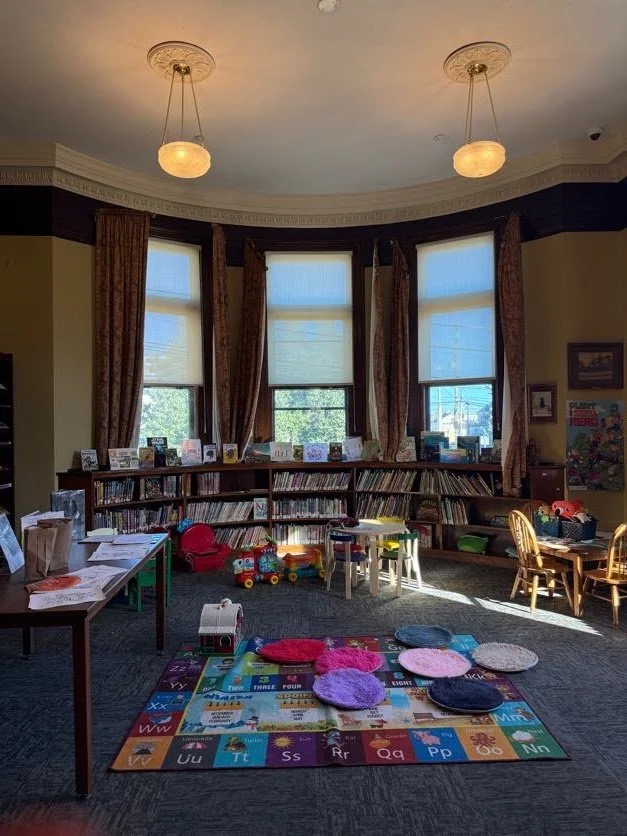
The desk is there beneath the dome; it’s a big, hulking thing. To the right is a reading room, YA and periodicals. A nice fireplace and some really outstanding woodwork make this a really comfortable space. Across the rotunda is what was once another reading room. Today it serves as Children’s, as a water leak made the actual Children’s room unusable. This has been the case for two years, but we learned the library simply doesn’t have the funds for the clean-up.
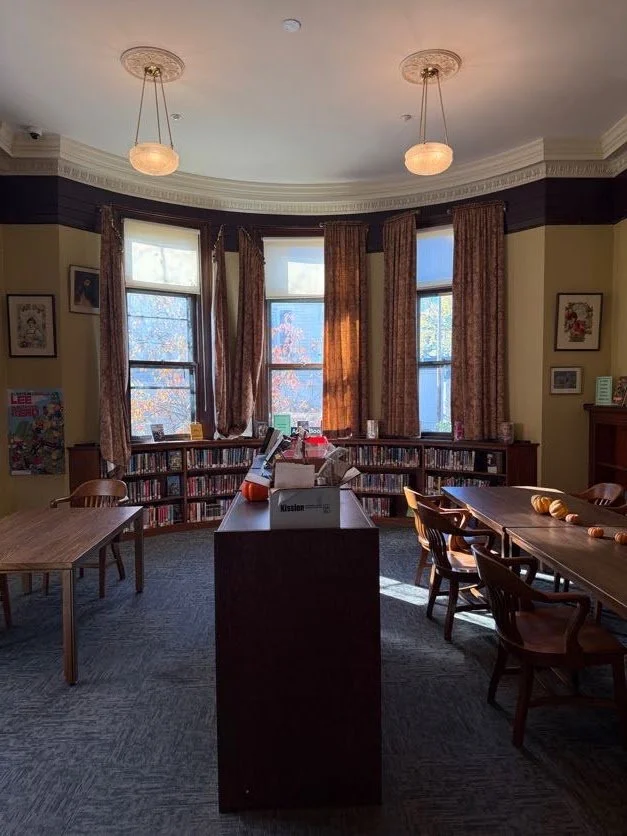
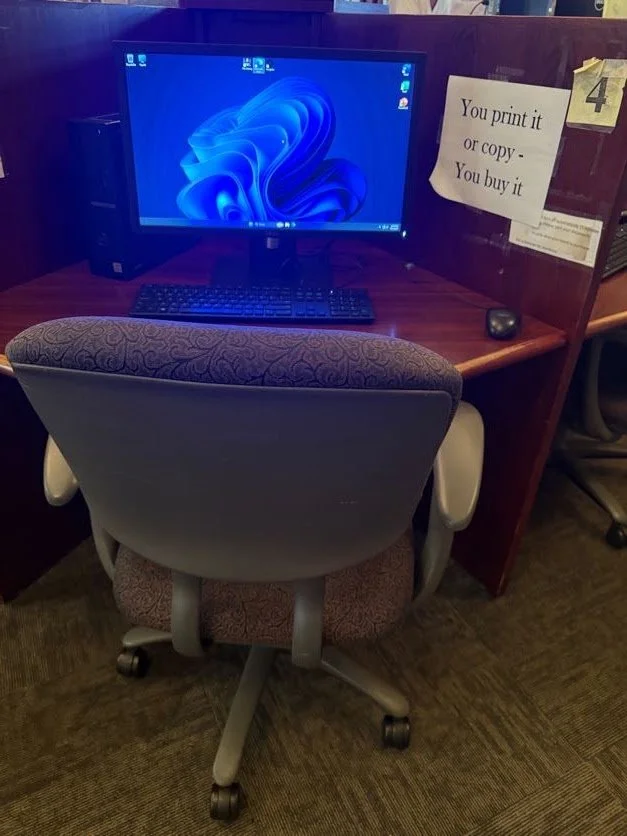
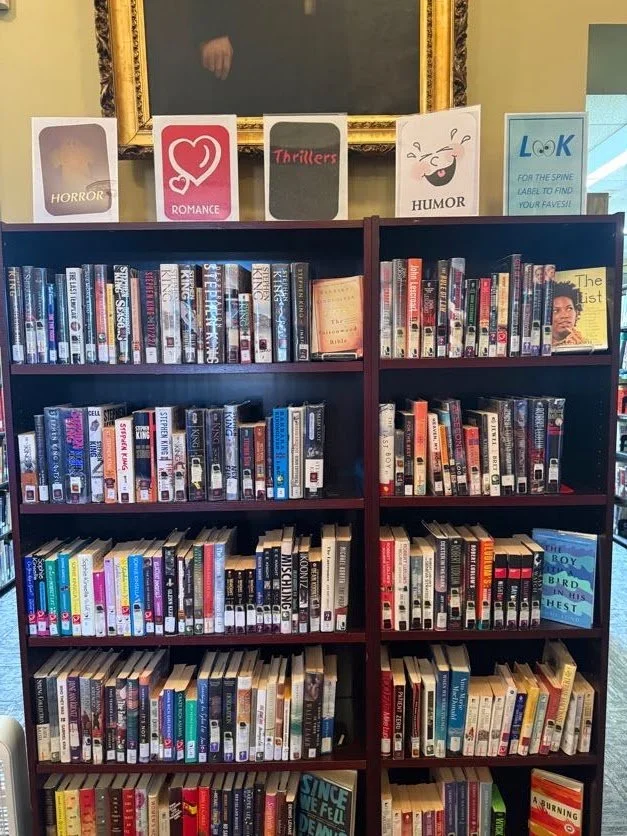
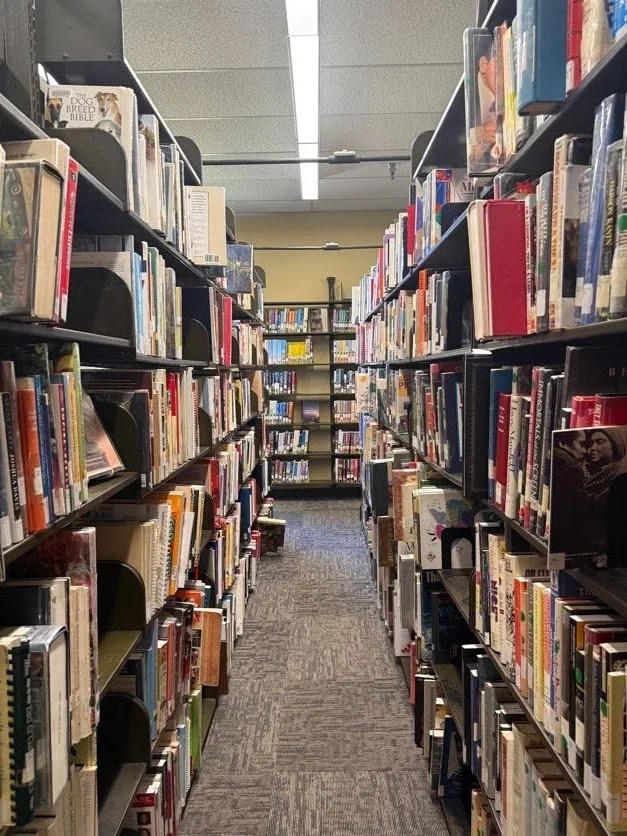
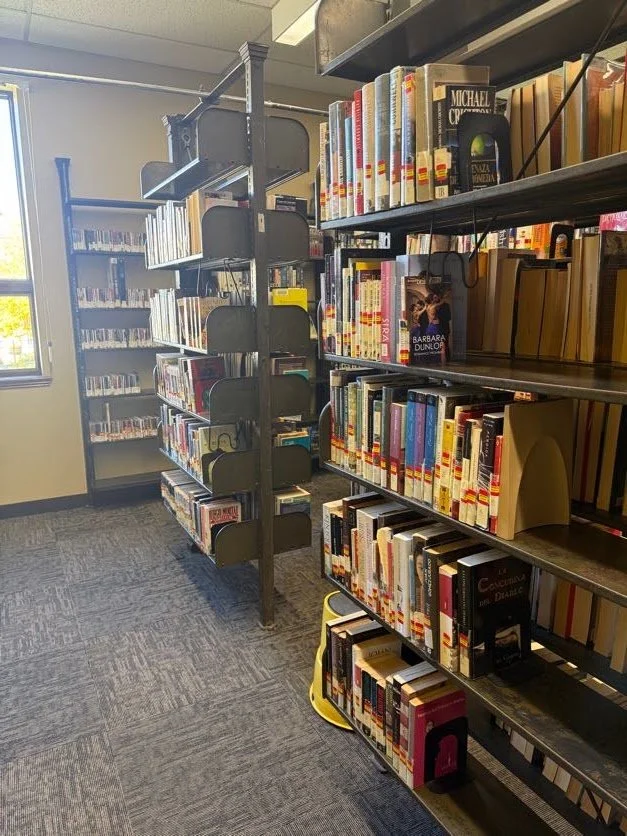
Behind the desk are a batch of public computers and a portion of the collection. This area housed the stacks during the library’s early years. Off it are what was once a local history room (today, the director’s office) and a staff area. Further back is an addition dating back to 1980, when the library undertook a major renovation. It houses the bulk of the library’s collection.
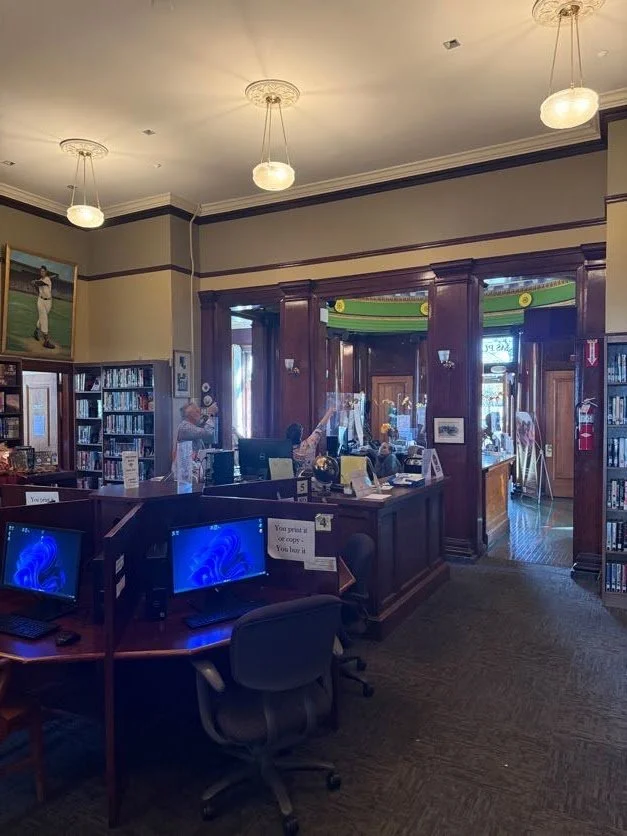
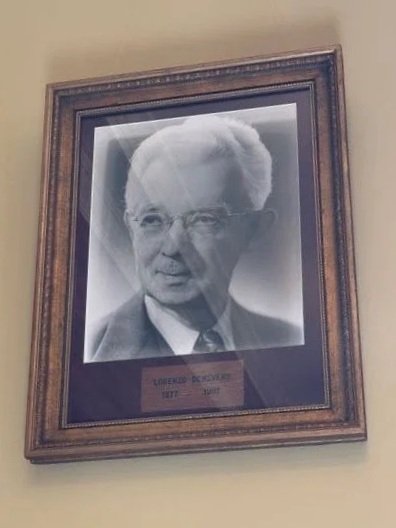
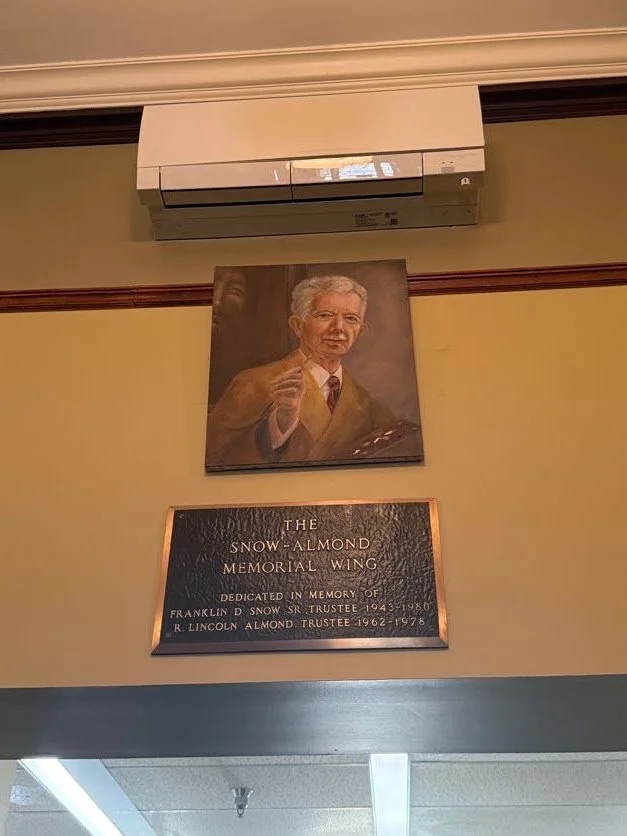
Throughout the library, we saw dozens of paintings. It turns out that they are all the work of a single artist. Lorenzo de Nevers (1877–1967) was a prominent painter who moved from Quebec to Central Falls as a young man. After studying at RISD and the École des Beaux-Arts in Paris, he returned to Central Falls in 1914. His paintings - including an autographed one of Ted Williams and one that had hung in the Vatican - create a consistent vibe throughout the library.
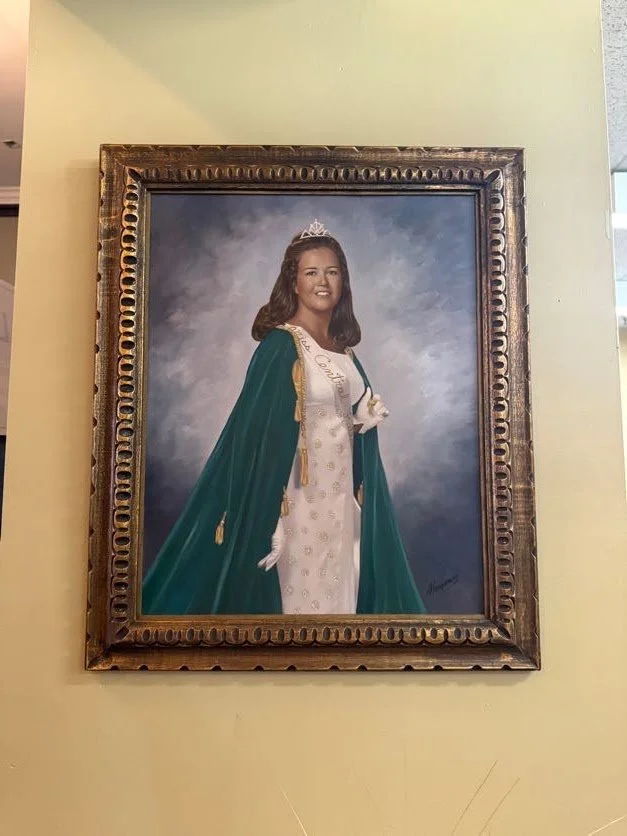
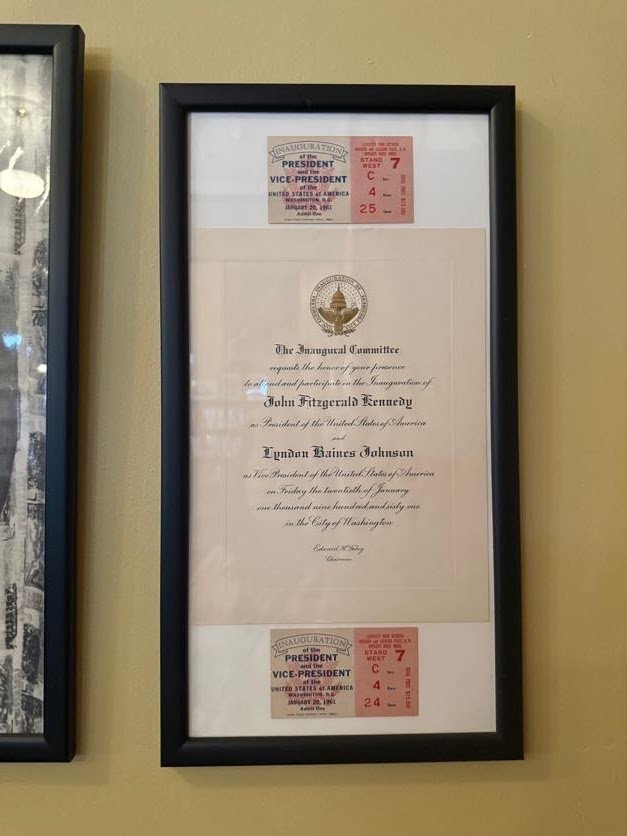
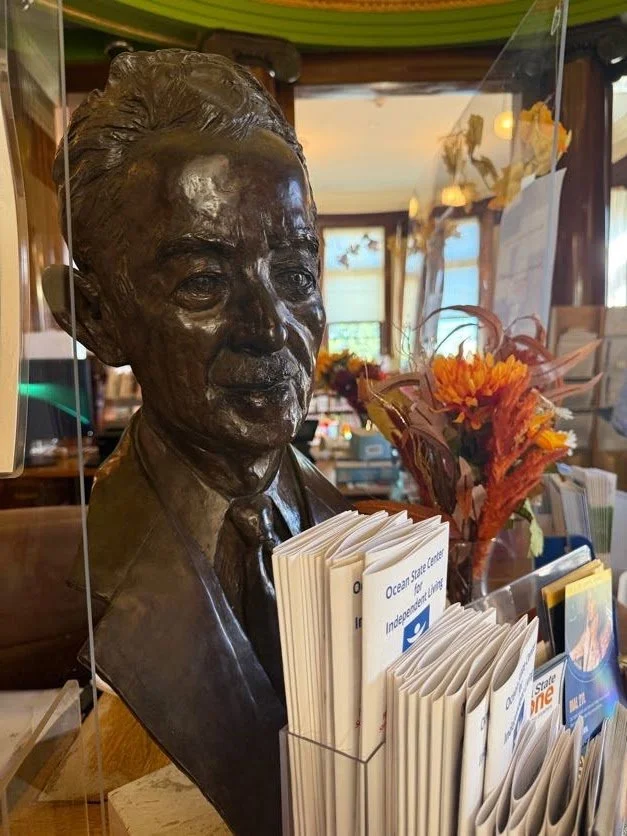
Two items weren’t by de Nevers, and both were striking. The first was a framed invitation and tickets to JFK’s 1961 inauguration. The second was a framed portrait of Miss Central Falls, probably from the mid-twentieth century. That kind of ephemera - in situ rather than sequestered or stored - helps tell the library’s story.
We spent time with staff, as we always try to do. First was librarian Jess; she provided much of the detail above. Reviving the library after the town's bankruptcy is one of her proudest achievements. She has been here since 2011 and has stood by this library through thick and thin. When we asked her favorite part of the library, she swept her hand across the room and said the physical space, but especially the wooden columns around the rotunda. She just wishes people knew what the library offers and would love, Love, LOVE a bump in the budget.
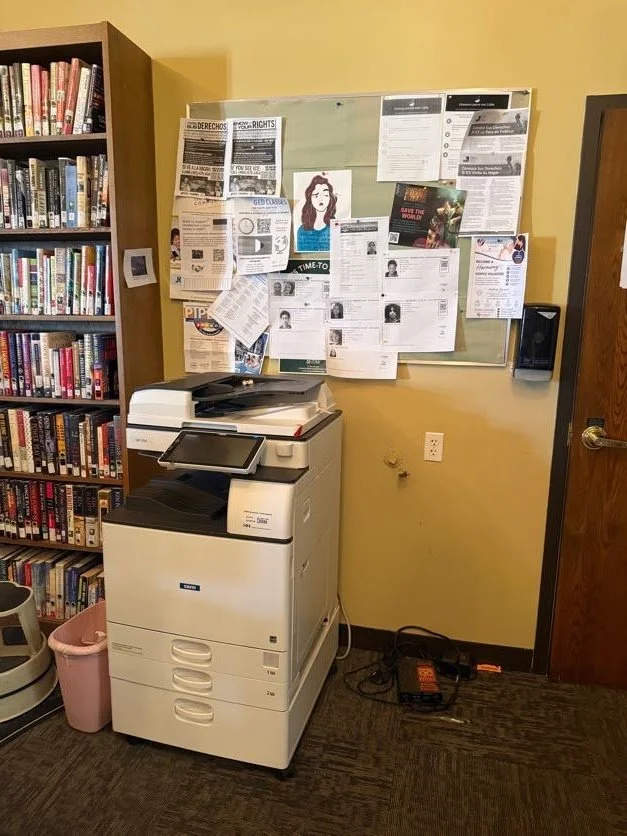
We’d heard at another library that Central Falls had had brushes with ICE and we were curious about that, too. Jess told us that they hadn’t had ICE in the building but on the street in front of the library. Too close for comfort. Posters in English and Spanish informed people of their rights vis-à-vis ICE.
We thanked Jess and librarian Briana and went out the way we’d come in. We stood in the yard talking about the library when a natty fellow arrived at the back door. Always striving to be helpful, we let him know the door was locked. He came prepared and pulled a ring of keys from his pocket. This was Alexander Williams, the library director.
He also provided a lot of detail about the library and its challenges. We couldn’t believe the city has zero-budgeted the library for years. This is a sad state of affairs, but it is not all doom and gloom. Despite the library’s small size, we were surprised to learn it’s a major contributor to the state’s ILL. Like Jess, Alexander loves the historical space he now stewards and the staff who have learned to do so much with so little. We also learned more about the community. For example, we found out that Central Falls was the childhood home of actor Viola Davis, who began her career in small playhouses in the city. That was pretty interesting.
When we asked about his proudest achievement, he demurred, saying it is still a work in progress. He’d like more people to use the library, but he knows other, better-funded ones are just a few minutes away. His wish is simple: funding to bring Children’s back up to snuff and hire a full-time librarian for that department. Sadly, those city funds are probably not forthcoming. This city struggles, so the library relies on grants and donors to get things done. For example, we learned that funding has been secured to begin clearing up Children’s. That’s a step in the right direction.
This library feels so needed and is trying so hard to do the impossible with next to no budget. We saw firsthand the kindness and generosity of the staff; we could see the potential here, but we understood the very real problems this library faces. After seeing what the library offers and hearing about the challenges it faces, we asked Jess what kept her here. “Because it’s home,” she told us. What else is there to say?